

U.S. Pumpkin Harvest Peaks in October as Agritourism Booms
Illinois grows more than double the pumpkins of any other state as farms shift toward direct-to-consumer you-pick models.
Illinois dominates American pumpkin production, harvesting 15,400 acres in 2023 — more than double the output of Indiana, which ranks second with roughly 6,500 acres. While all 50 states cultivate the crop, California, Michigan, Pennsylvania and Washington round out the top six producing states, supplying a market that has evolved far beyond seasonal decoration into a year-round agricultural commodity.
Most of the U.S. pumpkin crop reaches maturity in October, when growers hand-harvest the fruit once the rinds harden enough to resist denting under thumb pressure. Mechanized harvesting remains limited for ornamental varieties because bruising reduces retail value, though processing pumpkins grown for canned puree are frequently machine-harvested earlier in the season.



The economic model around pumpkins has shifted dramatically over the past two decades. Rather than selling exclusively through wholesale markets or grocery chains, an increasing number of farms rely on agritourism. You-pick operations allow growers to capture higher per-unit margins while eliminating harvest labor costs. Farms routinely bundle pumpkin picking with corn mazes, hayrides and petting zoos to extend visitor dwell time and increase secondary spending. The U.S. agritourism sector has expanded steadily since the early 2000s, driven by consumer demand for direct-to-farm experiences and supplemental revenue needs for small and mid-sized agricultural operations facing volatile commodity prices.
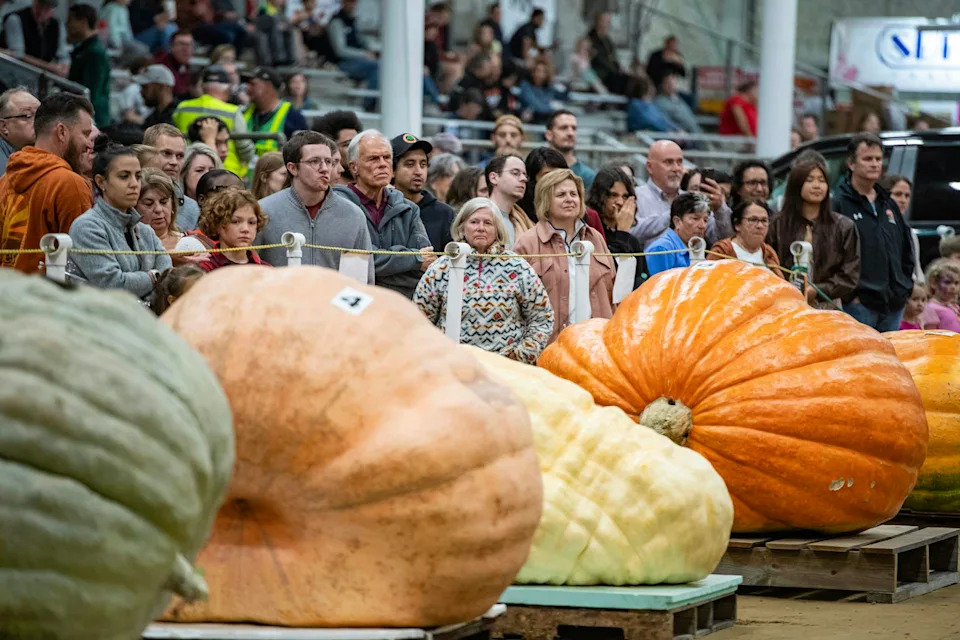
Botanically classified as fruits within the Cucurbitaceae family — alongside cucumbers, zucchini and gourds — pumpkins present significant morphological diversity. Varieties span red, yellow, white, blue and green hues, with textures ranging from smooth to heavily warty. Sizes vary from miniature ornamentals to giant cultivars bred specifically for weigh-off competitions, where specimens routinely exceed 2,000 pounds. Atlantic Giant cultivars, developed through decades of selective breeding, hold the records in competitive growing circuits across North America and Europe.
The term “pumpkin” derives from the Greek word “peopon,” meaning large melon. But the plant’s origins trace to Central and South America. Archaeological evidence places the oldest known pumpkin seeds in Mexico at approximately 9,000 years old. Indigenous populations cultivated squash species before domesticating corn or beans, eventually integrating all three into companion planting systems. In these arrangements, corn stalks served as natural trellises for climbing beans, while nitrogen-fixing bacteria in bean root nodules converted atmospheric nitrogen into ammonia to fertilize the soil. Broad squash leaves provided ground cover that retained moisture and suppressed competing weeds.
Every part of the plant served utilitarian purposes. Beyond consuming the flesh, seeds and flowers, some Native American groups dried the tough outer shells, cut them into strips and wove them into mats. European colonists encountered these crops through the Columbian Exchange and found New World varieties sweeter and easier to cultivate than existing European squashes, likely due to distinct American soil compositions and climate conditions.
Colonial-era pumpkin pies bore little resemblance to modern versions. Early settlers hollowed out whole pumpkins, filled them with milk, honey and spices, then roasted them directly in hot ashes. Others adapted English pastry traditions by layering pumpkin and apple between two crusts. The custard-style pie familiar today first appeared in print in 1796, when Amelia Simmons published “American Cookery,” the first cookbook authored and printed in the United States. Her text included two distinct recipes: one seasoned with mace, nutmeg and ginger, and another using only allspice and ginger.

Commercial pre-blended pumpkin spice — typically combining cinnamon, nutmeg, ginger, allspice and cloves — entered retail markets in the early 1930s as a convenience product for home bakers. The flavor profile has since detached entirely from the actual fruit, becoming a standalone marketing category applied to coffees, candles, lotions, yogurts, pretzels and marshmallows. Major food and beverage retailers now launch pumpkin spice product lines by late July or early August, months before the physical harvest begins, capitalizing on seasonal anticipation as a retail driver rather than an agricultural milestone.
According to the USDA National Agricultural Statistics Service, U.S. pumpkin production across all major states generated over $200 million in crop value in recent harvest cycles, with fresh-market ornamental sales accounting for a growing share compared to processed puree volumes.









