
From Navy SEAL to $9.25B Defense Titan: How Saronic Is Reshaping America’s Shipbuilding
Former Navy SEAL's $9.25B Startup to Build Autonomous Vessel Factory in Texas
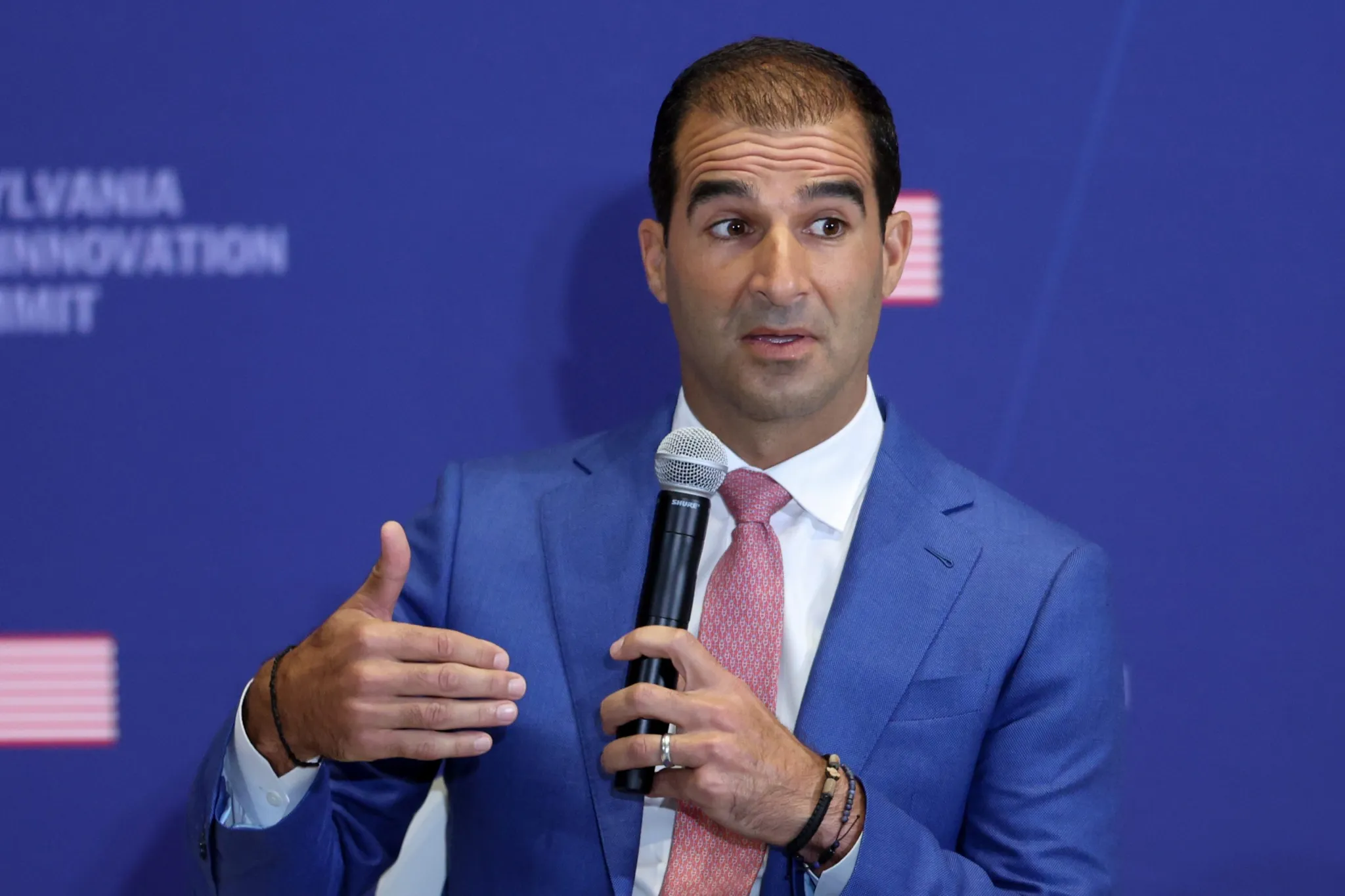
Valued at $9.25 billion, Saronic is preparing to build “Port Alpha,” a shipyard in Brownsville, Texas, intended to manufacture autonomous surface vessels at scale. The company projects the facility will generate billions of dollars in investment and create 10,000 jobs in the region. The startup is led by co-founder and Chief Executive Officer Dino Mavrookas, 46, who founded the company after transitioning through careers in military special operations and private equity.
Mavrookas earned a computer engineering degree from Rutgers University in 2003 before serving 11 years as a U.S. Navy SEAL. His military service included eight deployments, five of which were spent within SEAL Team Six, officially known as the Naval Special Warfare Development Group. The expansion comes as the Pentagon increasingly focuses on unmanned surface vessels and rapid hardware production to modernize naval capabilities and counter maritime challenges in the Indo-Pacific.
Saronic, founded in 2022, has scaled its workforce to more than 1,000 employees and maintains more than 200 active job postings. Following his military tenure, Mavrookas spent five years in private equity as a senior associate at Vista Equity Partners in Austin, acquiring experience in financial operations and enterprise investing. Roughly four years ago, he resigned from the firm to concentrate on developing a technology business focused on national defense.

A push to revitalize the U.S. defense industrial base through autonomous maritime technology is fueling rapid growth among next-generation military contractors, highlighted by Austin-based defense-tech firm Saronic’s expanding footprint in Texas. The challenge of expanding U.S. shipbuilding and military hardware manufacturing extends across both software-driven defense startups and traditional naval shipyards, which face persistent labor shortages and operational bottlenecks.
“After five years, I started to look around and say, is this what I want to do for the next 20 or 30 years of my life? Like, I learned a ton about investing. I learned a ton about operating companies, but is this what I wanted my career to be? And the answer was no,” Mavrookas said during an appearance on the *Sourcery* podcast, describing the moment he informed his wife he was leaving his finance position. “I just knew that I had to go and focus my energy there, and I wasn’t going to come up with Saronic, or at that point whatever the idea was, if I was working 80 to 100 hours a week at a finance firm.”
Corporate leaders outside the defense sector have also pointed to military operational structures and shipbuilding capacity as vital to national infrastructure. Mavrookas has cited his special operations background as foundational to his corporate execution strategy, particularly regarding rapid decision-making under uncertain conditions.
“A good decision doesn’t always have a good outcome, and a bad decision doesn’t always have a bad outcome,” Mavrookas said in an interview with McKinsey. “You have to focus on the decision-making process. Make good decisions with the information that you have and then execute adeptly. A perfect plan with mediocre execution will lose to a mediocre plan with excellent execution every time. Our goal is to deter a conflict, regardless of when it happens.”
JPMorgan Chase Chairman and CEO Jamie Dimon has publicly advocated for implementing small, empowered operational units modeled on military teams within corporate environments. “The teams needed to tackle [specific problems] should be small and authorized with the decision-making ability to move and act like Navy SEALs or the Army’s Delta Force,” Dimon wrote in a shareholder letter. “This is trench warfare; it’s about fighting for every inch, moving quickly, and getting things done.”
To address supply chain and workforce shortfalls in traditional naval production, JPMorgan Chase committed $24 million in loans and philanthropic grants to support a submarine manufacturing and assembly facility in Philadelphia. The capital is designated to fund workforce training and apprenticeship programs for pipefitters, welders, electricians, and other specialized trade workers required for naval construction. Dimon has also drawn attention to the skilled labor shortages confronting American shipyards, including facilities supporting the U.S. Navy’s submarine and surface fleets.
“We need 300,000 electricians, welders, etc. to build ships in the next five or 10 years,” Dimon said in a July interview with CNBC from the Philadelphia Navy Yard. “It fits what we call the American dream: getting kids skills or all workers’ skills that they have jobs that could pay 80-, 90-, $100,000 a year after you know a year or two of training. This lifts up America. It helps build the defense industry.”