

Mexico’s State-Backed Singing Contest Sidesteps Corridos Tumbados
Three U.S.-born singers advance to the Mexico City finale as the Sheinbaum administration enforces strict lyrical bans excluding the most streamed Latin genre in America.
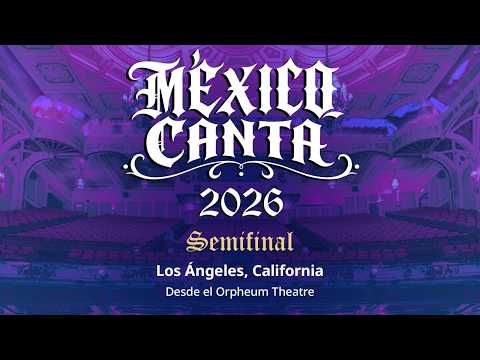
A Mexican government-sponsored singing competition advancing three U.S.-based finalists toward a record deal in Mexico City is operating under strict lyrical prohibitions, revealing a widening rift between state cultural policy and the most commercially dominant Latin music genre in the United States.
Joshua Soto, Tiffany Galaviz and Rosalba Valdez secured their spots in the Sept. 13 grand finale of México Canta after more than 300,000 viewers across both countries voted during a live broadcast from the Orpheum Theatre in Los Angeles on Aug. 23. The winner will perform at the Auditorio Nacional in Mexico City. But the artists who advanced did so by navigating rigid content restrictions that explicitly ban songs glorifying drug use or violence, alongside a prohibition on artificial intelligence and audio alterations.
Those rules effectively exclude corridos tumbados, the trap-infused regional Mexican subgenre driving a massive commercial boom. Global streams of música mexicana have surged 295% since 2021, with U.S. consumption alone rising 162%, according to Spotify data. Acts like Peso Pluma, Fuerza Regida and Junior H rank among the highest-streamed Latin musicians in the country, trailing only reggaeton heavyweight Bad Bunny. None were featured in the competition.


The disconnect between what young audiences stream and what the Mexican Ministry of Culture promotes on stage underscores a broader geopolitical strategy. Launched in 2025 under President Claudia Sheinbaum, México Canta functions as binational programming designed to strengthen ties with the roughly 37 million Americans of Mexican descent. Rather than relying solely on traditional diplomacy, the administration is deploying public television, live events and cultural heritage narratives to maintain influence within a diaspora that historically faced alienation from its ancestral country.
Mexican Secretary of Culture Claudia Curiel de Icaza framed the initiative as an effort to unite youth across the border through shared heritage rather than territory. The Los Angeles event leaned heavily into this historical framing. Host Majo Aguilar, granddaughter of Mexican entertainment icons Antonio Aguilar and Flor Silvestre, guided a program punctuated by educational segments on figures like Pedro J. González, an early Spanish-language radio broadcaster in the U.S., and American-born artists who popularized Mexican music, including Texas native Gloria Ríos and Linda Ronstadt, whose 1987 album “Canciones de Mi Padre” remains the bestselling non-English language record in U.S. history.
Finalists reflected this cross-border identity. Soto, an 18-year-old Bronx native enrolled in New York University’s vocal performance program, performed a bilingual country-corrido titled “Terco Callejero.” Valdez, 27, from Chicago, delivered a merengue-infused track called “Por Bonita.” Both emphasized their bicultural backgrounds as foundational to their artistry rather than a point of division.

The contest arrives amid an escalating regulatory crackdown on narcocorridos within Mexico itself. Ten of the country’s 32 states have enacted bans or limitations on playing corridos in public spaces, targeting lyrics associated with organized crime. In May 2025, Mexico City lawmakers passed legislation barring such songs from public events entirely. These domestic restrictions coincided with intensified pressure from the Trump administration regarding cross-border drug trafficking, placing the Sheinbaum government in a position where curbing cartel-associated culture serves both internal security goals and external diplomatic optics.
Sheinbaum has publicly rejected accusations that México Canta constitutes censorship, characterizing it instead as an educational alternative meant to guide listeners away from violent themes. Curiel de Icaza echoed this stance, maintaining that the state is not prohibiting existing music but rather choosing specific genres for government-backed platforms.
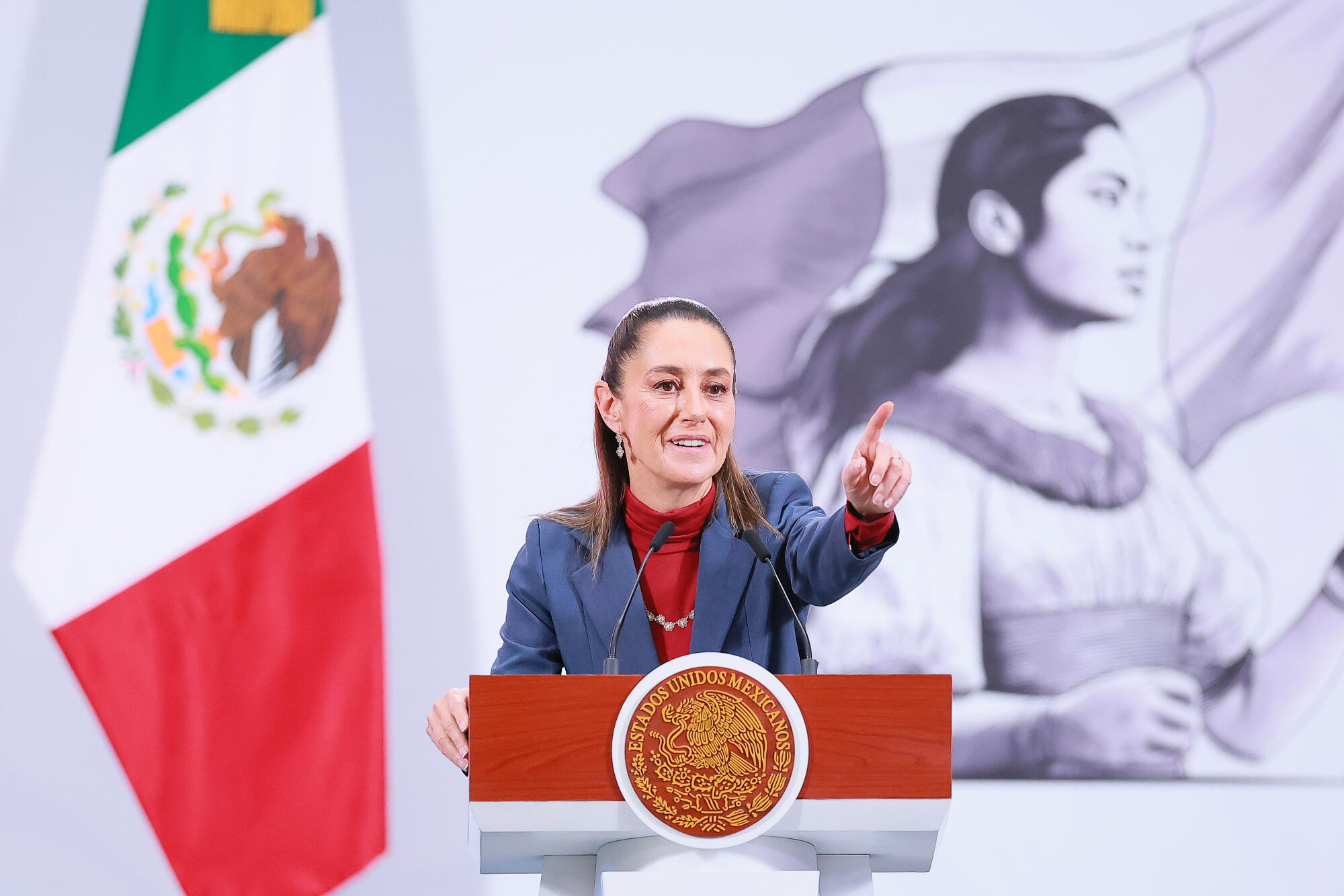
The government’s messaging received unexpected reinforcement from Junior H, born Antonio Herrera Pérez. The 25-year-old corrido tumbado star publicly supported the contest during a presidential news conference, acknowledging that his earlier catalog—which includes tracks widely interpreted as tributes to figures linked to the Sinaloa cartel—conflicted with his current artistic direction. His pivot illustrates the intense institutional pressure facing young musicians who built global followings on outlaw narratives.
To anchor the competition’s legitimacy, organizers enlisted Los Tigres del Norte, who closed the Los Angeles broadcast performing “México Sigue De Pie,” a new composition focused on community resilience. The booking carried deep irony. The band pioneered the modern narcocorrido with their 1974 hit “Contrabando y Traición” and the 1978 cocaine-trafficking narrative “La Banda del Carro Rojo.” Over the past decade, however, concert promoters in Mexico have pressured the group to drop those foundational tracks from setlists. Bandleader Jorge Hernández has consistently defended the genre as journalistic storytelling, arguing that corridos narrate lived realities rather than invent them.
Los Tigres del Norte performed alongside Gustavo Dudamel at the Hollywood Bowl the night before the semifinals, bridging the gap between institutional classical music, grassroots regional Mexican sounds, and state-sponsored cultural diplomacy.
Voting for the Sept. 13 finale at the Auditorio Nacional remains open to the public via the same binational broadcast infrastructure used during the U.S. semifinal round.









