US SPR Oil Floor Uncertain as Iran War Drains Reserves
Engineering constraints in salt caverns create uncertainty about how much crude can be safely released during emergencies
The U.S. Strategic Petroleum Reserve has fallen to approximately 284 million barrels, its lowest volume since 1982, but the true operational limit for emergency withdrawals remains a subject of intense debate among energy experts. With the Trump administration committed to releasing additional crude through March under an International Energy Agency agreement to offset supply shocks from the ongoing Iran war, inventories are projected to drop to 243 million barrels. However, determining how much oil can be safely extracted before infrastructure damage occurs is complicated by the unique geology of the reserve’s storage sites.
Unlike conventional above-ground tanks, the SPR stores crude in massive underground salt caverns along the Gulf Coast. These caverns naturally contain brine at the bottom, and because oil floats on water, extraction causes the brine interface to rise. If withdrawals continue too far, the rising water level can expose intake pipes and destabilize the cavern walls, potentially causing permanent structural failure. The Department of Energy has established a hard safety floor of 70 million barrels to prevent geological collapse, but industry engineers warn that functional limitations kick in far earlier than that theoretical minimum.
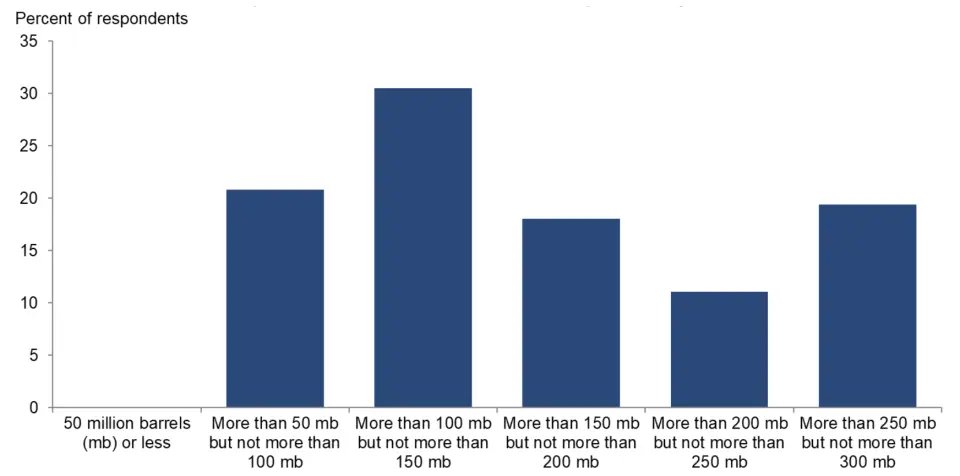
A recent survey of oil executives by the Federal Reserve Bank of Dallas highlights the lack of consensus on where that functional threshold lies. While 31% of respondents believe the absolute minimum safe inventory is between 100 million and 150 million barrels, nearly one-third of executives think the reserve is already at or near its effective tank bottoms. Estimates for the practical floor range wildly, with 19% placing it as high as 250 million to 300 million barrels and 21% suggesting it could go as low as 50 million to 100 million barrels. This disparity reflects differing assessments of cavern integrity across the reserve’s four storage sites.


Technical constraints vary significantly depending on when specific caverns were constructed. Approximately 80% of the SPR resides in Phase 2 and Phase 3 caverns, which allow for higher recovery rates with limited risk. The remaining 20% sits in older Phase 1 caverns that have already undergone significant drawdowns and possess reduced structural tolerance. Some operators estimate these older facilities can only sustain 50% recovery before risking damage, effectively shrinking the usable portion of the national stockpile well below headline inventory numbers.
The uncertainty over U.S. withdrawal capacity comes as global buffers erode. Saudi Aramco CEO Amin Nasser estimated Monday that more than 1 billion barrels have been removed from commercial and government stockpiles worldwide since the conflict began eight months ago. Although Persian Gulf exports have nominally returned to prewar volumes, renewed threats to shipping lanes suggest this recovery is fragile. Without a diplomatic resolution to the Iran war, continued reliance on strategic reserves appears inevitable, raising concerns that the market’s primary price stabilization mechanism may fail precisely when it is needed most.
Petroleum engineering experts emphasize that flow rate matters as much as total volume. Even if oil remains physically present in the caverns, extraction speeds decrease dramatically as levels drop, limiting the government’s ability to flood the market during a sudden supply crisis. Texas A&M University professor Siddharth Misra noted that while 70 million barrels represents the structural survival point, the practical operational floor for maintaining emergency response capability is likely closer to 250 million barrels. At current planned release rates, the U.S. could approach this functional ceiling within months.