Rolls-Royce’s October Slide Is the Market Selling Flying Hours
A 2.2% Brent move cost the stock 5.1% on Thursday: the per-hour billing model that turns fuel prices into a share price — while the company itself keeps posting record margins.
Rolls-Royce reported a half-year operating profit of £2.5bn in July, up 46 per cent on a year earlier with margins at 22.5 per cent. On Thursday its shares closed at 1,259.60p, down 5.11 per cent on the day and 20.6 per cent below the early-August peak near 1,586p.
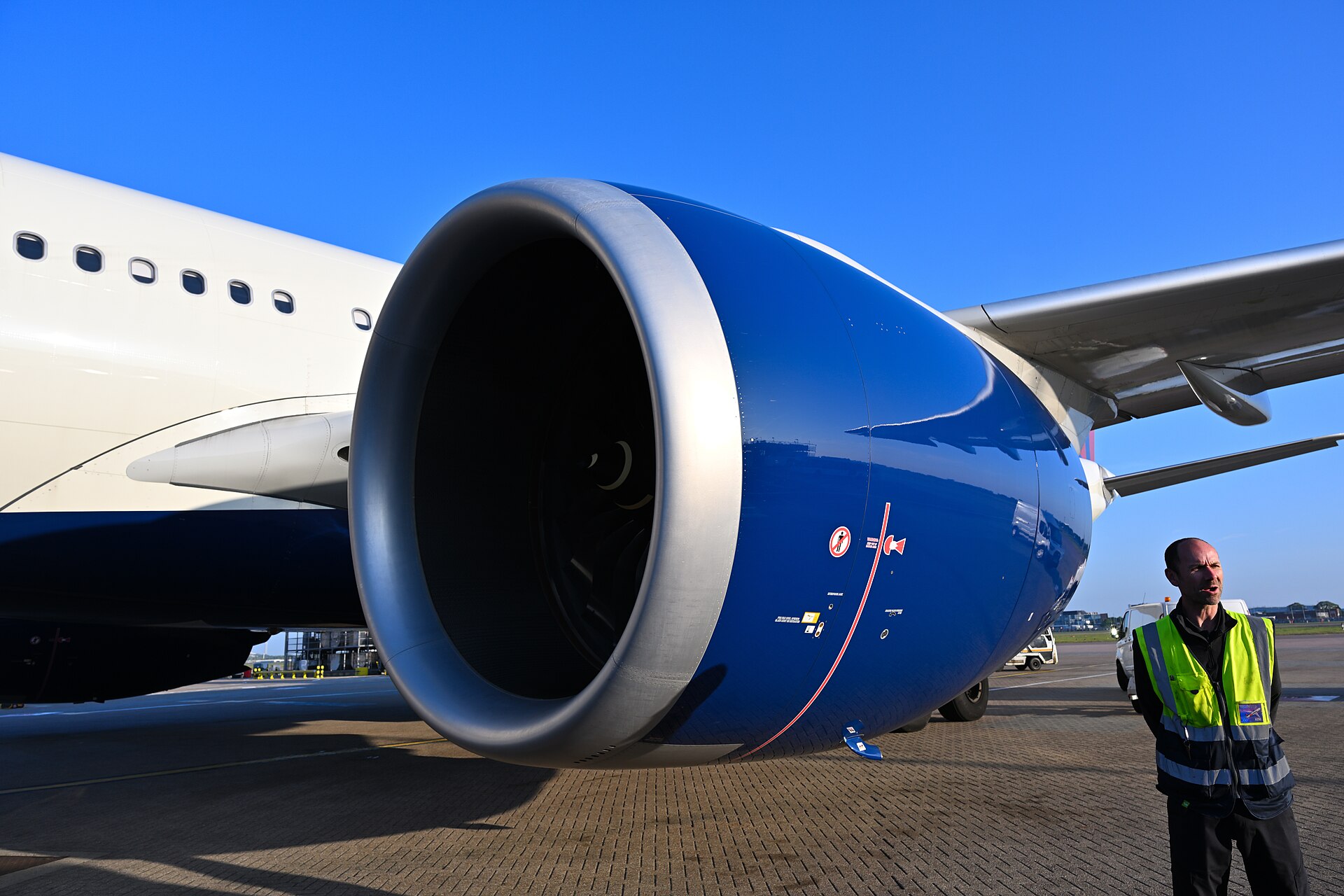
Brent crude rose 2.2 per cent on Thursday to $111.18 a barrel, briefly topping $113, after Houthi attacks in Saudi Arabia and reports that the United States and Israel were weighing further action against Iran. Oil moves the rate. Much of Rolls-Royce’s civil-aerospace profit is billed per engine flying hour under long-term service agreements, and when jet fuel gets expensive airlines trim capacity, which means fewer billable hours. The airline pays for hours, not engines. Two days ago the company widened coverage under its CorporateCare Enhanced programme while leaving the hourly rate unchanged — a reminder that the rate is the unit the business is sold in. International Consolidated Airlines Group fell on the same day, for the same reason.
The shares carry a beta of 1.56: for every point the market moves, they move about half as much again. Thursday fit the pattern. The FTSE 100 slipped 0.26 per cent; Rolls-Royce fell 5.11. Part of it was rotation rather than Rolls-Royce: a global tech sell-off on AI-spending worries punished high-valuation names, and London engineers Melrose, Weir, IMI and Diploma fell alongside. The shares have been one of the FTSE 100’s best three-year performers, which makes them the natural thing to sell when sentiment turns.

Rolls-Royce had completed £1.4bn of its £2.5bn 2026 buyback by July 30, part of a £7bn–£9bn programme running to 2028. The company is buying its own slide. The same month’s research notes priced the stock well above Thursday’s close: RBC reaffirmed its Outperform rating with a 1,600p target on October 9, implying 27 per cent upside from 1,259.60p, and the MarketBeat consensus target of 1,690.33p put the gap at 34 per cent. The full-year guidance the shares are sliding away from was raised on July 30 to £4.7bn–£4.9bn of underlying operating profit, a 17 per cent lift to the mid-point, with free cash flow guided at £3.8bn–£4bn.
Avolon’s order for 70 Trent 7000 engines, placed on October 13 to power 35 Airbus A330neos, added a demand signal nine days before the slide. Will Pitcher, the lessor’s head of powerplant strategy and asset solutions, said in a statement accompanying the order: “The A330neo remains one of the most capable and efficient wide-body aircraft in the market today. Powered by the Trent 7000, it offers our airline customers a compelling combination of fuel efficiency, operational reliability and range. This order strengthens our ability to support customers’ fleet renewal and growth plans over the coming decade.” The Trent 7000 is the A330neo’s only engine option and has passed five million flying hours in service.
In April, Great British Energy–Nuclear signed the contract for the first three Rolls-Royce small modular reactors at Wylfa in North Wales, backed by £2.6bn of Spending Review funding, with the regulators’ design decision due in December 2026 and first power targeted for the mid-2030s. The first A350F test flight on the Trent XWB-97 came at the end of September, and a £300m UK manufacturing investment was announced the day before that. October brought a Saudi licence for local production of mtu marine engines, the first high-speed engine licence production in the kingdom.
November 12 is the next dated checkpoint: the trading update that tests whether the second half can carry the raised £4.7bn–£4.9bn guidance. At Thursday’s close, the consensus target price sat 34 per cent above the stock.