KLM Flight Cancellations Continue a Maintenance Story From May 2025
One airline, three end dates, and a borrowed Romanian jet: what actually changes for a KLM booking this winter, and which notice date decides compensation.
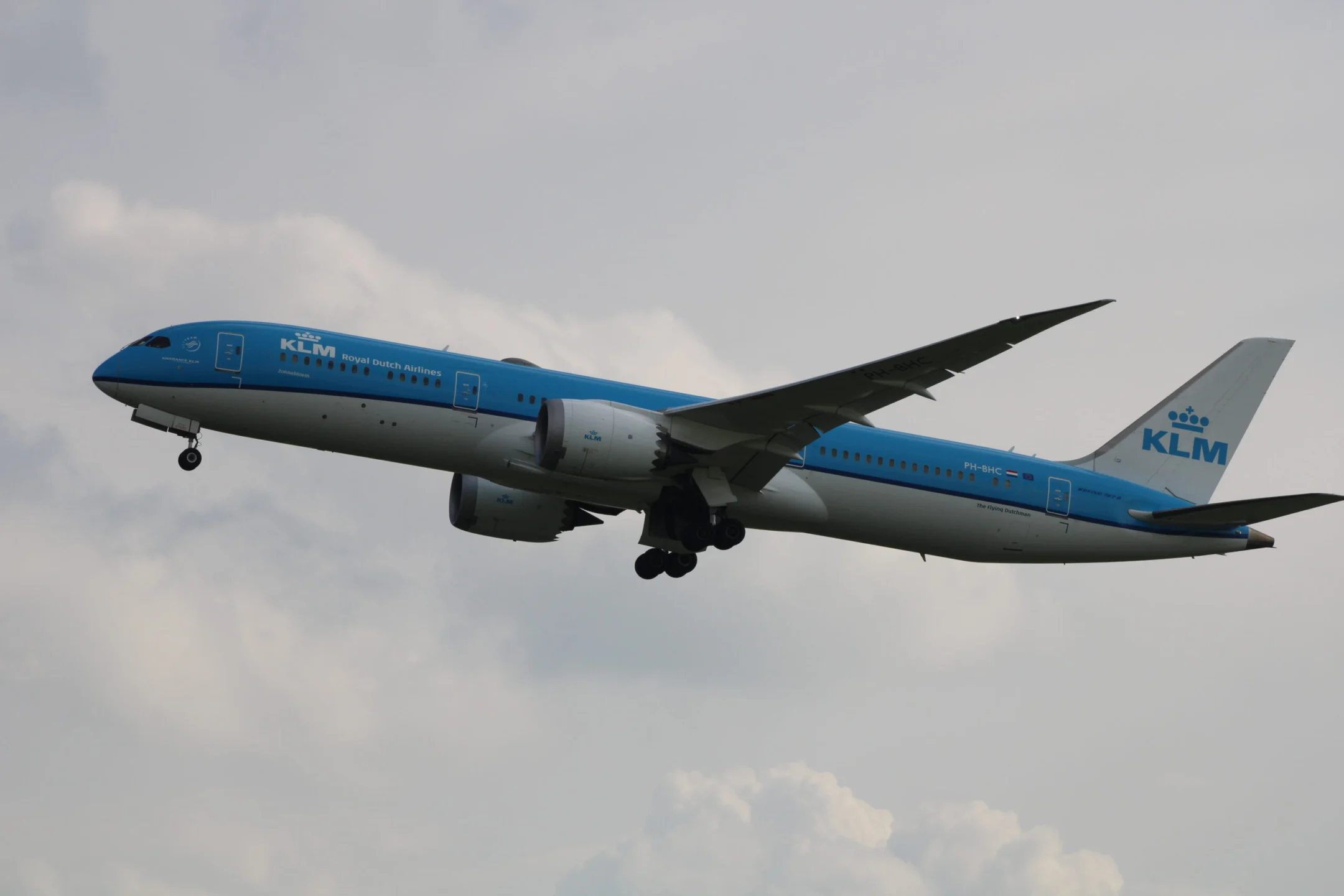
A KLM booking this winter can be disrupted in three different ways, and they do not share a cause, a reason, or an end date. One is a planned thinning of the schedule so more long-haul aircraft can stand by as reserves. The second is a security suspension of Middle East flying. The third is quieter: the aircraft that operates the flight may not be a KLM aircraft at all. Checking a booking means working out which of the three applies, because each one changes what the passenger is owed and when it ends.
The KLM flight cancellations in the maintenance programme started on October 26. They are due to run until early March 2027. KLM told staff it would cancel selected services in that window, after De Telegraaf first reported the plan and a spokesperson confirmed it to NL Times. The freed aircraft are meant to cover for jets that go out of service. No list exists. The airline has published no total count of the flights involved and no list of the destinations, and NOS reports that it is picking the services where a cancellation hurts least and rebooking is easiest. The winter network covers 164 destinations, from October 25 to March 27, but that is the size of the network, not the scale of the cuts. A route surviving on the timetable is not proof that a particular departure survives. The weekend before the cuts began, at least five intercontinental routes were cancelled at short notice. That is the disruption the advance cuts are meant to prevent. The strain showed up in crew scheduling as well as in passenger plans.
Reuters reported on October 26 that KLM will not fly between Amsterdam and Dubai for the whole 2026/27 winter season, through March 27, 2027. Flights to the Saudi cities of Riyadh and Dammam are cancelled through November 27, 2026, after the airline adjusted its Middle East schedule several times since the start of the US-Israeli war with Iran this year, and passengers on the cancelled flights are to be notified. The two end dates sit 120 days apart. The Dubai suspension outlasts the maintenance cuts by about three weeks. A passenger holding a Dubai ticket in late March is dealing with a security decision, not with the maintenance programme. A Riyadh ticket in December is already past its suspension.


Seventeen months before the cuts, KLM’s maintenance operation had already produced a grounding that stranded passengers in its own hub. On May 3, 2025, the airline took seven of its 24 Boeing 787 Dreamliners out of service. Maintenance on a refuelling component had not followed the correct procedure. The component itself was identical to one fitted to KLM’s Boeing 777s, where the correct procedure had been followed, but the 787 required a different instruction and engineers had applied the 777 procedure to the Dreamliner fleet. Three services were cancelled at short notice for lack of a spare aircraft: KL685 from Amsterdam Schiphol to Mexico City, KL611 to Chicago O’Hare, and KL615 to Portland. At least 650 passengers were left at Schiphol. The airline said there was no safety risk while the seven jets underwent expedited maintenance to the correct specifications.
In May, the Dutch regulator put the same maintenance division under closer watch. NOS reports that the Human Environment and Transport Inspectorate, known as ILT, placed KLM’s maintenance division under intensified supervision. The standards require minor maintenance tasks to be completed faster and recorded correctly. The shortcomings described are turnaround times and documentation. The report carries no finding that aircraft were operated unsafely. It gives no end date for the supervision and no breakdown of how many aircraft are waiting for which kind of work. KLM and NOS have not linked the supervision to the October cuts. The airline has not said how much of its shortage comes from work moving too slowly.
Some of the winter flying is also being done by other airlines’ aircraft. KLM has confirmed a temporary wet-lease under which Romania’s Carpatair flies an Airbus A319 on its European routes. Carpatair supplies the aircraft together with operating personnel, maintenance and insurance, which spares KLM from training its own crews on a type it does not otherwise fly. Business class and a full onboard product are mirrored, though the cabin will not fully replicate a KLM service. The A319 itself is absent from KLM’s single-aisle fleet, which otherwise consists of Airbus A321neos and Boeing 737s. German Airways Embraer E190s are flying eight KLM European routes this winter as well, from Amsterdam, with London City the busiest at 12 times a week. A passenger checking a booking therefore has a second check to make alongside the cancellation list: the operating carrier named on the confirmation. A substitute aircraft can change the seat map and the cabin even when the flight itself still operates.
KLM’s Boeing 737NG fleet averages 18.8 years, against 18 Airbus A321neos averaging 1.2 years. The older fleet breaks down as seven 737-700s averaging 15.5 years, 26 737-800s, 24 of them active, averaging 18.5 years, and five 737-900s averaging 24.6 years, 38 aircraft in total. That is a gap of 17.6 years between the fleet doing most of the short-haul work and the fleet replacing it. NOS puts the renewal investment at 7 billion euros. A first Airbus A350-900, named The Night Watch, has arrived at Schiphol. A new type needs trained crews, finished cabins and support systems before it can enter service. The newest aircraft cannot cover a winter that has already started. Operational director Mathieu Essenberg has said the schedule change was not the airline’s preferred option. Telling customers earlier, he said, gives them more certainty and leaves the airline more flexibility on the day. A spokesperson summed up the arithmetic to NL Times: “Every aircraft on the ground costs us money.”
Compensation turns on the date the passenger was personally told, not on the date the programme was announced. Under Regulation 261/2004, Article 5, no compensation is owed for a cancellation if the passenger was informed at least two weeks before departure, the shorter notice windows turn on the re-routing offered, and the burden of proving whether and when the passenger was informed rests on the carrier. The maintenance cuts were announced in early October. A passenger booked for November who was told in October will usually fall outside compensation. A passenger told days before a late-October departure is in a different position. The distinction is decided by the notification on their own booking. Rebooking or a refund, and care while waiting, apply regardless of compensation. AirHelp puts the compensation scale at up to 600 euros depending on distance.
KLM has not published a list of the flights cut for maintenance or a total count of them. The operating carrier on a confirmation is the other detail worth checking before assuming a winter booking will operate as sold.