China Plus One Strategy Falters as Southeast Asia Faces New Trade Risks
Narrowing tariff gaps and Chinese export surges expose limits of regional assembly hub strategy
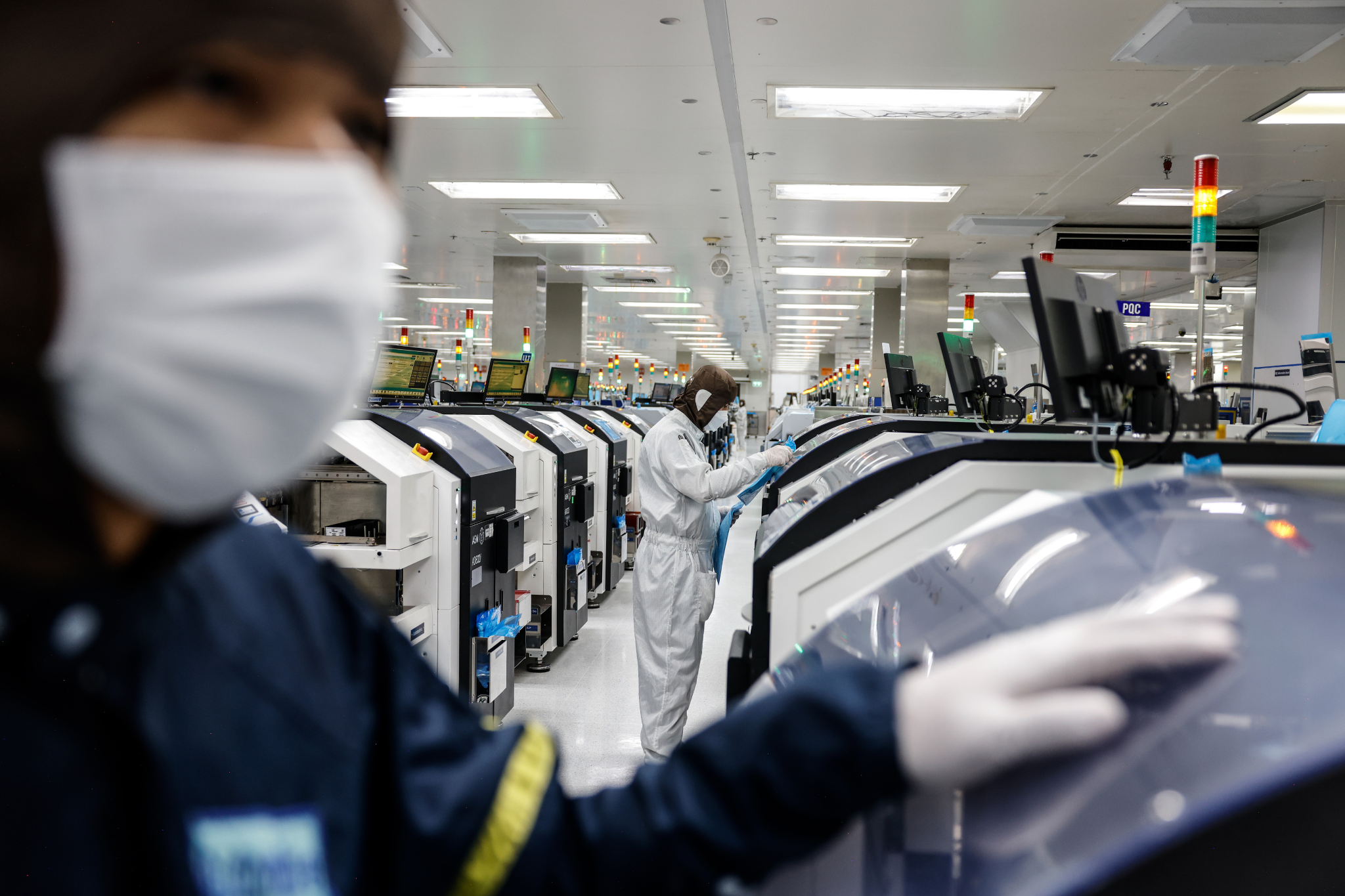
Southeast Asia’s manufacturing boom is confronting a structural reality check. While the region successfully attracted billions in foreign direct investment under the “China plus one” banner, it has largely failed to capture high-value supply chain segments, leaving local economies vulnerable to shifting U.S. tariff policies and a surge of Chinese consumer exports that threaten domestic industrialization.
The core issue is an overreliance on final assembly rather than component manufacturing. Vietnam, the region’s primary beneficiary, saw exports to the U.S. jump 28.1% to $153.2 billion in 2025, yet imports from China rose nearly 30% to $183 billion during the same period. This trade imbalance illustrates that while assembly lines have relocated, the production of batteries, optics, enclosures, and intermediate goods remains anchored in China’s vertically integrated ecosystems. Multinational corporations continue to source critical inputs from Chinese suppliers because alternative hubs lack the mature supplier networks found in cities like Shenzhen.
This dependency creates significant exposure to U.S. trade enforcement. Washington has increasingly scrutinized Southeast Asian exports for transshipment, alleging that some factories merely repackage Chinese goods to evade duties. The tariff advantage that initially drove relocation is also eroding. Following recent Section 301 expansions, goods from Singapore, Thailand, Vietnam, and the Philippines now face a 12.5% U.S. tariff rate, while Cambodia, Indonesia, and Malaysia face 10%. With China’s average rate at 21% and both nations pursuing reductions on non-sensitive goods, the cost differential has narrowed enough to prompt some PC manufacturers to shift production back to China.


Beyond tariff risks, Southeast Asia faces a more fundamental economic threat: premature deindustrialization. As China’s domestic consumption stagnates and its property sector struggles, Beijing has aggressively pushed exports into ASEAN markets. Bilateral trade surpassed $1 trillion in 2025, but the influx of low-cost Chinese EVs and consumer goods is suppressing local manufacturing growth. Thailand’s GDP expansion has slowed to 2%, partly due to intense price competition from Chinese imports in sensitive sectors. For less developed nations like Cambodia, Laos, and Timor-Leste, the risk is not displacement but the failure of nascent industries to ever achieve scale.
Regional leaders are attempting to counter these trends through targeted industrial policy. Indonesia banned nickel ore exports to force downstream refining and attract EV battery manufacturing. Malaysia has carved out a niche in semiconductor packaging and data centers, with investment in the latter reaching 18% of GDP. However, Malaysian officials have publicly warned against becoming mere infrastructure hosts while AI development and strategic decisions remain concentrated elsewhere.
Supply chain experts suggest the region may need to bifurcate its industrial strategy to survive in a multipolar trade environment. This could involve establishing separate manufacturing zones: one fully compliant with Western standards and rules of origin for export to the U.S. and Europe, and another integrated with Chinese supply networks serving the Global South. Without such adaptation, the “flying geese” model of sequential development may no longer apply, as China increasingly seeks to retain full supply chain control domestically while treating Southeast Asia primarily as a consumer market rather than a production partner.