Billionaires Are Building a Space Economy on Unproven Timelines
Executives from SpaceX to Voyager Technologies are pitching orbital habitats on schedules that defy current launch economics.
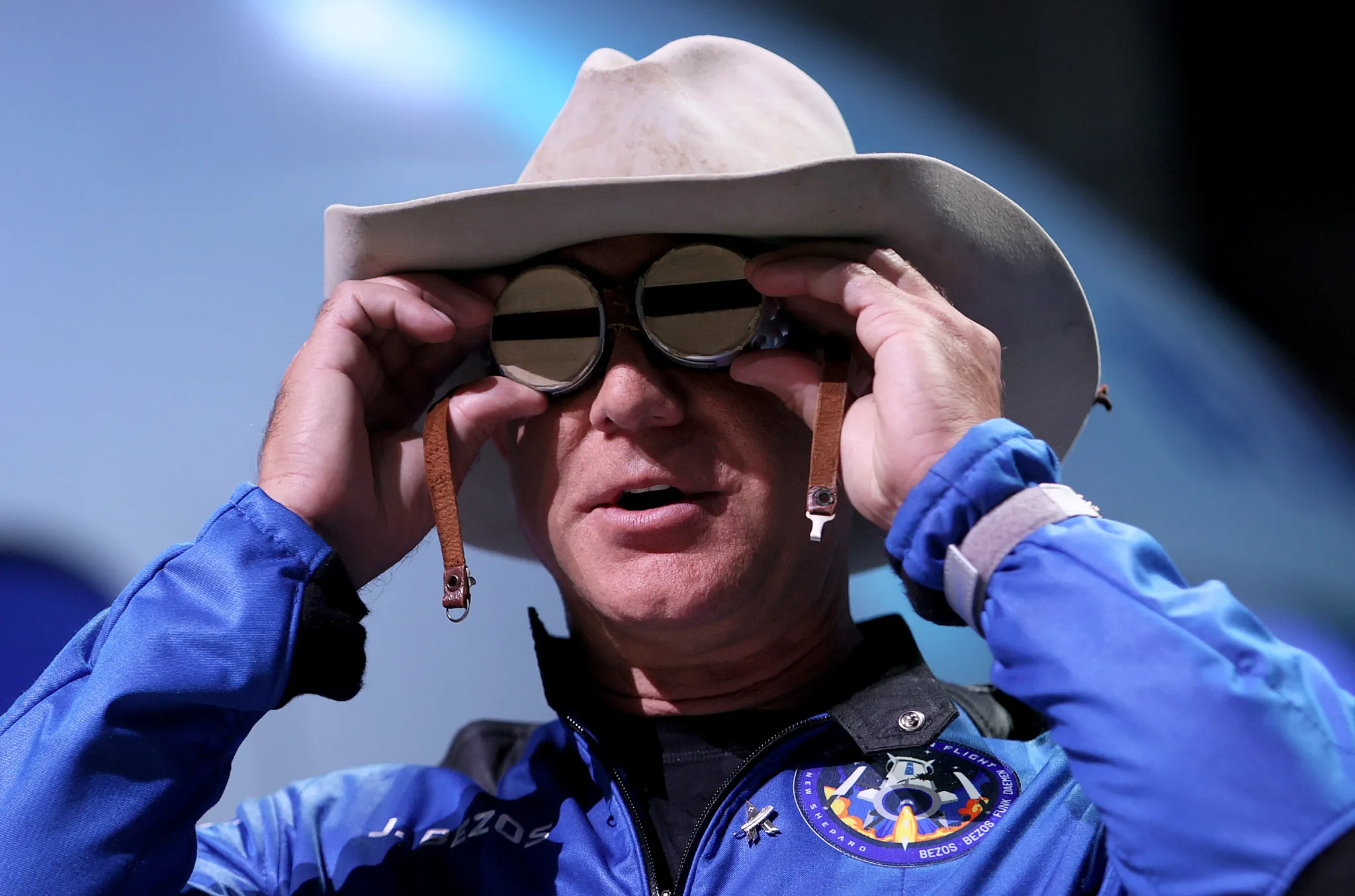
Jeff Bezos told an audience at Italian Tech Week 2025 that millions of people will live in space within two decades. The Amazon founder did not explain who will pay for the oxygen.
His remarks reflect a widening gap between the aerospace industry’s financial engineering and its physical infrastructure. Bezos, Sam Altman, Elon Musk, and Dylan Taylor have all attached specific dates to human expansion beyond Earth. None of these timelines align with current launch economics or orbital construction capabilities.
Bezos insisted robots will handle lunar labor because sending humans is too expensive. Yet his own company, Blue Origin, has spent years developing heavy-lift rockets designed primarily to move massive payloads—and eventually people—off the planet. The contradiction sits at the center of the modern space economy. Executives pitch automation to justify near-term research budgets while simultaneously promising consumers they will soon commute from orbit.


Musk set a 2028 target for human boots on Mars. SpaceX, valued at $1.95 trillion, plans unmanned flights next year. NASA relies on the company for basic crew transport to low Earth orbit, a route that took decades and billions of federal dollars to operationalize. A Martian landing requires life-support systems that do not yet exist outside of laboratory simulations.
OpenAI CEO Sam Altman shifted the focus from engineering to employment. He predicted college graduates will hold high-paying jobs in space within ten years. Altman offered no details on what those roles entail or which companies will fund them. His comments mirror a broader trend among software executives applying Silicon Valley hiring cycles to an industry governed by orbital mechanics.
Dylan Taylor provided the most aggressive timeline. The Voyager Technologies CEO told Fortune humans will live and work in space by the early 2030s. Voyager went public on the NYSE last year, hitting a $3.8 billion valuation. The company holds NASA contracts to build a replacement for the International Space Station. Taylor, who turned 53 as a billionaire after founding Space for Humanity in 2017 and Voyager two years later, also backed Relativity Space alongside Mark Cuban. Public markets rewarded the vision. The hardware remains largely unbuilt.
Taylor promised visible lights on a future moon base. Current lunar initiatives, including NASA’s Artemis program, are already facing schedule delays due to spacesuit development and thermal protection challenges.
Bill Gates rejected the premise entirely. Speaking to comedian James Corden, the Microsoft cofounder questioned the logic of funding off-world colonies while terrestrial problems persist. Gates previously stated he would ask a time traveler whether artificial intelligence ultimately helped or doomed humanity. He favors a domestic application of AI, suggesting automation could reduce the standard workweek to two days.
“If you zoom out, the purpose of life is not just to do jobs,” Gates said.
A version of this story originally published on Fortune.com on October 15, 2025.
Read more about the future of work from Fortune’s Orianna Rosa Royle: