
How Genesis Elevates a Shared Platform to Rival Luxury Giants
Shared Architecture, Premium Execution: The 2026 Genesis GV60

SEOUL, South Korea — Hyundai Motor Group is pursuing a multi-tier brand strategy through a single, highly flexible engineering foundation, aiming to capture both mainstream buyers and premium consumers in a shifting electric vehicle market. At the pinnacle of this approach sits the 2026 Genesis GV60, a luxury crossover engineered to demonstrate how a shared architecture can compete directly with legacy European luxury brands.
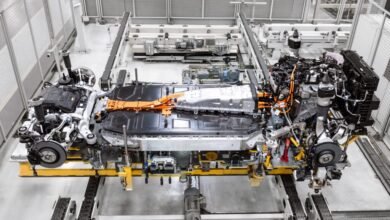
The E-GMP architecture features a flat floor, a modular wheelbase, and a low-mounted battery pack positioned between the front and rear axles. This layout lowers the vehicle’s center of gravity, improving handling dynamics and maximizing cabin volume. While these core technical capabilities are shared across the Hyundai, Kia, and Genesis lineups, the GV60 represents the platform’s most refined execution.
To justify the price premium of the Genesis brand—established as an independent luxury marque in November 2015—engineers focused heavily on noise, vibration, and harshness (NVH) mitigation. The GV60 features thicker acoustic laminated glass in both the front windshield and side windows, alongside denser sound-absorbing materials lined throughout the wheel wells, floorboards, and pillars.


The 2026 Genesis GV60 is equipped with a 77.4 kWh lithium-ion battery pack. In its standard dual-motor all-wheel-drive configuration, the powertrain delivers 314 horsepower. The platform also supports bi-directional charging, known as Vehicle-to-Load (V2L), allowing the car to power external electrical appliances.
Crucially, the E-GMP platform utilizes an advanced 800-volt electrical architecture. This enables ultra-fast DC charging up to 350 kW, allowing a charge from 10% to 80% capacity in approximately 18 minutes under optimal conditions. Genesis differentiates the GV60 through avant-garde design elements, such as the “Crystal Sphere”—a sphere-shaped shift selector that rotates 180 degrees to reveal the gear selector when the vehicle is started.
The top-tier Performance trim increases output to 429 horsepower, with a steering-wheel-mounted “Boost” button that temporarily unlocks 483 horsepower and 516 lb-ft of torque for 10-second intervals. The cabin utilizes active road noise cancellation technology, which emits inverted sound waves through the audio system to neutralize low-frequency road noise before it reaches passengers’ ears.
Hyundai Motor Group introduced the E-GMP architecture in late 2020, designed from the ground up specifically for battery-electric vehicles (BEVs). Unlike internal combustion engine (ICE) platforms modified to house batteries, the E-GMP platform serves mass-market siblings like the Hyundai Ioniq 5 and the Kia EV6.
Biometric technologies in the GV60 include Face Connect, which allows drivers to unlock the vehicle using a facial recognition camera on the B-pillar. For ride sophistication, higher trims feature the Preview Electronic Control Suspension (Preview ECS), which uses a forward-facing camera to scan the road ahead for imperfections and automatically adjusts the damping force of the shocks in milliseconds.
The GV60 enters a highly competitive compact luxury EV segment, facing rivals such as the Audi Q4 e-tron, Volvo C40 Recharge, and the top-selling Tesla Model Y. By leveraging the shared development costs of the E-GMP platform across millions of Hyundai and Kia vehicles, Genesis is able to offer advanced luxury features and high-speed charging capabilities at a price point designed to undercut established European premium competitors.
While the Hyundai Ioniq 5 and Kia EV6 have received praise for their driving dynamics, they are tuned for mainstream appeal. For the 2026 GV60, Genesis implemented luxury-focused mechanical and material upgrades including a bespoke suspension calibration.