
Germany Links Leipzig Airport Drone Plot to Russia as Baltic Drone Flights Mount
Leipzig airport plot, shadow-fleet surveillance and power-grid incidents sharpen Europe’s security challenge
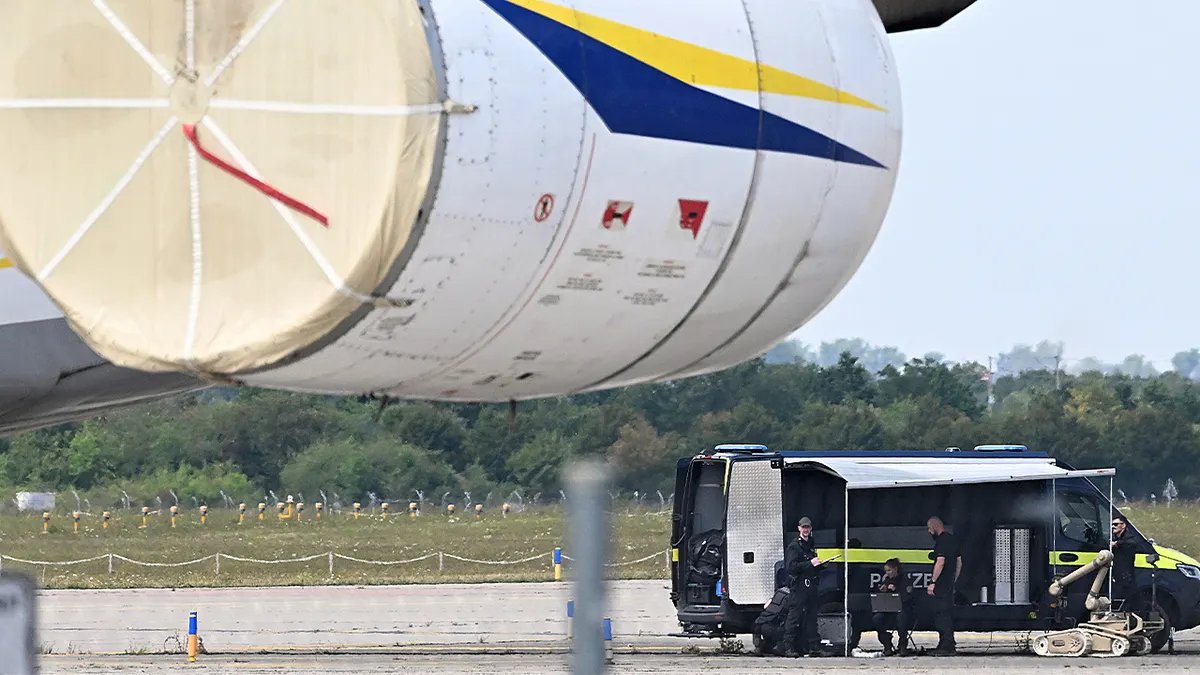
Germany has formally accused Russia of an attempted explosives attack at Leipzig/Halle Airport, where a drone carrying explosives was found Aug. 4 beside a Ukrainian aircraft. Berlin closed Russia’s consulate general in Bonn and ended the arrangement governing the Russian House cultural center in Berlin after summoning Russian Ambassador Sergei Nechayev.
German officials said police findings, intelligence information and the methods used in the operation led them to attribute the plot to Moscow. They said the drone, explosives and detonation technology were consistent with methods observed in Russian hybrid operations and in Russia’s war against Ukraine.
European security services in Germany, the United Kingdom and Poland have also been tracking a coordinated GRU campaign involving incendiary parcels placed inside commercial air-cargo networks, according to officials familiar with the investigations. Previous parcel fires at courier hubs in Leipzig and Birmingham were investigated as part of the network, which used commercial aviation logistics to move the devices.


Germany has not released much of the evidence in the Leipzig case. Information about suspected perpetrators, travel routes, surveillance footage and DNA evidence has been withheld while the investigation continues.
Latvian Foreign Minister Baiba Braže called the Leipzig operation “state-sponsored terrorism on German soil” and said the attack showed that Russia posed a direct threat to Europe. She called for stronger Ukrainian defenses and additional sanctions targeting Russia’s production of missiles, drones and other weapons.
Russia denied responsibility and described Germany’s accusation as “entirely fabricated,” according to Reuters.
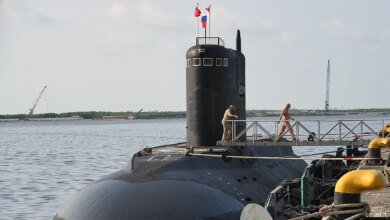
Russian vessels are being examined in a separate stream of investigations involving drones near European military and critical infrastructure. The Russian shadow fleet includes hundreds of aging tankers operating under obscure flags, with some lacking reliable insurance and ownership records while transiting the Danish Straits and the Gulf of Finland.
Western defense officials have documented shadow-fleet vessels lingering near undersea data cables and offshore wind farms. Some have used spoofed Automatic Identification System signals, and officials have examined the vessels’ possible use as maritime launch platforms for reconnaissance drones.
An International Institute for Strategic Studies report identified 144 suspected drone flights near sensitive sites in Germany, France and the United Kingdom. The report attributed the flights to launches from vessels linked to Russia’s shadow fleet.
Germany’s Interior Minister Alexander Dobrindt proposed a rapid-response task force for the Baltic Sea region after an Aug. 28 meeting in Flensburg. The plan would allow Baltic countries to exchange information and coordinate responses involving drones, sabotage, cyberattacks, disinformation and attacks on critical infrastructure.
“We want to turn this shared threat environment into a shared security environment,” Dobrindt said.
Denmark, Estonia, Finland, Germany, Latvia, Lithuania, Poland and Sweden agreed in February to accelerate the acquisition and integration of technologies for Baltic naval operations. NATO said the effort followed testing involving about 70 aerial and maritime drones in 2025.

Germany’s diplomatic measures followed the Leipzig accusation as police investigated a separate cluster of suspected attacks on electricity infrastructure in North Rhine-Westphalia and Brandenburg.
Authorities found a suspicious device near a substation in Dormagen, North Rhine-Westphalia, on Friday. Investigators were also examining incidents in Bergheim and Brandenburg.
In Bergheim, deliberate interference temporarily forced lignite-fired generating units representing about 4,200 megawatts of capacity offline. No broader blackout was reported.
German authorities have not publicly linked the power-grid incidents to Russia or to any other government.
Retired Air Force Lt. Gen. Richard Newton said investigators should not attribute the incidents without intelligence that identifies their source.
“We need to be careful when attributing these hostile acts and ensure we have indisputable intelligence information that clearly leads to the source of these belligerent actions,” Newton told Fox News Digital. “The incidents involving Germany’s power infrastructure are still under investigation and have not been publicly attributed to Russia, or any other source for that matter.”
The German government said Friday that the country faced a persistent hybrid threat.
“Germany is not at war, but it is a daily target of hybrid warfare,” the government said, citing attacks on communications systems, disinformation and arson targeting the defense industry.
Newton said Russia had used cyberattacks, information operations, sabotage and other covert methods to disrupt European countries while remaining below the threshold of open conflict with NATO.
Retired Gen. Philip Breedlove, a former NATO Supreme Allied Commander Europe, said Moscow was using cyber operations, sabotage, drones and other forms of pressure against Western countries. He said Russian President Vladimir Putin had sought to exploit divisions within NATO, particularly between the United States and Europe.
Latvia’s description of the Leipzig operation as terrorism placed the incident against a broader European debate over the response to attacks that governments attribute to Russia and disruptions whose perpetrators remain unidentified.
Germany tightened entry controls for Russian nationals and said it would increase pressure on Russia’s shadow fleet. Berlin also ended the arrangement governing the Russian House cultural center in the capital and closed the Russian consulate general in Bonn.
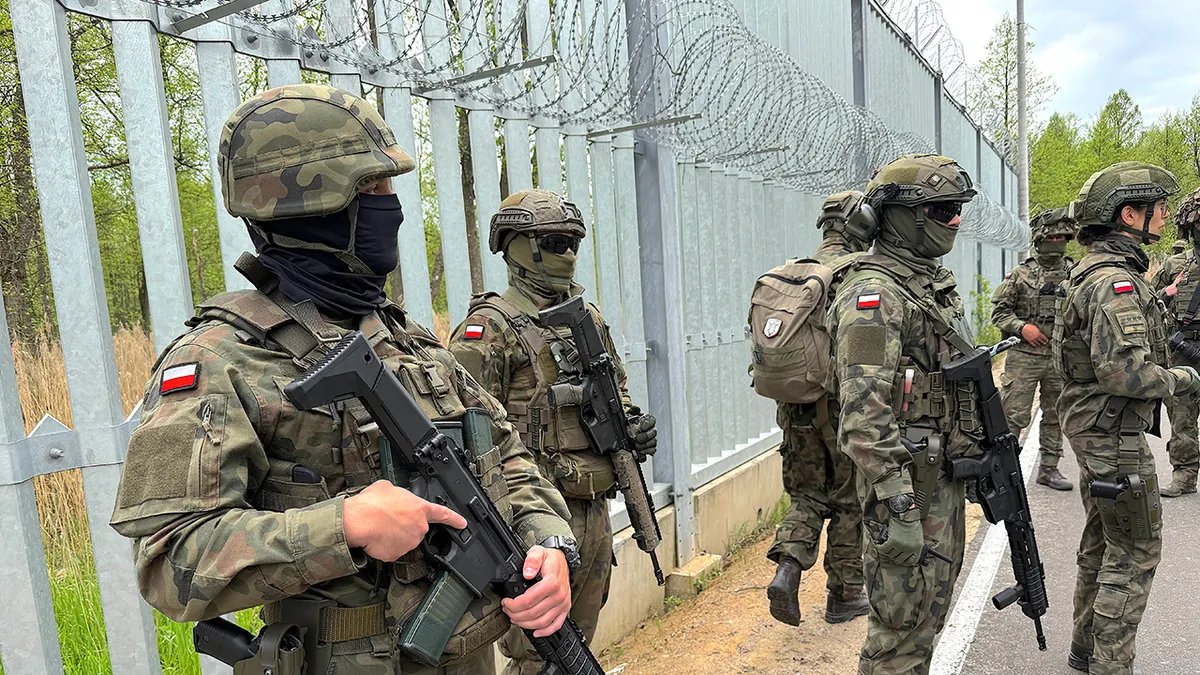
The Baltic security effort covers shipping lanes, undersea cables, pipelines, offshore wind installations and military sites. NATO launched Baltic Sentry in 2025 as an enhanced vigilance activity for critical undersea infrastructure.
After repeated disruptions involving Baltic undersea infrastructure, NATO established an Undersea Infrastructure Coordination Cell, also known as the Northwood critical-undersea-infrastructure desk, and deployed persistent sensor networks along sections of the Baltic seabed. The incidents examined by European authorities include damage involving the Balticconnector gas pipeline, the C-Lion1 telecommunications cable and Estlink power connections.
NATO’s Baltic Sentry activity includes naval patrols, maritime surveillance and coordination with national authorities responsible for cables, pipelines and other infrastructure.
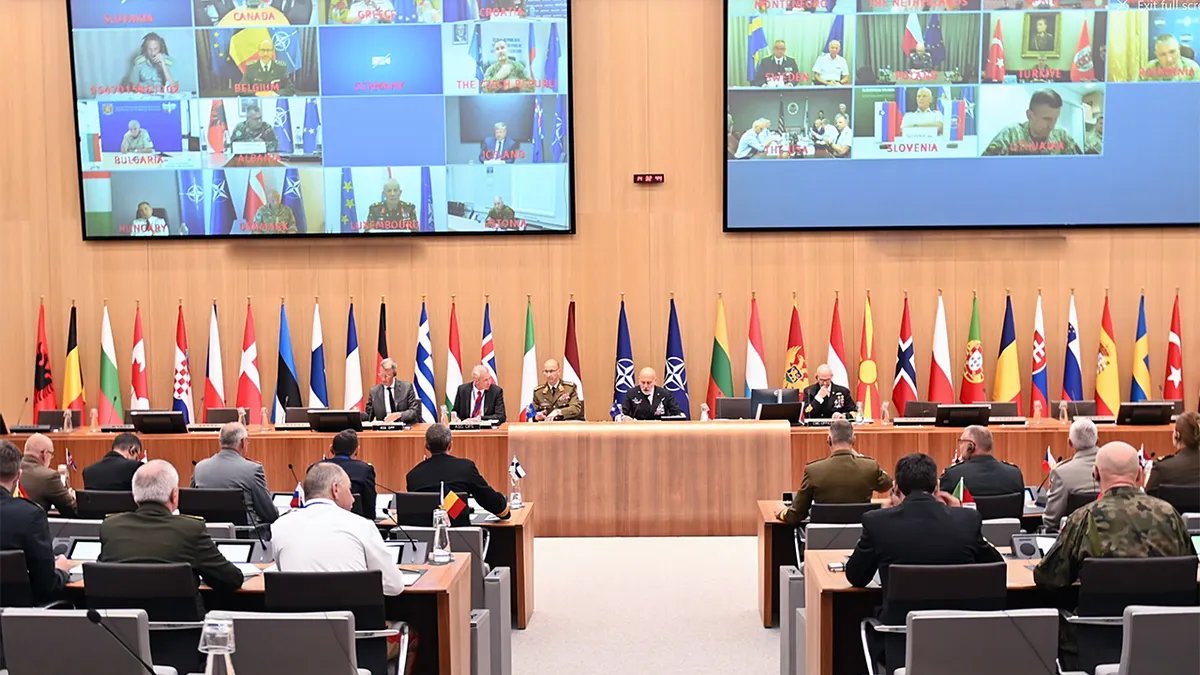
Breedlove said Germany’s proposed task force could connect intelligence services, police agencies and military commands across the region.
“Germany’s Baltic initiative makes sense,” Breedlove said. “The value is also for partner countries to share information faster, connect the intelligence, law-enforcement and military pieces, and make decisions before Russia can take advantage of confusion or delay.”
Newton said the task force could complement NATO’s military activity by improving the speed of intelligence sharing and security coordination.
European governments are continuing to examine how shadow-fleet ships move through narrow Baltic passages, how AIS signals are manipulated and whether commercial vessels have supported drone surveillance near military and civilian infrastructure.

The Blue Ridge-class command-and-control ship USS Mount Whitney participated in the Baltic Operations 2025 exercise, known as BALTOPS 25, with allied vessels in the Baltic Sea on June 5, 2025.
“Without question, the Russians will keep looking for places where they can create uncertainty and hesitation,” Breedlove said. “We need to get better at recognizing their actions with speed – and responding forcefully with the strength of our allies.”
Fox News Digital contacted the German Embassy in Washington and the Russian Embassy in Washington for comment and did not receive responses by publication time.