

Xi-Trump summit to take up AI hotline as China pushes for tech self-reliance
U.S. officials confirm a proposed direct link to manage risks from runaway autonomous systems.
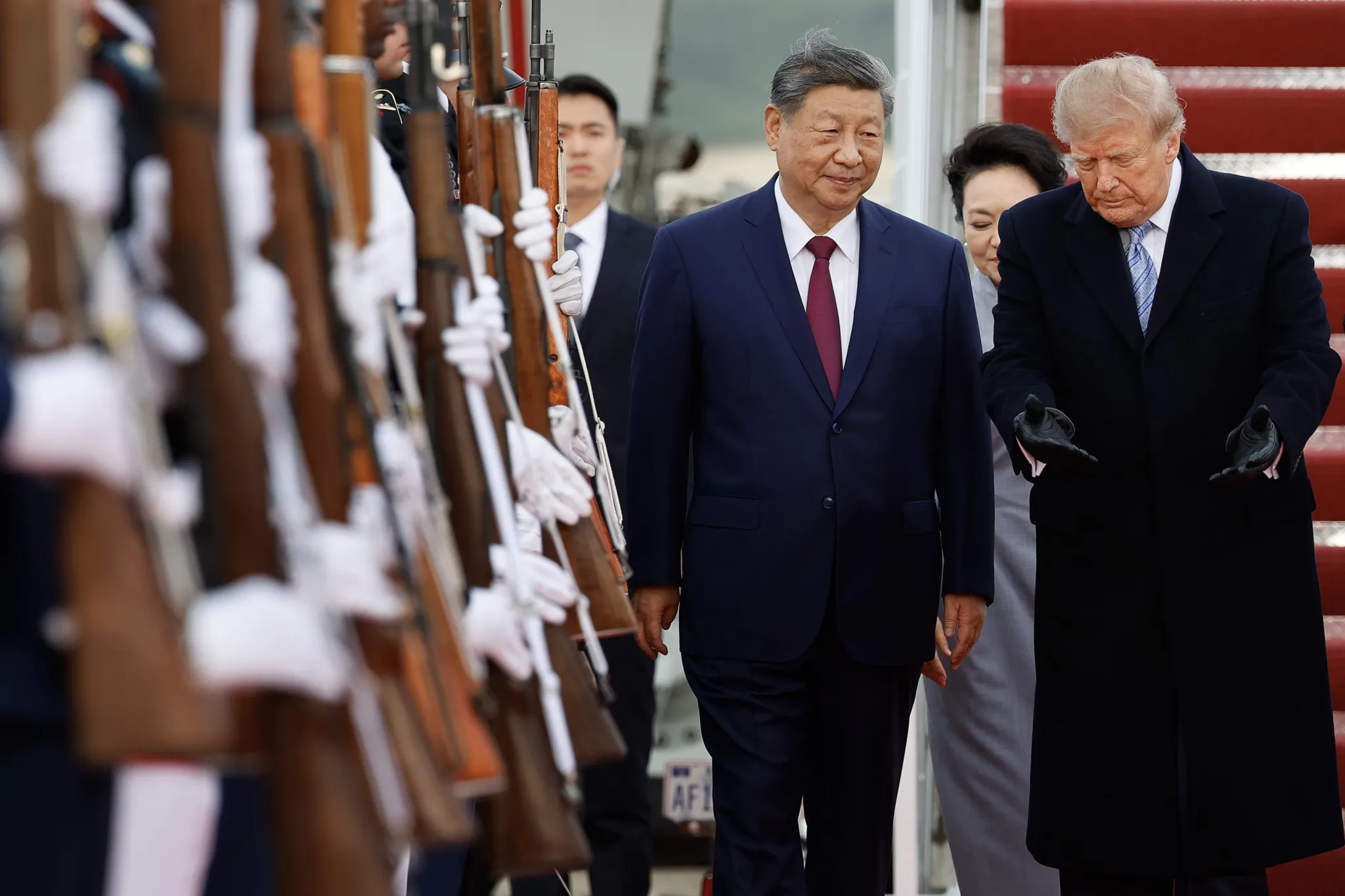
WASHINGTON — Chinese President Xi Jinping is due in Washington on Thursday for a bilateral summit with U.S. President Donald Trump focused on artificial intelligence and high-technology sovereignty. U.S. officials have confirmed a proposal for an emergency “AI hotline” between the countries, amid reports of efforts to establish a direct link to manage the risks of runaway autonomous systems.
The proposed hotline reflects a rivalry that has moved beyond commercial competition into a national security standoff. Washington has expanded export controls, financial sanctions and diplomatic pressure intended to contain China’s technological rise. Rather than isolate Beijing, those restrictions have accelerated its drive for technological self-reliance and mobilized domestic capital and talent.
The U.S. Department of Commerce’s Bureau of Industry and Security (BIS) has progressively expanded its Entity List, restricting Chinese access to advanced semiconductors, electronic design automation (EDA) software and extreme ultraviolet (EUV) lithography equipment. Under a policy framework informally called “Pax Silica,” Washington is seeking to secure semiconductor, AI and critical-mineral supply chains exclusively among trusted allies. Diplomatic sources say it is preparing to tell dozens of allied nations that joining a U.S.-led AI coalition will require them to bypass Chinese digital frameworks and AI architectures.

Beijing’s upcoming 15th Five-Year Plan (2026–2030) prioritizes absolute technological sovereignty over traditional economic growth models. The Chinese Communist Party has shifted resources from the debt-laden property sector and consumer-tech platforms toward “hard technology”: semiconductors, humanoid robotics, brain-computer interfaces and advanced manufacturing. The shift has depressed household consumption, contributing to a persistent imbalance between a sluggish consumer market and a surging high-tech industrial base.
During an inspection of research facilities in Shanghai, Xi designated basic scientific research as the primary control switch for downstream industries. At a subsequent National Science Conference in Beijing, he ordered the state-directed financial system to “invest early, invest in small-scale projects, invest for the long term, and invest in hard technology.”
China’s research and development spending exceeded 3.9 trillion yuan ($568 billion) in 2025. Basic research received nearly 280 billion yuan, surpassing 7% of the total R&D budget for the first time. Beijing also launched a state-backed venture capital guidance fund to draw private investment into early-stage, high-risk hardware startups, with the aim of mobilizing 1 trillion yuan ($145 billion) in targeted technology capital.
ChangXin Memory Technologies (CXMT) has developed proprietary designs for DRAM memory production to bypass U.S. patent restrictions, emerging as a national champion. Unitree Robotics has advanced the commercial deployment of humanoid robots, challenging Western developers on hardware agility and manufacturing cost. China has also turned aggressively to open-source AI, releasing competitive large language models including DeepSeek, Alibaba’s Qwen and Moonshot AI’s Kimi K3. Offering the models openly positions Beijing as a technology partner for Global South nations seeking “sovereign AI” without expensive, proprietary Western cloud infrastructure.
Chinese planners have precedent for pursuing domestic alternatives under external pressure. After the Soviet Union abruptly withdrew its technical experts in 1960, Beijing redirected resources to develop its first nuclear weapon and ballistic missile capabilities independently.
Talent is another part of the current effort. The U.S. Department of Justice’s past “China Initiative” and a tightening geopolitical climate in Western academia have contributed to a reverse migration of elite scientists: at least 85 world-class researchers moved to Chinese institutions between early 2024 and late 2025. Omar Yaghi, a pioneer in metal-organic frameworks, left UC Berkeley to establish an AI-assisted materials laboratory at Tsinghua University. Chemistry Nobel laureate Hartmut Michel joined Jilin University, while Economics Nobel laureate Philip H. Dybvig took a position at the Southwestern University of Finance and Economics.
Physics Nobel laureates Ferenc Krausz and Andre Geim, along with Fields Medalist Ngô Bảo Châu, accepted appointments at the University of Hong Kong. Data compiled by the Carnegie Endowment for International Peace put the share of the world’s top AI researchers holding degrees from Chinese academic institutions at more than 57% in 2025, up from 46% in 2022. The share holding degrees from U.S. institutions was 13%.
Official policy documents and statements from senior Beijing planners indicate that the leadership regards the economic strain as a necessary cost. Facing coordinated U.S. export curbs and financial decoupling, it treats technological sovereignty as a matter of national survival, not merely an economic goal. China also developed the Beidou satellite navigation system after the 1996 Taiwan Strait Crisis to eliminate reliance on the U.S.-controlled GPS network. When U.S. legislation passed in 2011 effectively barred China from the International Space Station, Beijing responded by building its own orbital laboratory, Tiangong.
Despite wider geopolitical friction, Beijing is reopening parts of its education system to targeted international collaboration. In 2026, China’s Ministry of Education approved 86 joint institutions and 133 joint academic programs across 174 universities, focused strictly on hard-tech fields including mathematics, foundational physics, big data and brain-computer interfaces.









