

The $14 Billion Cable Designed to Bypass the South China Sea
Thailand’s proposed trans-Pacific cable would avoid contested waters as Washington and Beijing compete over digital infrastructure
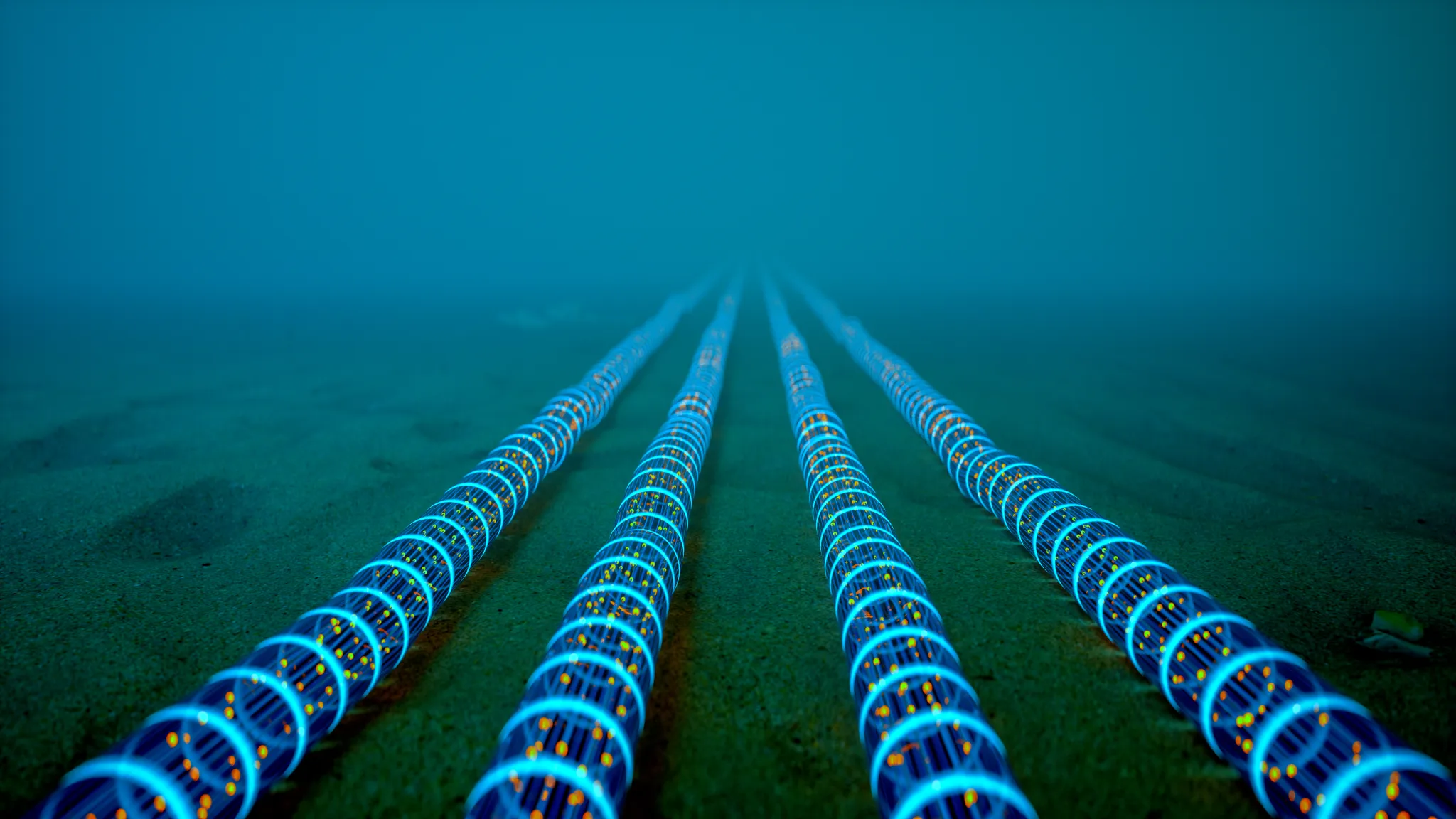
WASHINGTON — The U.S. Trade and Development Agency (USTDA) will fund a feasibility study for a new subsea cable project led by Thailand’s state-owned telecommunications firm, National Telecom. The proposed system would connect Thailand directly to the United States, with potential branches to Singapore, Malaysia, Indonesia, Vietnam, and the Philippines.
National Telecom plans to organize an international consortium of regional co-investors to finance construction. Industry estimates put the cost of the trans-Pacific cable system at more than $14 billion, and Washington is backing the infrastructure shift as Southeast Asia’s aging, outage-prone undersea links face mounting pressure.
The proposed network is intended to succeed the Asia-America Gateway (AAG), a 20,000-kilometer (12,000-mile) subsea system commissioned in 2009 at an initial cost of approximately $560 million. For over a decade, the AAG has provided the primary direct digital connection between the U.S. and Thailand.


The AAG is especially vulnerable along intra-Asia segments between Singapore, Vietnam, and Hong Kong. Shallow waters, heavy commercial shipping, and intense fishing activity leave the cable exposed to ship anchors and commercial trawling nets. When outages occur, particularly on the segment near Vietnam, Cambodia and Malaysia face severe bottlenecks because they lack redundant trans-Pacific routing options.
Subsea cables carry more than 99 percent of global internet traffic, making repair access a central concern for operators. Foreign repair vessels working in waters claimed by China must obtain prior approval and submit detailed notifications to Chinese authorities under Beijing’s laws governing its claimed continental shelf and territorial waters, including the revised Maritime Traffic Safety Law.
The South China Sea is also marked by overlapping territorial claims involving China, Vietnam, the Philippines, Malaysia, Brunei, and Indonesia. The administrative requirements imposed by Beijing can delay time-sensitive maintenance and surveying work, while cable developers, operators, and maritime insurers are seeking routes that avoid the region’s geopolitical and logistical bottlenecks.
The USTDA-backed initiative comes as Washington works to protect critical digital infrastructure from potential disruption during international crises. “The military conflicts in the Middle East and Europe show that geopolitical crises can trigger cyber or physical disruptions to subsea cables,” said Muhammad Faizal Bin Abdul Rahman, a research fellow at Singapore’s Nanyang Technological University (NTU). Rahman said policymakers in Washington and allied capital cities are increasingly concerned that similar tactics could be deployed in the Asia-Pacific region during a conflict.
Washington has previously intervened in trans-Pacific cable routing. In 2020, the U.S. government blocked the final activation of the Hong Kong landing station for the Pacific Light Cable Network (PLCN), a project launched in 2015 with backing from U.S. technology companies Meta Platforms and Alphabet’s Google.
The federal interagency committee known as Team Telecom recommended blocking the activation because of national security concerns over the cable’s connection to Dr. Peng Telecom & Media Group, a China-based telecommunications provider. PLCN was later rerouted to land in Taiwan and the Philippines.
Other technology-backed systems have taken southern maritime routes. Echo, backed by Google, and Bifrost, backed by Meta and Singapore’s Keppel Midgard Holdings, travel through the Celebes and Java seas, linking the U.S. West Coast directly with Singapore and Indonesia while avoiding the contested northern waters.
Cable landing stations connect maritime lines to domestic land-based networks and have become critical control points. Alex Capri, a senior lecturer at the National University of Singapore, said Washington is likely to intensify its focus on those terminal facilities.
“Washington will double down on extending its influence and control over the full subsea and land-based infrastructure ecosystem,” Capri said, adding that the proliferation of competing U.S. and Chinese networks will force countries in the region to navigate parallel, incompatible technological frameworks.
That competition is also dividing Southeast Asia across technology standards and infrastructure ownership. In December 2023, Singapore joined the U.S.-led “Pax Silica” alliance, which focuses on securing clean and secure telecommunications networks, and the Philippines also aligned with the framework.
Singapore is reportedly weighing an invitation to participate in the China-backed World Artificial Intelligence Cooperation Organization (WAICO), established to promote Chinese standards in artificial intelligence and digital development. Cambodia, Indonesia, Laos, Malaysia, and Myanmar have already aligned with the China-led WAICO.
China is funding a competing digital infrastructure network of its own. Reports in 2023 said the state-owned telecom giants China Telecom, China Mobile, and China Unicom were developing EMA, a $500 million undersea cable network whose name refers to Europe-Middle East-Asia. The network is intended to connect Asia with Europe and the Middle East, directly competing with U.S.-backed subsea routes.









