

Why AI Labs Are Hiring Philosophers as Coding Becomes Automated
As AI takes over routine coding, technology employers are placing greater value on critical reasoning and cross-disciplinary thinking
SAN FRANCISCO — The labor market for recent college graduates is tightening even as artificial intelligence reshapes technology work. The Federal Reserve Bank of New York reported that unemployment among recent college graduates reached 5.7% in June, up from 3.6% for the same group before the COVID-19 pandemic in 2019 and above the overall U.S. unemployment rate of 4.1% for June.
At Anthropic, a public benefit corporation founded in 2021 by former OpenAI executives, philosophers are being recruited alongside computer scientists and research engineers. The San Francisco-based company uses them to examine complex conceptual, policy, and ethical frameworks. Alphabet Inc.’s Google DeepMind has also added philosophers to its research staff to address ethical and governance questions involving automated decision-making systems.
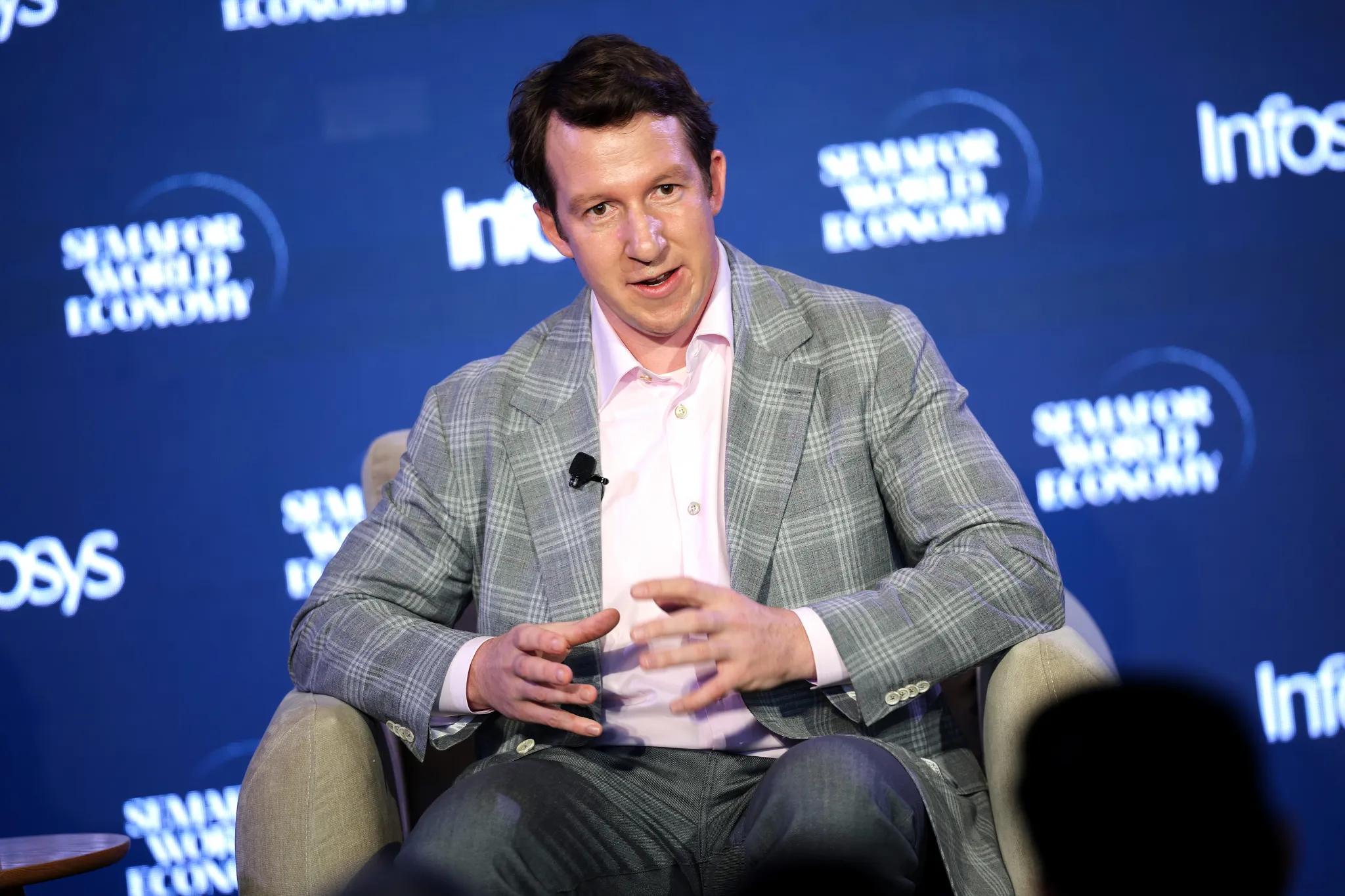
Jack Clark, Anthropic’s co-founder, previously worked as a technology journalist for Bloomberg News and is co-chair of Stanford University’s AI Index steering committee. He attributes part of his ability to help build a frontier AI company to an undergraduate degree in English literature and creative writing.

The education system that produced today’s technology workforce expanded heavily around technical credentials. According to the National Center for Science and Engineering Statistics (NCSES), a division of the National Science Foundation, graduate enrollment in science and engineering programs increased by more than one-third between 2000 and 2015, driven largely by demand for computer science credentials.
Clark said at an industry conference earlier this year that his humanities education gave him grounding in historical patterns and the structure of human narratives. “I’m a literature graduate, and I don’t think you’d put that as a cofounder of a frontier AI company, but what turned out to be useful is that I got to learn a lot about history and a lot about the kind of stories that we tell ourselves about the future,” Clark said. “That’s turned out to be, like, extremely relevant for AI in a way that I think people wouldn’t have predicted.”
The demand for technical workers nevertheless remained strong through much of the past decade. NCSES tracking shows that STEM job creation grew 26% between 2013 and 2023, compared with a 9% increase in non-STEM employment.
Jaime Teevan, chief scientist at Microsoft Corp., said software tools would make metacognitive abilities more important for workers. “Metacognitive skills will be very important—flexibility, adaptability, experimentation, thinking critically, being able to challenge things,” Teevan told The Wall Street Journal. “Developing critical-thinking skills requires friction, doing things that are hard, doing deep thinking.”
Anthropic researchers Maxim Massenkoff and Peter McCrory found in an empirical report that current AI capabilities can theoretically perform up to 94% of subtasks in standard computer and mathematical occupations. Routine software engineering was among the work activities most exposed to technological displacement.
Boris Cherny, the lead developer behind Anthropic’s Claude Code tool, said earlier this year that “coding is practically solved.” He predicted that “we’re going to start to see the title ‘software engineer’ go away.”
Clark cautioned students against basic or “rote programming” and said disciplines focused on “synthesis across a whole variety of subjects and analytical thinking about that” were likely to gain long-term value. He described the ability to formulate complex questions and connect insights from separate fields as more important than carrying out repetitive coding tasks.
“The really important thing is knowing the right questions to ask and having intuitions about what would be interesting if you collided different insights from many different disciplines,” Clark said.
Michael Oakes, executive vice president for research and economic development at Case Western Reserve University, said classical liberal arts disciplines help students navigate cultural nuances and contextual ambiguities that large language models cannot replicate. “As AI lowers the barrier to technical execution, the labor market premium is shifting toward a human layer of rigorous critical reasoning,” Oakes said.
Clark also addressed the changing prospects associated with humanities degrees. “When was the last time you heard that a philosophy degree was like a great job prospect? But it turns out that now it is.”
Anthropic Chief Executive Officer Dario Amodei has warned of wider labor market disruption. He previously said AI automation could eliminate up to half of all entry-level white-collar jobs, though he later qualified his projections about the precise timeline and rate of displacement.
During his conference remarks, Clark said he saw “potential weakness in early graduate employment in some industries.” He also said AI adoption would fundamentally restructure business models and workplace workflows. “I haven’t seen anything beyond that,” Clark said regarding broader AI-driven workforce reductions to date.
Young adults are responding to the altered employment environment through several routes. The National Student Clearinghouse Research Center reported a 16% increase over the past year in enrollment at trade-focused community colleges. Other job seekers are pursuing independent entrepreneurship or combining multiple part-time positions.









One Comment