U.S. Visa Denial for Sudan’s Burhan Backfires as Red Sea Proxy War Defies Ceasefire Push
Competing Middle Eastern powers and unresolved territorial disputes undermine Washington's 90-day truce proposal as displacement tops 12 million.
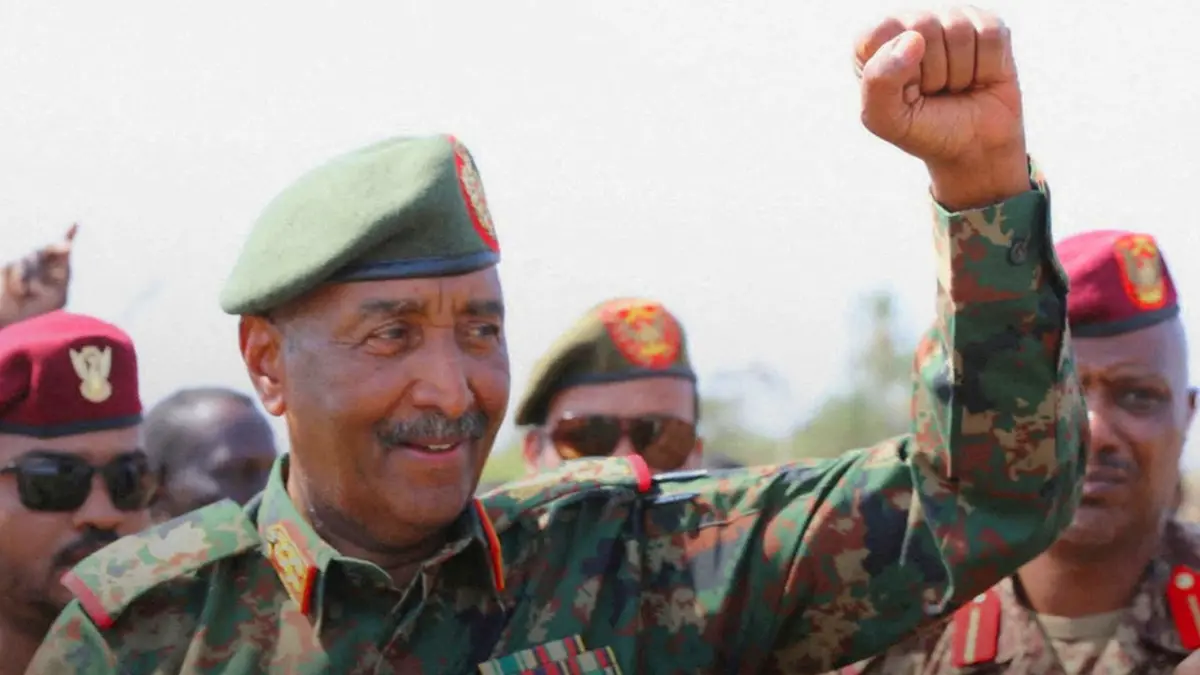
A last-minute U.S. decision to block Sudanese military leader Gen. Abdel Fattah al-Burhan from attending the United Nations General Assembly has derailed a fragile ceasefire framework, emboldened Khartoum’s defiance and exposed deep fractures in Washington’s strategy to end a civil war now fueled by competing Middle Eastern and African powers.
Rather than forcing compliance with a proposed 90-day humanitarian truce, the visa revocation prompted Burhan to publicly reject American leverage from Khartoum, declaring his forces would not “bow to anyone” or require foreign permission to govern. The confrontation threatens to collapse the Quad diplomatic mechanism — a coordination effort between the United States, Egypt, Saudi Arabia and the United Arab Emirates — that Washington had positioned as the primary vehicle for ending the conflict.
The breakdown in New York highlights a broader failure to manage the external actors sustaining the war. Sudan’s 500-mile Red Sea coastline has transformed an internal power struggle into a strategic battleground. Control over ports like Port Sudan offers naval access, commercial shipping routes and proximity to the Bab el-Mandeb strait, one of the world’s most critical maritime chokepoints. A July 2026 UK government assessment confirmed that the Rapid Support Forces (RSF) paramilitary group benefits from support networks linked to the UAE and neighboring states, while Burhan’s Sudanese Armed Forces (SAF) receive backing from Egypt, Iran, Pakistan and Turkey. The UAE has consistently denied arming the RSF.

Secretary of State Marco Rubio acknowledged during UNGA week that the war would not persist without this external participation, stating that progress is impossible until regional powers pressure their respective proxies. Yet former National Security Council director for African affairs Cameron Hudson noted that Washington lacks the willingness to expend limited political capital with allies such as Saudi Arabia, Egypt or the UAE to force a withdrawal of support. Hudson also pointed out that Massad Boulos, President Donald Trump’s senior advisor for Arab and African affairs tasked with mediating the crisis, has never traveled to Sudan.
The technical dispute stalling the ceasefire extends far beyond diplomatic posturing. Amjad Farid Al-Tayyib, foreign affairs advisor to Sudan’s Transitional Sovereignty Council, stated that Khartoum did not reject the American proposal but submitted technical objections centered on territorial control. SAF leadership fears that freezing current front lines would leave the RSF entrenched in civilian areas it has captured, effectively partitioning the country and legitimizing territorial gains achieved through ethnic cleansing campaigns in Darfur.
That fear is rooted in documented atrocities. While the State Department declared both factions ineligible to govern due to intensified combat operations and drone strikes killing civilians, international investigators have drawn sharp distinctions between the two forces. A September 2025 U.N. fact-finding mission concluded that the RSF committed crimes against humanity during its siege of El Fasher, including mass murder, sexual enslavement and persecution on ethnic grounds. A separate February report by the U.N. Human Rights Office documented more than 6,000 killings during the first three days of the RSF’s final offensive on the city. Hudson argued that Western framing of equivalent culpability obscures the scale and intentionality of RSF violations compared to SAF abuses, which include arbitrary detention and indiscriminate strikes.
The State Department declined to discuss Burhan’s specific visa case, citing standard privacy policies regarding individual immigration decisions. However, the U.N. formally challenged the move. Secretary-General spokesman Stéphane Dujarric confirmed that U.N. authorities immediately raised the denial with Washington, noting that Burhan was scheduled to address the General Assembly. Under the 1947 U.N. Headquarters Agreement, the United States is generally obligated to grant entry to representatives of member states traveling to U.N. business, though Washington has historically invoked national security exceptions to deny visas to adversarial leaders.
The economic dimensions of the conflict remain largely unaddressed by current ceasefire proposals. Beyond its geopolitical position, Sudan controls the pipeline infrastructure required to transport South Sudanese crude oil to global markets via the Red Sea. Disruptions to this route threaten the economic survival of landlocked South Sudan, adding another layer of regional instability. The World Bank has previously assessed Sudan’s vast agricultural and gold reserves as critical untapped resources, now entirely subordinated to the war economy.
More than 12 million people have been forcibly displaced since fighting erupted in April 2023 between Burhan and his former deputy, RSF commander Mohamed Hamdan Dagalo, widely known as Hemedti. Over 3.5 million have fled across Sudan’s borders into Chad, Egypt and South Sudan, overwhelming refugee infrastructure. The U.S. and African Union co-chaired a Sept. 23 meeting attempting to align the Quad and Quintet diplomatic groupings around a unified cessation of hostilities. As of late September 2026, U.N. officials confirm no reduction in violence has materialized following those talks.