Gaza births outpace deaths in 2025, complicating genocide claims
New health statistics reveal 50,227 live births against 24,650 total deaths, while a UN commissioner admits casualty statuses were never independently verified.

Gaza’s population expanded in 2025 as live births significantly outpaced total mortality, according to newly released Palestinian health data that challenges the demographic assumptions underpinning international accusations of genocide against Israel.
The Palestinian Ministry of Health recorded 50,227 live births and 24,650 total deaths across the territory this year. Of those fatalities, 17,286 — roughly 70% — were attributed directly to combat operations. The remaining deaths resulted from non-violent causes, marking the first time the ministry has published comprehensive non-conflict mortality figures since 2022, before Hamas launched its Oct. 7, 2023, attacks on southern Israel.
Under the 1948 United Nations Genocide Convention, establishing genocide requires proving a specific intent to destroy a national, ethnic, racial, or religious group in whole or in part. Legal scholars and demographers generally evaluate such claims by examining whether a targeted population is experiencing catastrophic decline or conditions calculated to bring about its physical destruction. A territory where births exceed total deaths by more than two-to-one presents a statistical environment fundamentally at odds with conventional models of population destruction.

“The argument that we would need to make to say that there was negative population growth in 2025 would be to more than double the number of both violent and non-violent deaths,” said Gabriel Epstein, senior policy associate at the Israel Policy Forum. Epstein noted that while precise net growth rates are difficult to calculate without accounting for wartime emigration, the raw data demonstrates a population capable of sustaining itself.
The demographic findings also undermine the evidentiary basis for the Integrated Food Security Phase Classification’s declaration that famine had reached parts of Gaza during the summer of 2025. Famine classifications rely heavily on projected mortality spikes driven by malnutrition and starvation. Andrew Fox, a senior associate fellow at the Henry Jackson Society, argued that a growing population indicates sufficient caloric intake to sustain life, contradicting the threshold required for an IPC famine designation. The IPC did not respond to questions regarding how the new mortality data affects its prior assessment.
Beyond demographics, the evidentiary foundation of institutional genocide allegations faced separate scrutiny this month. Chris Sidoti, a commissioner on the UN Independent International Commission of Inquiry on the Occupied Palestinian Territory, acknowledged that the panel never independently verified the civilian status of casualties it cited in its September 2025 report accusing Israel of genocide.
That report relied partly on external media accounts claiming 83% of those killed were civilians. When pressed on whether the commission determined the status of the remaining dead, Sidoti stated investigators lacked the information. “We literally do not know, nor does anybody else know, including the IDF, how many militants were there,” he said.

The UN inquiry was previously chaired by South African jurist Navanethem Pillay, who was awarded the Nobel Peace Prize last week. Israel’s government condemned the commission’s September report as a “political blood libel,” particularly rejecting its assertions regarding the deliberate targeting of children.
The gender breakdown within the new Palestinian health data offers further insight into the mechanics of the casualty count. Males accounted for 18,085 deaths, or 73.4% of the total, compared to 6,565 female deaths. The ministry attributed this disparity to the direct targeting of working-age men during military operations, framing the ratio as evidence of deliberate demographic selection.
Military analysts point to a different structural reality. Gaza possesses one of the most heavily mobilized male populations in modern conflict zones. Hamas and allied factions, including Palestinian Islamic Jihad, draw almost exclusively from young men. The Israel Defense Forces maintains that its targeting protocols focus strictly on individuals involved in hostilities or affiliated with armed groups, regardless of age or gender.
“The fact that more military-age men are disproportionately among those eliminated is consistent with the fact that terrorist organizations are predominantly composed of men in this age group,” an IDF spokesperson said, adding that targets are selected based on military nature and involvement in armed organizations under international law directives.
Epstein echoed this assessment, noting that the overrepresentation of military-aged men in death tolls reflects the composition of militant rosters rather than a broader Israeli policy aimed at males as a demographic category.
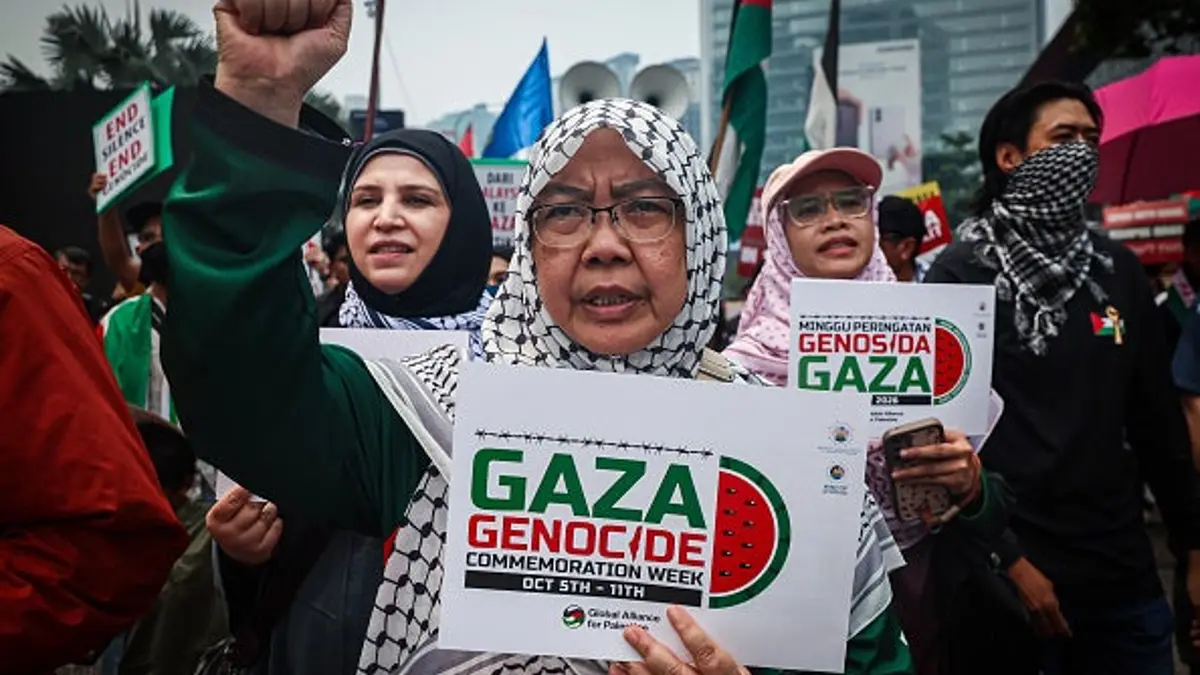
Throughout the war, outside organizations frequently used estimated ratios of non-violent deaths drawn from other global conflicts to argue that Gaza’s actual death toll was vastly higher than reported, potentially reaching into the hundreds of thousands. Those extrapolations fueled legal complaints at the International Court of Justice and protests worldwide. The inclusion of verified non-violent mortality data in the 2025 report effectively eliminates the statistical gap required to support theories of a massive hidden death toll driven by starvation or disease.
Critics of the international campaigns against Israel argue the unverified allegations have generated severe real-world consequences, driving a documented surge in global antisemitism. Protests featuring coordinated messaging, including downloadable graphics labeling the conflict a genocide, continue internationally.
Elliot Malin, president of the Stratos Council, said the combination of population growth and the absence of mass non-violent mortality makes inferring genocidal intent mathematically untenable. “We’re not seeing a population under threat. We are seeing that it is actually able to sustain itself,” Malin said.
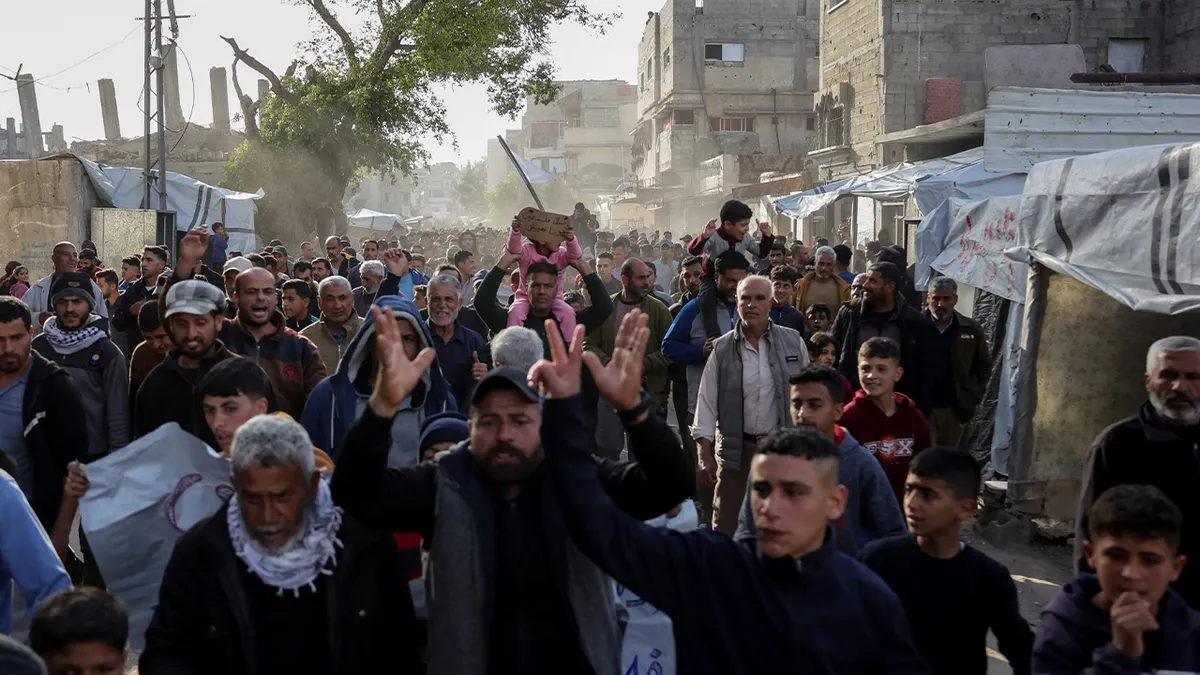
While the Palestinian Ministry of Health faced widespread criticism early in the conflict for allegedly inflating civilian casualty figures — particularly among women and children — independent analysts suggest the latest comprehensive release indicates an attempt at more accurate accounting. The ministry did not respond to requests for comment regarding the new data.
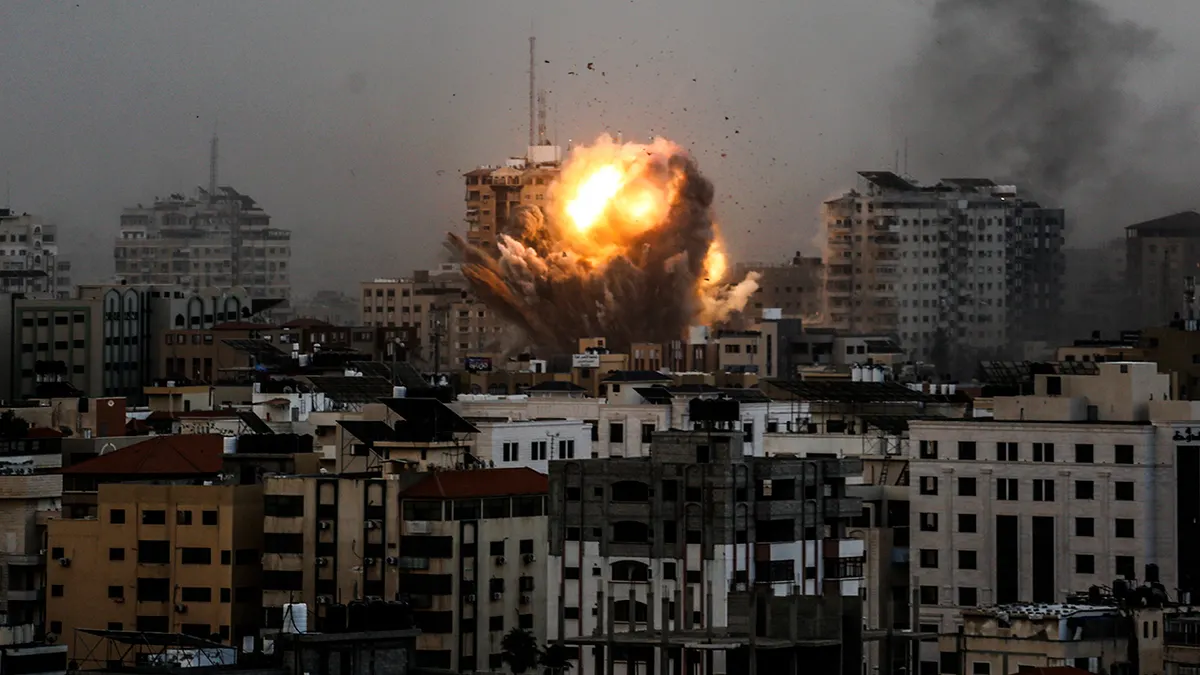
Separately, the IDF recently addressed allegations concerning casualties among media workers operating in the territory, stating that investigations identified 170 journalists who were simultaneously members of terror organizations, including Hamas.