

U.S. housing crisis fuels record socialist support among young voters
With 8 million renters priced out of homeownership since 2021, Jeff Bezos points to Austin's zoning overhaul as the blueprint to defeat rising socialist sentiment.
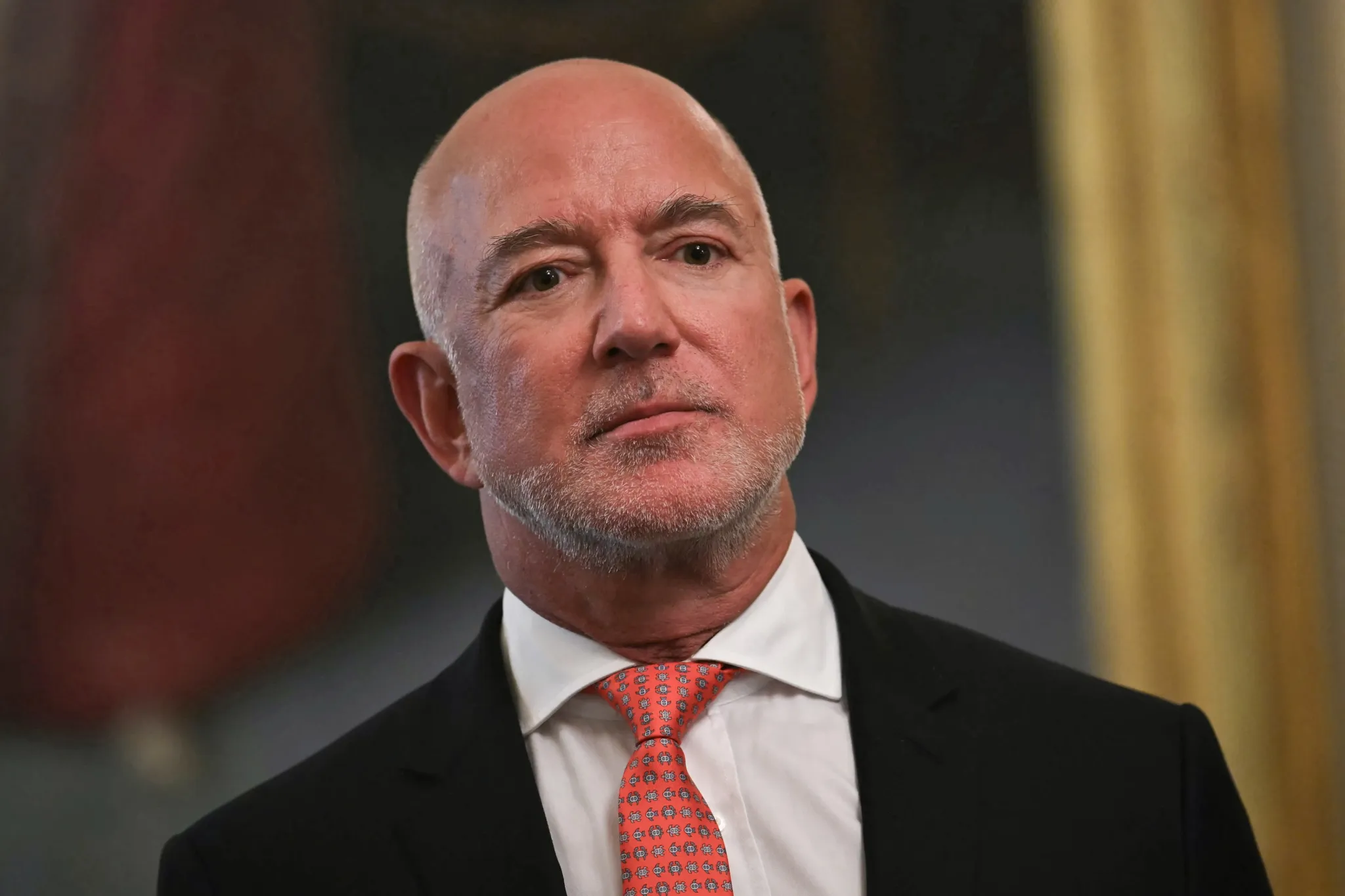
A record 57% of Americans between 18 and 34 now view socialism favorably, a demographic shift driven less by ideological conversion than by the mathematical impossibility of buying a first home. The affordability collapse has created a political opening that Amazon founder Jeff Bezos argues is being exploited through misdiagnosis rather than solved through construction.
Bezos told Fox News anchor Bret Baier on Wednesday that politicians blaming corporate landlords for high rents are ignoring basic supply-and-demand mechanics. His critique targets federal and local programs that subsidize buyer demand while simultaneously restricting new development through zoning codes, parking mandates, and lengthy permitting timelines. He pointed to Austin, Texas, as evidence that deregulation can reverse price trajectories faster than rent controls or tax interventions.
The scale of the exclusion from homeownership explains why younger voters are abandoning traditional capitalist allegiances. A household needed $120,800 in annual income at the end of 2025 to afford payments on a median-priced U.S. home, according to Harvard University’s Joint Center for Housing Studies. Five years earlier, that threshold sat at $68,700. Roughly 8 million renter households who earned enough to buy a median home in 2021 lost that purchasing power by 2024. First-time buyers accounted for just 21% of all home purchases in the National Association of Realtors’ latest annual survey, the lowest share ever recorded.


Gallup polling released in September shows capitalism still holds a national advantage, with 55% of all adults viewing it positively compared to 43% for socialism — the highest favorable rating for socialism since Gallup began tracking the metric in 2010. But the generational inversion is stark. Among adults 55 and older, 65% prefer capitalism while only 34% view socialism favorably. In a separate Gallup survey, 26% of respondents specifically cited stronger safety nets and affordable essentials like housing, healthcare, and education as socialism’s primary appeal.
Vice President JD Vance acknowledged the political danger of this economic reality in July, warning that an entire generation locked out of property ownership could fundamentally alter the American electorate’s relationship with free markets.
Austin provides the most visible test case for Bezos’ supply-side argument. Between 2015 and 2024, the city added 120,000 housing units after systematically dismantling restrictive zoning rules. In 2023, officials eliminated minimum parking requirements citywide, removing a hidden cost that developers routinely pass to tenants. Voters also approved $250 million in affordable housing bonds in 2018 and another $350 million in 2022. Median monthly rent subsequently dropped from $1,546 in December 2021 to $1,296 in January 2026, according to the Pew Charitable Trusts. The broader Austin metro area saw its median home listing price fall 9.8% year over year to $446,450 in September, per Realtor.com data.
Yet isolating Austin’s success as purely a victory for deregulation ignores broader market forces. Nationally, median listing prices fell 1.4% year over year in September, marking the 11th consecutive month of annual declines. Approximately 26% of active listings in the Austin metro featured price cuts, mirroring a nationwide trend where sellers are conceding ground due to elevated mortgage rates holding near 6.5% and persistent inventory accumulation.
The structural changes in Austin also carry limitations that undercut a simple pro-market narrative. Despite the construction boom, Pew researchers noted that affordability gaps actually widened for lower-income residents attempting to purchase homes, as new apartment inventory primarily served higher-earning renters. With multifamily completions now slowing across the Sun Belt following a peak in development starts, analysts warn that Austin’s rental relief may prove temporary unless single-family zoning reforms accelerate.
Bezos extended his economic framework beyond real estate during the same interview, predicting artificial intelligence could enable a three-day workweek. He has previously argued that raising taxes on billionaires would fail to address systemic affordability issues, maintaining that capital allocation toward production, rather than redistribution, remains the only viable mechanism for lowering consumer costs.









