TV Makers Face Open-Source Revolt Over Ad Revenue
Open-source projects using AI agents to strip tracking software threaten the ad-subsidized hardware model
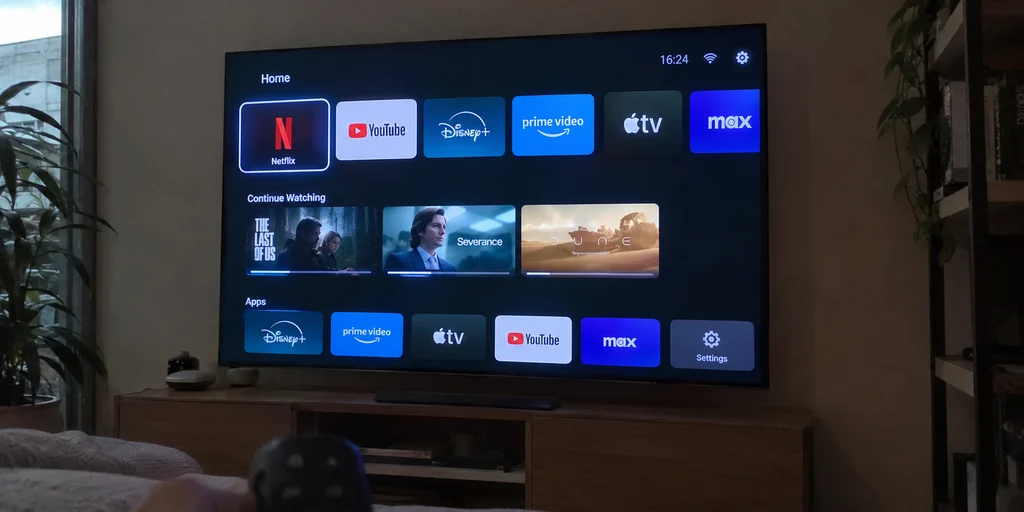
Television manufacturers built a lucrative business model on the assumption that buyers would never touch the software running their living room screens. That assumption collapsed over a single weekend.
An open-source toolkit called cleanyourtv, created by developer Gathin T., now lists tested configurations for 107 TV models across 37 brands, according to the project’s GitHub repository. The tool uses Android Debug Bridge (ADB), a standard maintenance protocol, to disable advertising and telemetry packages rather than delete them. As of Tuesday, the repository had collected 10,700 stars and been forked 1,200 times, with 85 open pull requests from volunteers submitting proposed changes.
The immediate trigger was a Xiaomi set owned by Gathin’s parents. He fed the model number into Claude Code, Anthropic’s programming agent, which located the television on his home Wi-Fi network, disabled 25 Xiaomi software packages, and generated a replacement home screen interface. On his donation page, Gathin wrote that a few thousand people replicated the process on their own televisions within two days.


This is not a niche hobbyist experiment. It strikes directly at the financial architecture of the modern television industry. Hardware margins on flat-panel displays have compressed for years, pushing manufacturers toward recurring software revenue. Sets equipped with Automatic Content Recognition (ACR) fingerprint whatever appears on screen—including cable broadcasts, gaming consoles, and external HDMI inputs—and transmit that data back to the manufacturer for targeted advertising sales.
The profitability of this surveillance infrastructure is documented in corporate filings. When Walmart acquired Vizio for approximately $2.3 billion in 2024, executives specifically cited the television maker’s ad business as a primary asset. That same data-harvesting model previously cost Vizio a $2.2 million settlement in 2017 over charges it collected viewing information from 11 million televisions without consent.
Texas regulators moved against the broader industry in December 2025, filing lawsuits against Sony, Samsung, LG, Hisense, and TCL. The state alleged these manufacturers’ ACR systems can capture a screenshot of a user’s display every 500 milliseconds.
Developers are now automating the opt-out process using artificial intelligence. The method relies on ADB, accessible by tapping a television’s “Build” number seven times in the settings menu to unlock developer mode. Once connected, AI agents map installed applications and flag those serving ads or running background telemetry.
Other users have pushed past simple debloating. Mihir Gupta replaced a 192 MB stock launcher with a custom 83 MB version. Ansub Khan reported free memory on his parents’ older Android TV increased by roughly 90%. Ryan Doyle configured his set to display live Stripe payment notifications. Rod Pers swapped advertisements for a real-time 3D rendering of his apartment, including functioning lights and a ceiling fan.
A separate project, dumbtv, targets Amazon Fire TV hardware. It disables approximately 65 packages, including ACR software, and installs a 41 KB launcher stripped of internet permissions entirely.
The revolt has hard technical boundaries. Cleanyourtv fully supports Android TV and Google TV sets manufactured by Sony, TCL, Hisense, Philips, and Xiaomi. Samsung’s Tizen and LG’s webOS operate on different architectures, limiting automated cleanup. LG users have managed partial debloating, a significant development given security researchers previously demonstrated the company’s ability to pinpoint user locations and collect voice data even when televisions appeared powered off. Fire TV only permits the disabling phase of the process.
Executing these modifications carries risk. One user reported bricking their television entirely, while another got stuck midway through a Fire TV configuration. The cleanyourtv documentation warns that network ADB operates unencrypted; on certain firmware versions, any device sharing the same Wi-Fi network can seize control of the television. Users are instructed to disable debugging immediately upon completion.
AI agents introduce separate vulnerabilities. Microsoft disclosed earlier this year that hidden instructions could manipulate Claude Code into exposing credentials, a flaw Anthropic patched in May. The term “vibe coding,” describing the practice of directing AI to write and execute code via plain language prompts, was coined by OpenAI co-founder Andrej Karpathy in 2025.