Why Formula 1 Chose a $9,950 Camera Maker Over Big Tech
Liberty Media expands F1's off-track revenue model with a $9,950 carbon fiber camera aimed at wealthy collectors.
Formula 1 is hunting for revenue beyond the racetrack. The motorsport’s first global licensing deal with Leica Camera AG, announced Tuesday, signals a broader push by the racing series to monetize its engineering reputation through high-margin consumer goods rather than relying solely on broadcast rights and ticket sales.
The partnership covers the entire sport instead of a single team. It includes gallery exhibitions in Los Angeles, events at this weekend’s United States Grand Prix in Austin, and the release of a special-edition camera priced at $9,950. For Liberty Media, the American conglomerate that acquired Formula 1 in 2017 for roughly $8 billion, such agreements represent a calculated effort to extract more value from the brand’s association with precision manufacturing.
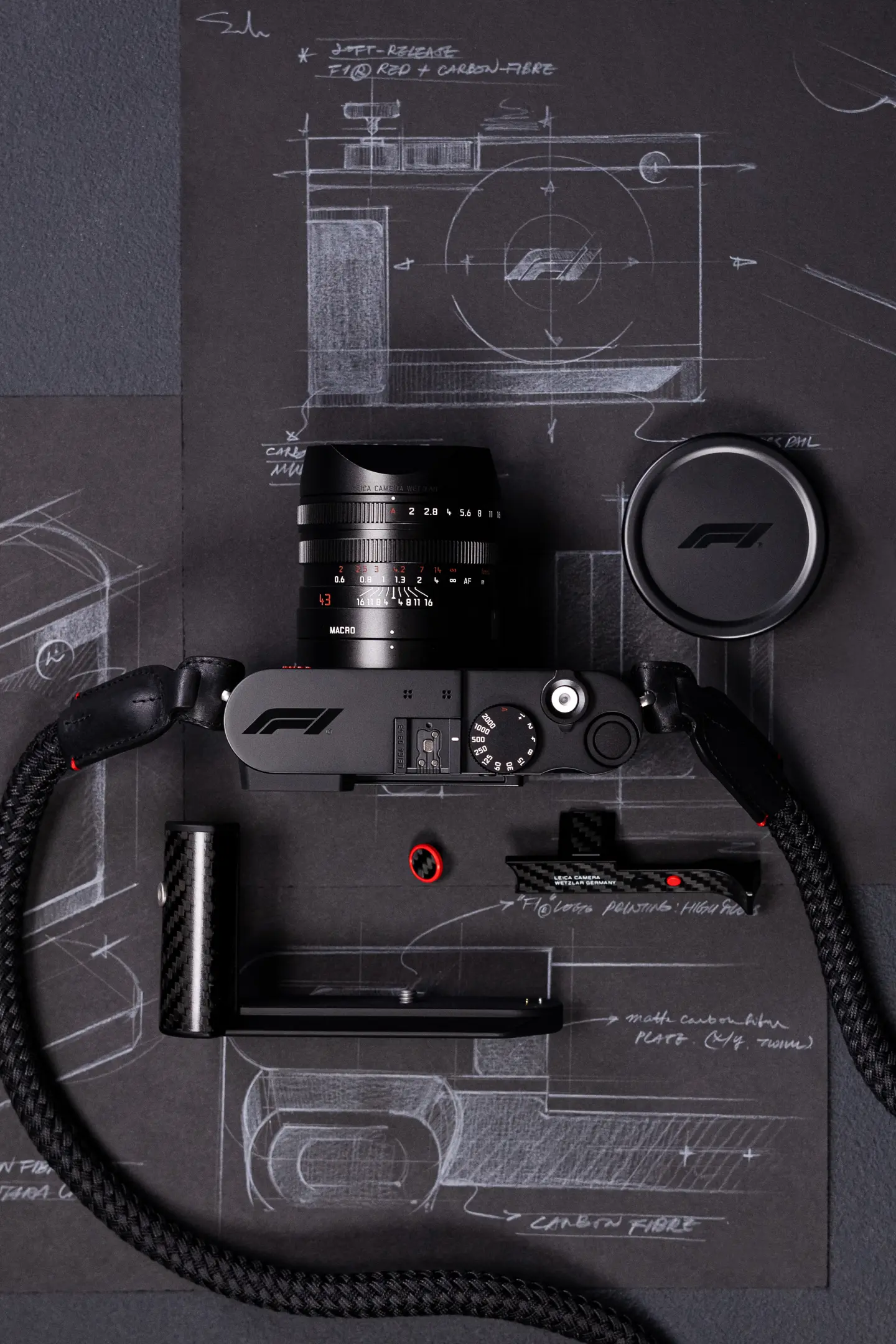
Leica Q3 43 Formula 1 Edition



The product anchoring the deal, the Leica Q3 43 Formula 1 Edition, introduces carbon fiber to the German manufacturer’s lineup for the first time. The material covers the grip, thumb rest, and soft-release button. Its black exterior mimics the texture of an F1 steering wheel, while red accents on the buttons replicate the color-coding race drivers use to locate controls instantly. Mike Giannattasio, president of Leica Camera North America, told Fortune that adapting carbon fiber required reworking the handling so photographers would not lose the tactile feedback they expect from the company’s equipment.
Pricing a compact camera near $10,000 places it far outside the reach of casual buyers. Standard digital cameras with comparable sensors typically sell for a fraction of that cost. But Formula 1 merchandise has increasingly shifted upmarket under Liberty Media’s ownership. The racing series has moved away from mass-market trinkets toward limited-run apparel collaborations and premium lifestyle products designed to attract affluent consumers who may never attend a race but buy into the engineering mythology.
Giannattasio approached the collaboration from a luxury retail background rather than photography. He spent over a decade at Montblanc, eventually becoming president and CEO of its North American operations, and previously managed Christian Dior watches at LVMH. When he interviewed for the Leica role in 2020, his competitors came from electronics and traditional camera companies. He rejected the luxury label for his current employer during the interview, telling Fortune that Leica operates as a “premium brand” focused on optical equipment, though he acknowledged the time and intellect required to master their rangefinder systems—machines containing over 150 individual mechanical parts—delivers a “quite luxurious” experience.
That distinction matters financially. Luxury brands depend on logo visibility to justify markups. Premium toolmakers must defend their pricing through functional superiority. By aligning with Formula 1, Leica borrows the sport’s credibility in applied physics to reinforce its argument that a nearly five-figure price tag buys superior mechanics rather than mere status.
The overlap between the two customer bases already existed before corporate contracts formalized it. Drivers including Lewis Hamilton and Lando Norris have been photographed using Leica equipment; Norris maintains a dedicated Instagram account for his photography. Giannattasio estimated that among vintage or racing car collectors, eight out of ten carry a Leica in the passenger seat if anyone is riding with them at all.
Both companies lean heavily on legacy hardware to validate modern pricing. Formula 1 traces its championship history to 1950. Leica continues manufacturing purely mechanical film cameras, such as the MP and M-A models, which contain no digital components and function in extreme Antarctic temperatures where batteries fail. Giannattasio described this approach to Fortune as “heritage for innovation’s sake,” arguing that historical continuity only holds commercial value if it drives current product development forward.
The Austin rollout tests whether motorsport fans will convert into camera buyers at that price point. If the Q3 43 Formula 1 Edition moves units this weekend, similar cross-industry licensing agreements targeting niche, high-income demographics will likely follow across both the paddock and the camera market.