Crypto Tax Amnesty Bill Clears Committee, Awaits Floor Vote
The proposal offers tiered penalties and criminal referral protections for investors correcting unreported trades.
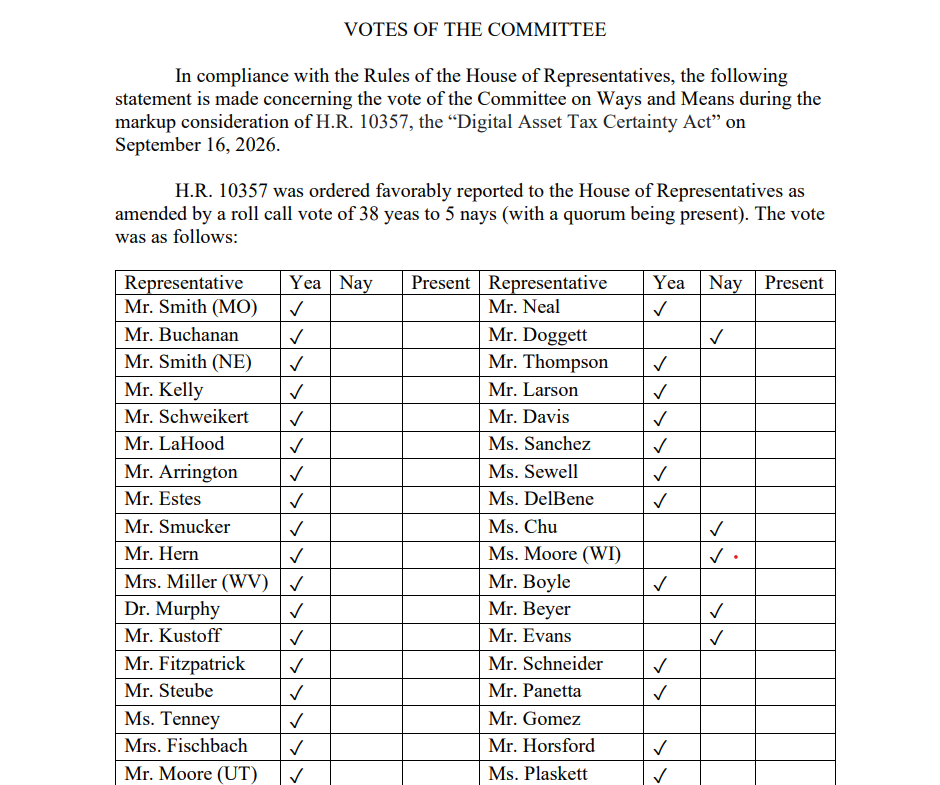
A bill advancing through Congress would force the Treasury Department to create a formal amnesty program for cryptocurrency investors who failed to report past trades, shielding them from criminal prosecution if they come forward voluntarily.
Section 502 of the Digital Asset Tax Certainty Act, H.R. 10357, mandates that the Treasury secretary establish a Digital Asset Voluntary Disclosure Program within 12 months of enactment. The House Ways and Means Committee passed the measure 38-5 on Sept. 16. It still requires full House approval, Senate passage and a presidential signature to become law.
The legislation arrives as the Internal Revenue Service begins enforcing its new 1099-DA broker reporting rules. Those regulations give the IRS direct visibility into crypto transactions moving forward but leave millions of prior-year filings untouched. Existing voluntary disclosure procedures at the agency target willful tax evasion carrying potential criminal exposure. They offer no standardized path for retail investors who made accounting errors.


“Today, a crypto investor who learns they didn’t properly report their crypto or has not reported at all has no good way to fix it,” Andrew Gordon, executive director of Digital Asset Tax Action, told Magazine.
Under the proposed framework, taxpayers would have 24 months to file amended returns once the program launches. The bill creates two penalty tracks. Investors who certify under penalty of perjury that their violations were neither fraudulent nor willful face a 0% penalty on the first $25,000 of tax deficiency per year and 5% on amounts above that threshold, provided they file within the first 12 months. Those who decline to certify pay 25% on the first $25,000 and 40% on the remainder. Rates increase for both groups if they miss the initial one-year window.
Taxpayers who do not certify would still receive protection from criminal referrals based on information disclosed under the provision, along with relief from specified civil penalties.
Sharon Yip, a certified public accountant and founder of Crypto Tax Advisors, said her firm routinely encounters clients who believed no tax was due until they converted digital assets to fiat currency, relied on incomplete exchange records or incorrectly classified transactions.
“There is no standardized process that gives non-willful crypto investors predictable penalty treatment or a clear resolution,” Yip told Magazine.
Falsely certifying that an omission was non-willful carries perjury charges. Yip advised investors to audit their transaction histories across every exchange and wallet before deciding whether to use the lower penalty track.
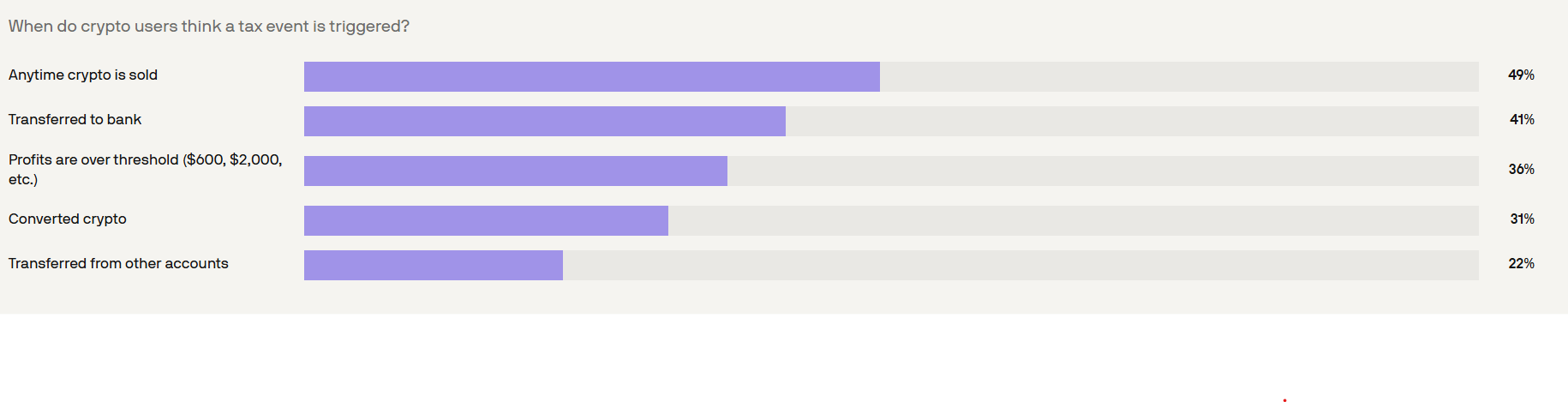
A 2026 report by CoinTracker and Coinbase found that only 49% of crypto users correctly understood that selling crypto can be a taxable event.