Bank Deposit Rates Slow Stablecoin Growth, BIS Paper Finds
USDC slowed more than USDT when banks raised savings yields, according to weekly data spanning 2019 to 2025.
U.S. banks can throttle the expansion of stablecoins simply by raising what they pay depositors. A working paper published by the Bank for International Settlements found that a single basis-point increase in bank deposit rates cuts typical 10-week stablecoin market capitalization growth from roughly 15% to about 6%, using a methodology designed to isolate cause and effect.
The research, conducted by BIS economist Iñaki Aldasoro and Rashad Ahmed of the Andersen Institute for Finance and Economics, analyzed weekly U.S. data from January 2019 through June 2025. The authors exploited a known friction in retail banking: lenders generally ignore federal funds rate hikes until the benchmark passes 3%, then reprice savings accounts aggressively. That lag allowed them to separate actual rate impacts from broader crypto market cycles.
Circle’s USDC absorbed the brunt of the slowdown compared to Tether’s USDT. The authors attributed the divergence to USDC’s heavier concentration of U.S.-based holders, who face direct competition from domestic savings yields when deciding where to park dollars.
BitcoinBTC · USD
$81,231−2.3%
24H7D1M1YYTD
Oct 11Oct 13Oct 15Oct 16Oct 18
$84.2k$82.9k$81.5k$80.2k
24h HighHigh$82,178
24h LowLow$80,823
VolVol$705.7M
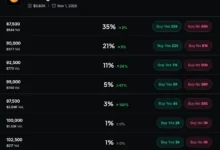
Market projectionsOdds by Myriad
 →
$50$100$500
Buy
The findings arrive as Washington finalizes the rulemaking architecture for digital dollars. President Donald Trump signed the GENIUS Act into law in July 2025, legalizing stablecoins in the United States and establishing baseline issuance standards. The OCC, FDIC, and Treasury are currently drafting implementation rules ahead of the law’s January effective date.
Yield remains the primary fault line. Banks lobbied heavily to block stablecoin issuers from paying interest directly to holders, a dispute that derailed the Clarity Act during a failed Senate vote earlier this year. If regulators ultimately permit yield-bearing stablecoins under the GENIUS Act framework, the defensive pricing lever identified by the BIS researchers would likely evaporate.
Working papers reflect the views of their authors rather than official institutional policy. The dataset covers a single high-rate cycle during which no major stablecoin paid interest to token holders.
The Basel-based institution has tracked the sector closely since 2021, when it argued that blockchain-based digital dollars made central bank digital currencies more urgent. A subsequent 2023 BIS survey warned that widespread adoption could threaten financial stability.