

The Middle East’s Energy Routes Face a High-Stakes Redesign at the UN
UN diplomacy weighs maritime security, Gaza policy and new overland energy links
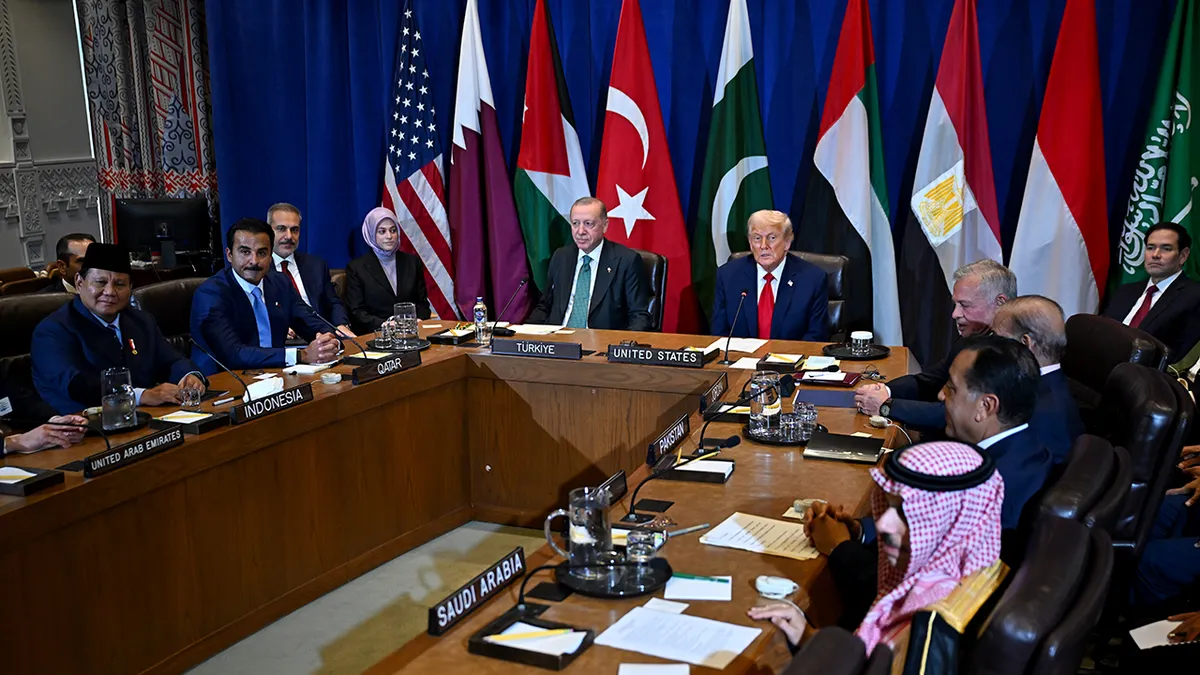
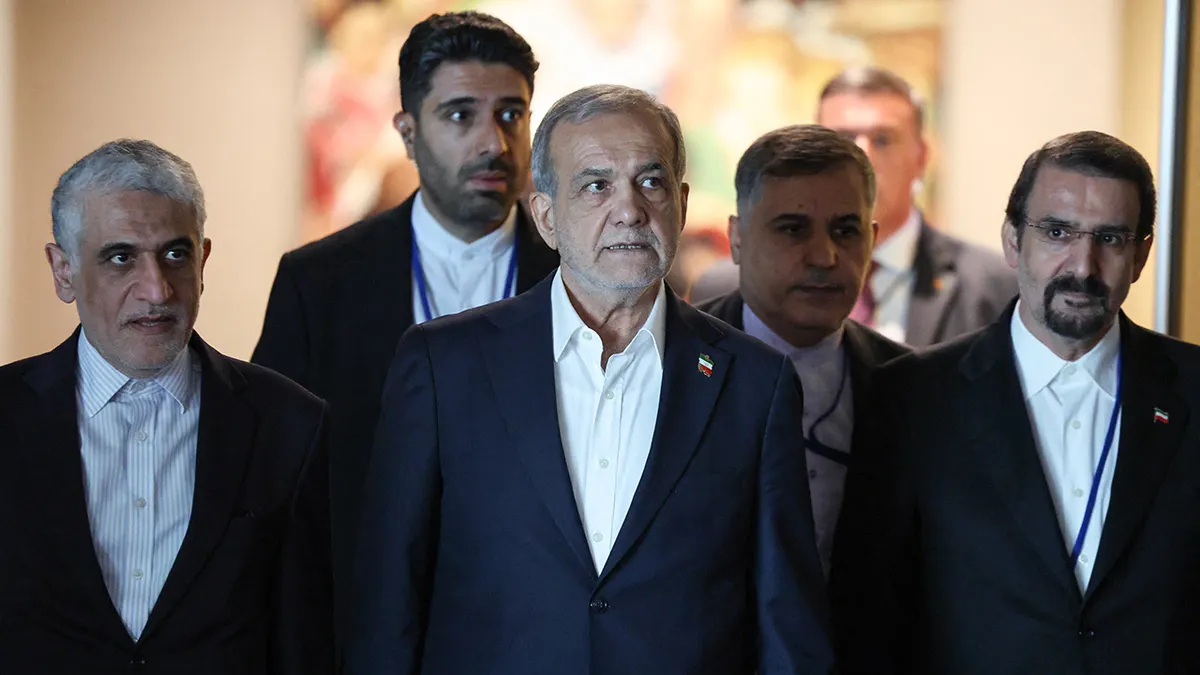
NEW YORK — Iran is maintaining a visible diplomatic presence at the New York summit, where Iranian President Masoud Pezeshkian arrived for bilateral meetings, including high-level talks with French President Emmanuel Macron. Qatar and other Gulf states continue to publicly condemn Iranian drone and missile strikes directed at regional infrastructure.
As world leaders assemble at United Nations headquarters for the 80th General Assembly debate opening Sept. 22, private negotiations are focusing on the future architecture of Middle East energy and security. Public debate will center on military escalation, international sanctions, and the humanitarian crisis in Gaza, while senior U.S. officials and key Middle Eastern leaders work on pragmatic responses to the region’s mounting maritime vulnerabilities.
The talks are taking place amid persistent military conflict with Iran and renewed attacks by Yemen’s Houthi movement. Recent military offensives along Yemen’s western coastline have sharply increased risks for commercial shipping, and a Sept. 11 technical analysis by Washington Institute experts April Longley Alley and Allison Minor said Houthi coastal advances had “shattered the status quo” along the Red Sea, leaving commercial lines exposed to persistent disruptions.

The Strait of Hormuz, a narrow waterway between Oman and Iran connecting the Persian Gulf to the Arabian Sea, carries roughly 20 to 21 million barrels of petroleum per day. That amounts to nearly 20 percent of global petroleum liquids consumption. The Bab el-Mandeb strait, positioning Yemen’s coast along the Red Sea, carries more than 6 million barrels per day in oil flows and accounts for approximately 12 percent of global seaborne trade.
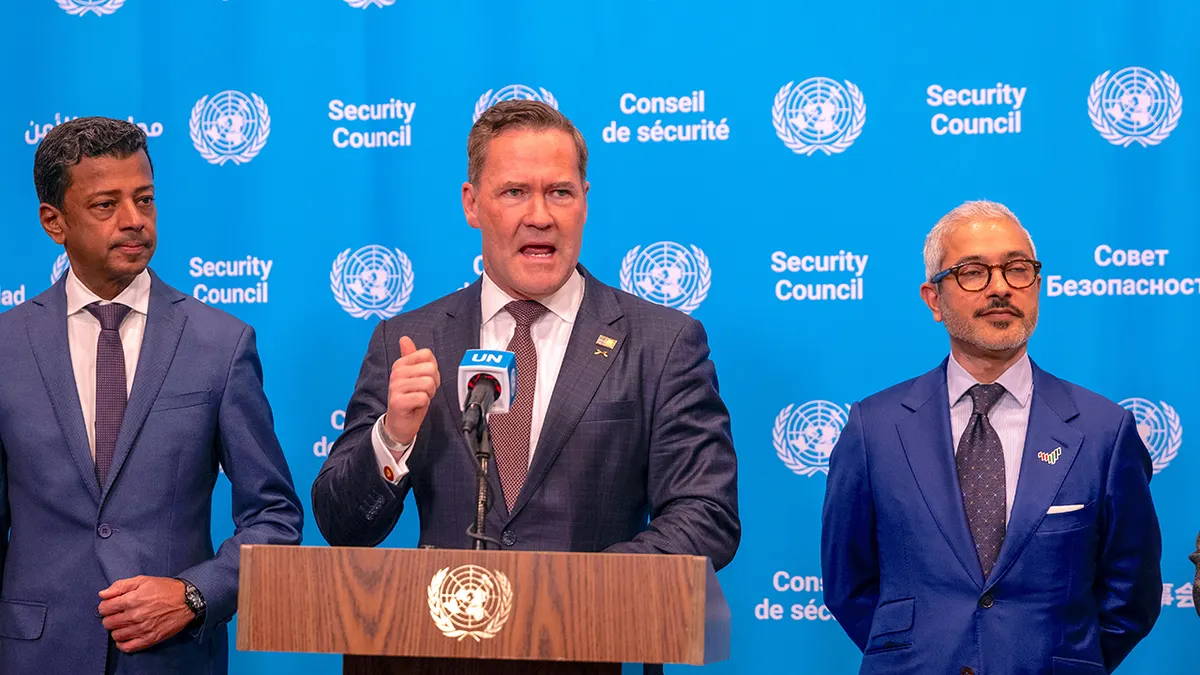
U.S. Ambassador to the UN Mike Waltz said sideline diplomacy during the summit will focus heavily on hearing direct operational and physical security concerns from regional powers. The coordination builds on a May 7 UN Security Council initiative co-sponsored by the United States, the United Arab Emirates, and Bahrain to secure commercial navigation in the Strait of Hormuz.
U.S. and regional planners are examining overland infrastructure that could shield energy markets from maritime interdiction. Rich Goldberg, a senior adviser at the Foundation for Defense of Democracies, said months of regional warfare have fundamentally altered energy calculations for Gulf producers.
“The opportunity for regional integration and normalization works alongside energy infrastructure meeting the moment, the crisis of needing bypasses for Hormuz,” Goldberg said. He highlighted networks of overland pipelines traversing the Arabian Peninsula to Mediterranean ports, potentially utilizing Israeli infrastructure. “We can make the Strait of Hormuz irrelevant,” Goldberg added, pointing to strategic overland links involving Saudi Arabia, Qatar, and Mediterranean terminals.
President Donald Trump is scheduled to meet separately with Gulf leaders in New York to address security guarantees, regional integration, and energy resilience alongside broader diplomatic frameworks. The private discussions are centered on a proposal to re-engineer energy transit routes across the Middle East by bypassing vulnerable maritime bottlenecks such as the Strait of Hormuz and the Bab el-Mandeb strait.
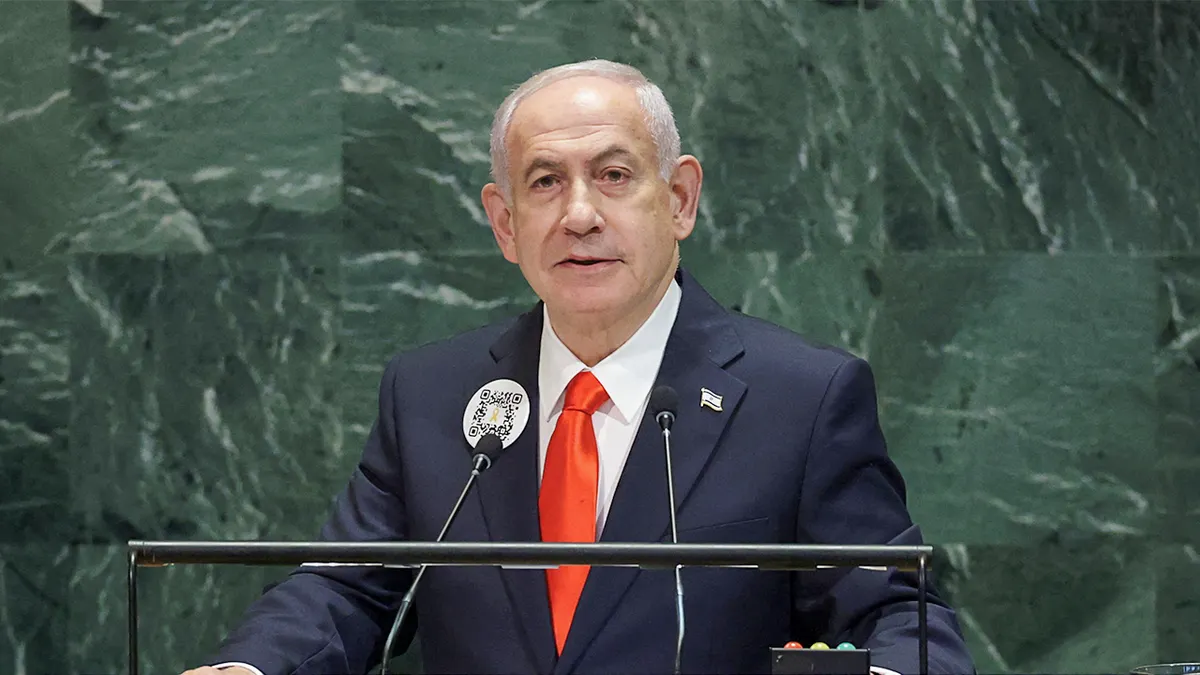
Israeli Prime Minister Benjamin Netanyahu arrives at the General Assembly during a pivotal domestic and international juncture. His speech comes just weeks before Israel’s Oct. 27 parliamentary election, the nation’s first general vote since the Oct. 7, 2023, attack by Hamas.
A Pew Research Center survey conducted across 36 nations in June 2026 found a median of 67% of respondents held an unfavorable view of Israel, compared with 25% who held a favorable view. Netanyahu has maintained that Israeli forces will not withdraw from Gaza until Hamas is completely disarmed and its governance capabilities are eliminated, despite international calls for immediate ceasefires and structured troop withdrawals.
Public positions on the General Assembly stage remain heavily focused on the Palestinian conflict and post-war governance in Gaza, even as operational security dominates private sessions. Heads of state from Jordan, Türkiye, Qatar, and Egypt are set to deliver formal addresses outlining strict conditions for regional stabilization.
On Sept. 6, foreign ministers from eight major Muslim-majority nations—Jordan, Egypt, Qatar, Türkiye, Saudi Arabia, the UAE, Indonesia, and Pakistan—issued a joint communique strongly opposing any forced displacement of Palestinians from Gaza. They reaffirmed support for a two-state outcome based on pre-June 1967 borders, with East Jerusalem as the Palestinian capital, and warned that displacement proposals threaten the viability of Trump’s broader Gaza peace framework.
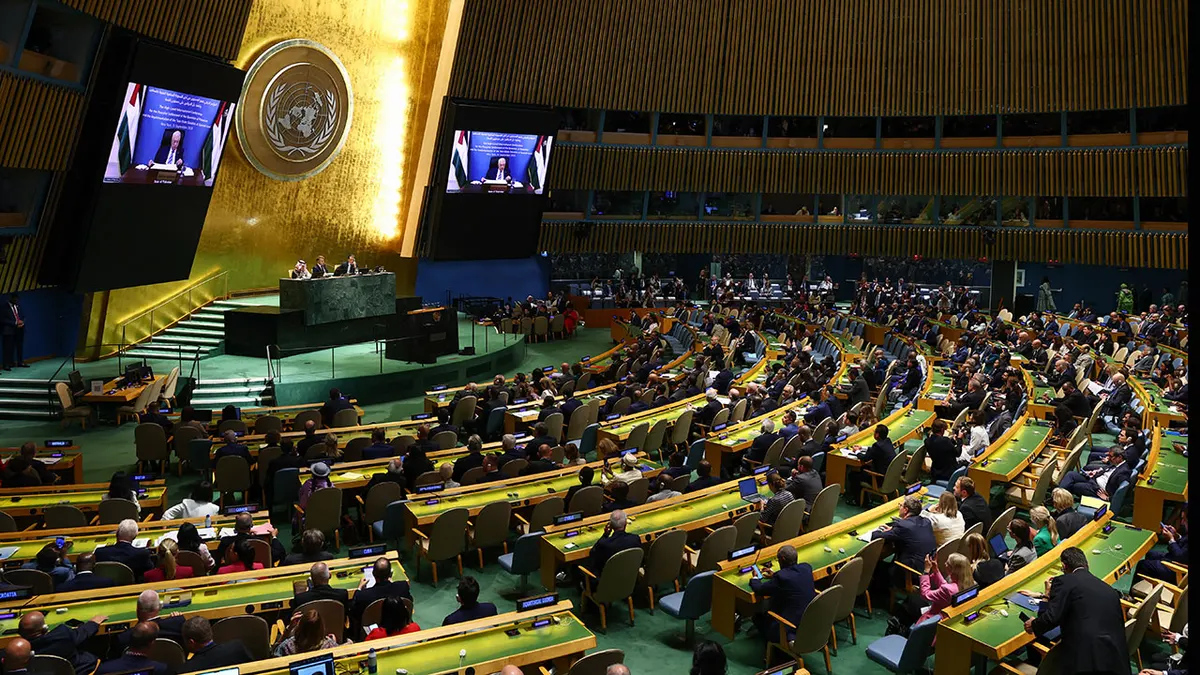
Procedural restrictions have also shaped the summit. Palestinian Authority President Mahmoud Abbas could not attend in person after the U.S. Department of State denied his visa request for a second consecutive year, citing security provisions under the 1947 UN Headquarters Agreement. Following a procedural vote on Thursday, the UN General Assembly authorized Abbas to address the hall through a pre-recorded video statement.
Western nations are pursuing unilateral policy shifts over Israel’s West Bank settlement policies. On Sept. 8, the leadership of France, Britain, and Canada announced coordinated plans to ban imports originating from Israeli settlements in the West Bank and impose targeted financial measures against entities facilitating settlement expansion. The three nations formally recognized Palestinian statehood a year prior and confirmed that they will co-chair a high-level summit during the UNGA session to advance a two-state political track.
International friction has also been fueled by Israel’s E1 development plan, a long-controversial urban corridor linking Jerusalem to the Ma’ale Adumim settlement. Critics argue that the plan would sever geographical contiguity between the northern and southern West Bank.
As formal speeches unfold in the main hall over the coming days, foreign ministers and security advisers will continue parallel talks in private conference rooms to establish energy bypasses and strategic commitments designed to endure long after the diplomatic debate concludes.









One Comment