

SMS AI Agents: Top Text-Based Assistants Replacing Apps in 2026
Security, autonomy, and pricing vary widely among text-first assistants replacing traditional apps
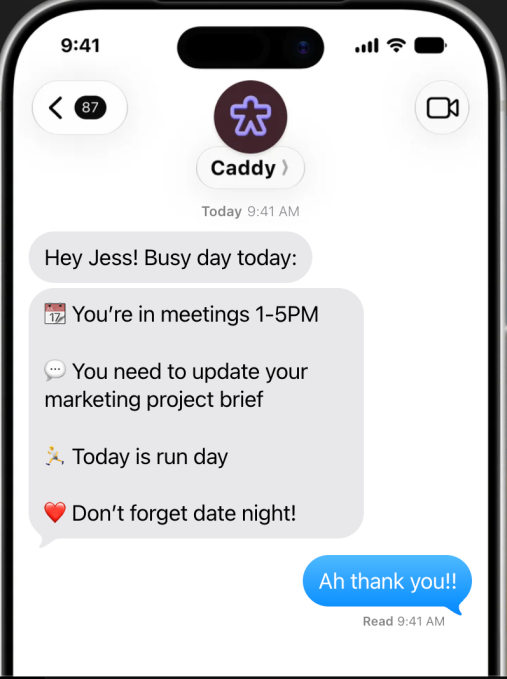
The era of downloading a dedicated application for every digital task is rapidly ending. A new generation of AI agents has shifted the interface from standalone apps to native messaging platforms like iMessage, WhatsApp, and SMS, allowing users to delegate complex workflows through simple text conversations. This transition reduces friction by meeting users where they already communicate, but it introduces significant variations in security, autonomy, and integration capabilities across the market.
Instinct currently dominates the sector’s financial narrative following a $1 billion funding round in September 2026 that established a $10 billion valuation. Unlike simpler chatbots, Instinct operates with high-level autonomy, including the ability to generate dedicated email addresses for user accounts and place voice calls. While this enables the agent to sign up for services and handle customer support independently, it represents a departure from traditional personal assistant models where the user retains direct credential control. The service remains in private beta as the company navigates the privacy implications of fully autonomous account management.
For households managing school schedules, meal planning, and logistics, specialized family agents have emerged to address gaps left by general-purpose tools. Ollie distinguishes itself as one of the first family-focused assistants to achieve SOC 2 compliance, a critical security standard for handling sensitive data about children and household routines. Competitors like Fambot and Ohai focus on proactive daily briefings and calendar synchronization across Gmail and Google Calendar, with Outlook and Apple Calendar support pending. These services typically operate on subscription models ranging from free tiers to approximately $25 monthly, positioning them as premium utilities rather than disposable apps.


Professional and creator-focused agents prioritize workflow integration over household management. Town, backed by a $55 million Series A led by Andreessen Horowitz, provides “Townies” that learn individual work patterns to manage Slack, email, and documents. Stanley targets content creators via iMessage and Telegram, converting voice notes into social media assets and maintaining publishing calendars. Martin offers a broader executive assistant function across SMS, WhatsApp, and Slack at a higher price point of $21 per month, emphasizing cross-platform communication management for power users.
Travel and commerce agents demonstrate the practical limits of current text-based automation. Miso combines AI trip planning with human travel agents via iMessage, acknowledging that pure algorithmic booking often fails to capture nuanced loyalty preferences or complex itinerary changes. Wajo takes a different approach by giving its agent, Fo, a distinct identity complete with its own phone number and payment card. Crucially, Wajo employs a hybrid model where human assistants intervene when the AI reaches its capability limit, ensuring task completion rather than leaving users stranded in an automated loop.
Platform integration remains a key differentiator in this fragmented landscape. Poke became the first AI agent approved for Apple Messages for Business in June 2026 before being acquired by coding startup Cognition. Skye reimagines the iPhone home screen as an agentic interface that surfaces contextual cards and audio briefings without requiring user prompts. Meanwhile, Folk utilizes a private cloud computer to execute code and multi-step tasks, offering technical depth that standard API-connected assistants cannot match.
Pricing structures reflect the computational costs of persistent memory and active agency. While basic reminders and simple queries are often free, agents capable of background task execution, voice calls, or unlimited context retention command premiums. Rene and Pally offer tiered access based on call minutes or task volume, while Orbits leverages backing from a16z Speedrun to subsidize development of household coordination features. As these tools mature, the primary selection criteria for consumers is shifting from novelty to reliability, security compliance, and seamless interoperability with existing digital ecosystems.




