Shasta Dam’s Warming Water Puts Sacramento River Salmon at Risk Again
Warming Sacramento River threatens Chinook eggs after California’s three-year salmon fishing shutdown
REDDING, Calif. — California’s commercial salmon fishers have returned to the Pacific Ocean after a devastating three-year shutdown, but a renewed thermal crisis on the Sacramento River is threatening the next generation of Chinook salmon.
The Sacramento River supports four distinct runs of Chinook salmon: fall, late-fall, winter, and spring. The winter-run Chinook, which finished spawning in August, is federally listed as endangered. The threatened spring-run began spawning in September.
Chinook salmon eggs survive in gravel nests known as redds only when water temperatures remain below 53.5 degrees Fahrenheit (11.9 degrees Celsius). State biologists monitoring spawning grounds downstream from Shasta Dam estimated on September 4 that approximately 20 percent of this season’s eggs may already have been lost. Temperatures have continued to rise since that assessment, raising fears of a more severe die-off.


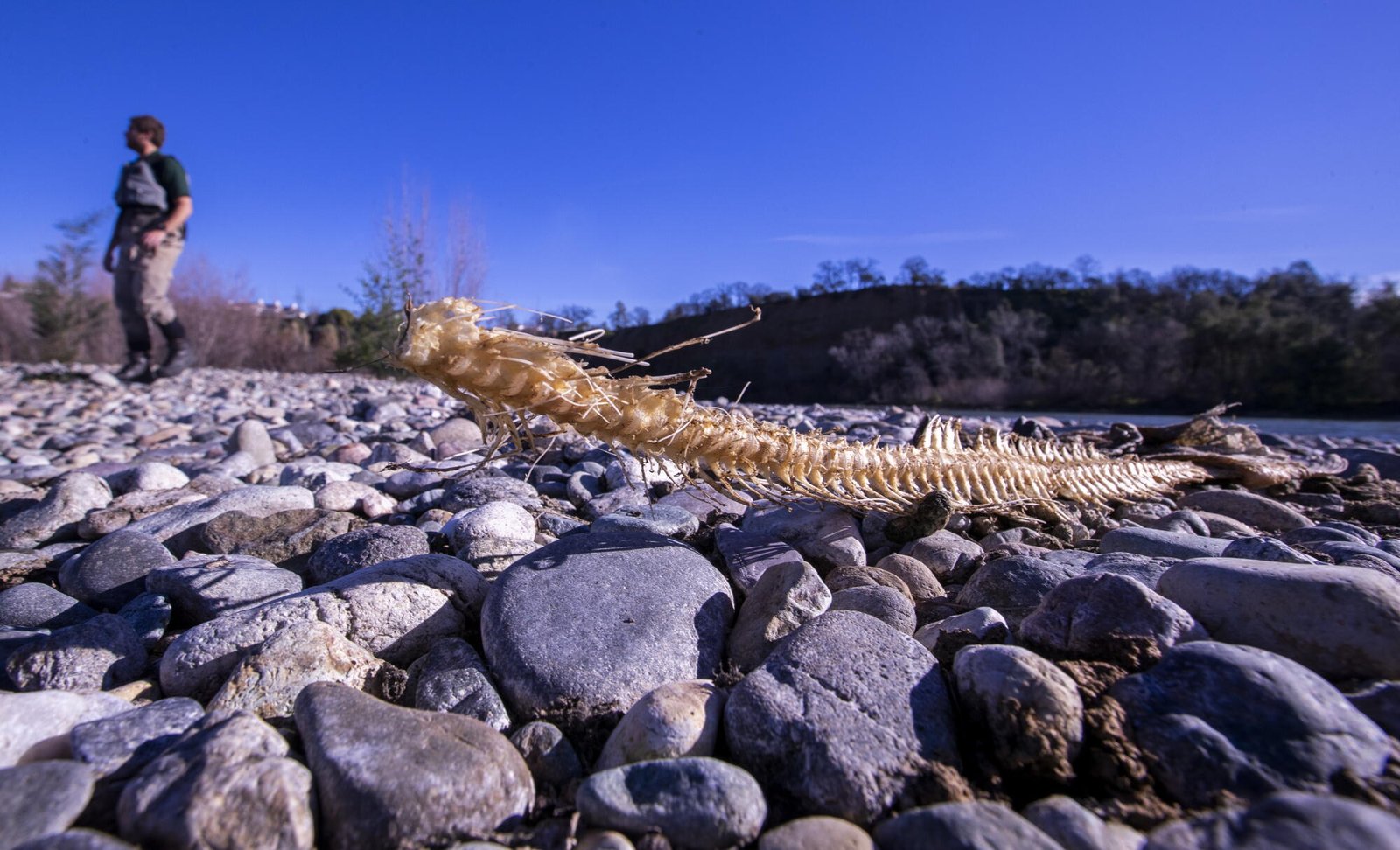
The fall-run Chinook is the most abundant of the four runs and forms the economic backbone of California’s commercial and recreational ocean salmon fishing industries. Between 2020 and 2022, severe drought conditions and elevated river temperatures decimated juvenile salmon populations. Nearly all the eggs and young fish in the main stem of the Sacramento River died as the river grew warmer.
“The Bureau of Reclamation practically sterilized the Sacramento River,” said Barry Nelson, an advisor with the Golden State Salmon Association. “They killed virtually all the juvenile salmon.” The reproductive collapse forced federal and state regulators to completely ban commercial and recreational salmon fishing along the California coast for three consecutive years to protect the remaining population.
Wet winters in 2023, 2024, and 2025 temporarily replenished reservoirs and boosted salmon numbers, allowing regulators to approve a highly restricted commercial fishing season this year. The current warming trend has raised concerns that another fishery closure could be on the horizon.
The temperature spike has renewed a long-standing dispute among environmental advocates, state regulators, and federal water managers over the operation of Shasta Dam. Critics contend that the U.S. Bureau of Reclamation drew down too much water from Shasta Lake during the spring and summer to supply agricultural contractors in the Central Valley, leaving an insufficient “cold-water pool” at the bottom of the reservoir to sustain salmon downstream.
“The fish are not being protected,” said Jon Rosenfield, science director for the nonprofit group San Francisco Baykeeper. “We know that those eggs are getting cooked.” San Francisco Baykeeper and another environmental organization have filed a lawsuit against the federal government in federal court, alleging that current operations violate the federal Endangered Species Act.
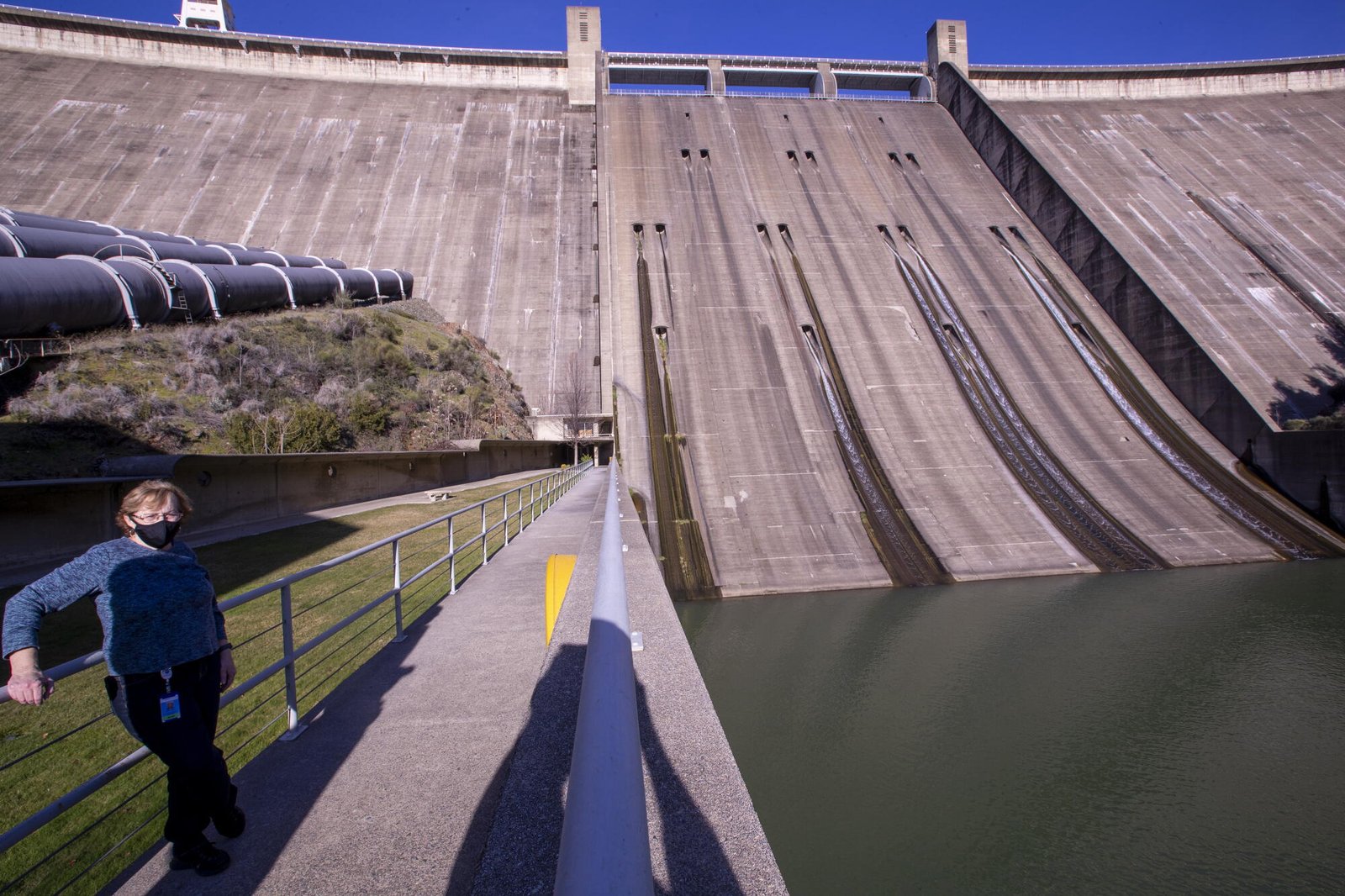
Completed in 1945, the 602-foot-tall Shasta Dam is the cornerstone of the federal Central Valley Project, a massive water system that diverts flows from California’s wet northern regions to the highly productive agricultural lands of the arid Central Valley. The dam blocked access to the high-altitude, spring-fed streams near Mount Shasta where Chinook salmon historically spawned, forcing the fish to rely entirely on cold-water releases from the reservoir.
The Bureau of Reclamation uses an $80 million Temperature Control Device to manage downstream temperatures. The massive shutter-like steel structure was completed in 1997 and allows operators to selectively pull cold water from the deepest layers of Shasta Lake. If the reservoir’s total volume is heavily depleted by early-season water deliveries or successive years of dry weather, however, the cold-water reserve can run dry before the salmon spawning season concludes in late autumn.
The Bureau of Reclamation has defended its management of the reservoir. “The Bureau of Reclamation is managing Shasta operations under a temperature management plan developed in coordination with state and federal fishery agencies,” Reclamation spokesperson Peter Soeth said in an email, adding that the agency is in compliance with the federal Endangered Species Act.
State officials have expressed growing concern over federal operations. In June, regulators at the California State Water Resources Control Board formally objected to the federal government’s temperature management plan.
“California is continuing to see climate change-driven losses in snowpack that result in far less cold water available in the Shasta reservoir for releases to support salmon,” said Jackie Carpenter, a spokesperson for the state water board. Carpenter said the board raised its concerns with the Bureau of Reclamation during the spring and will continue monitoring river conditions to assess potential interventions.
Environmental groups argue that the state should take a more aggressive stance to compel federal compliance. Rosenfield asserted that ample water was available this year to maintain colder river temperatures, but that federal operators prioritized water deliveries over conservation.
“It’s too early to know how bad the mortality is going to be this year, but we’re off to a terrible start,” Nelson said, calling on the state of California to play a more active role in protecting the species.
Other water management experts suggest caution before attributing this year’s temperature issues entirely to operational decisions. “It’s of concern, but you need more data before you start accusing [the federal government] of operating this way,” said Greg Gartrell, a former manager of the Contra Costa Water District. “It’s a complicated situation, and we don’t have enough data yet.”