Airbnb’s Checkout Chore Ban Starts November 20 — but Only for Bookings Made After That Date
Hosts who keep banned chores face listing-editor flags, an email with an appeal option, a guest-facing "includes cleaning requests" label — and, per the legal write-ups, reduced visibility in search results.
Read the fine print first, because Airbnb buried the most important date in its own announcement.
The new policy takes effect November 20, 2026 — but it applies to reservations booked on or after that date. Book a trip on November 19 for a stay in December and the old rules, chore list and all, still apply. The trigger is the booking date. Not the stay.
Why now is easy to explain. For years guests have paid a cleaning fee, a service fee, and then spent their last morning doing a cleaner’s job. It went viral a few months ago when an Airbnb host couple blew up on TikTok for strict house rules and post-checkout inspections — users ridiculed them for criticizing guests over things like misplaced pillows, moved furniture and leftover food. The platform had heard enough.


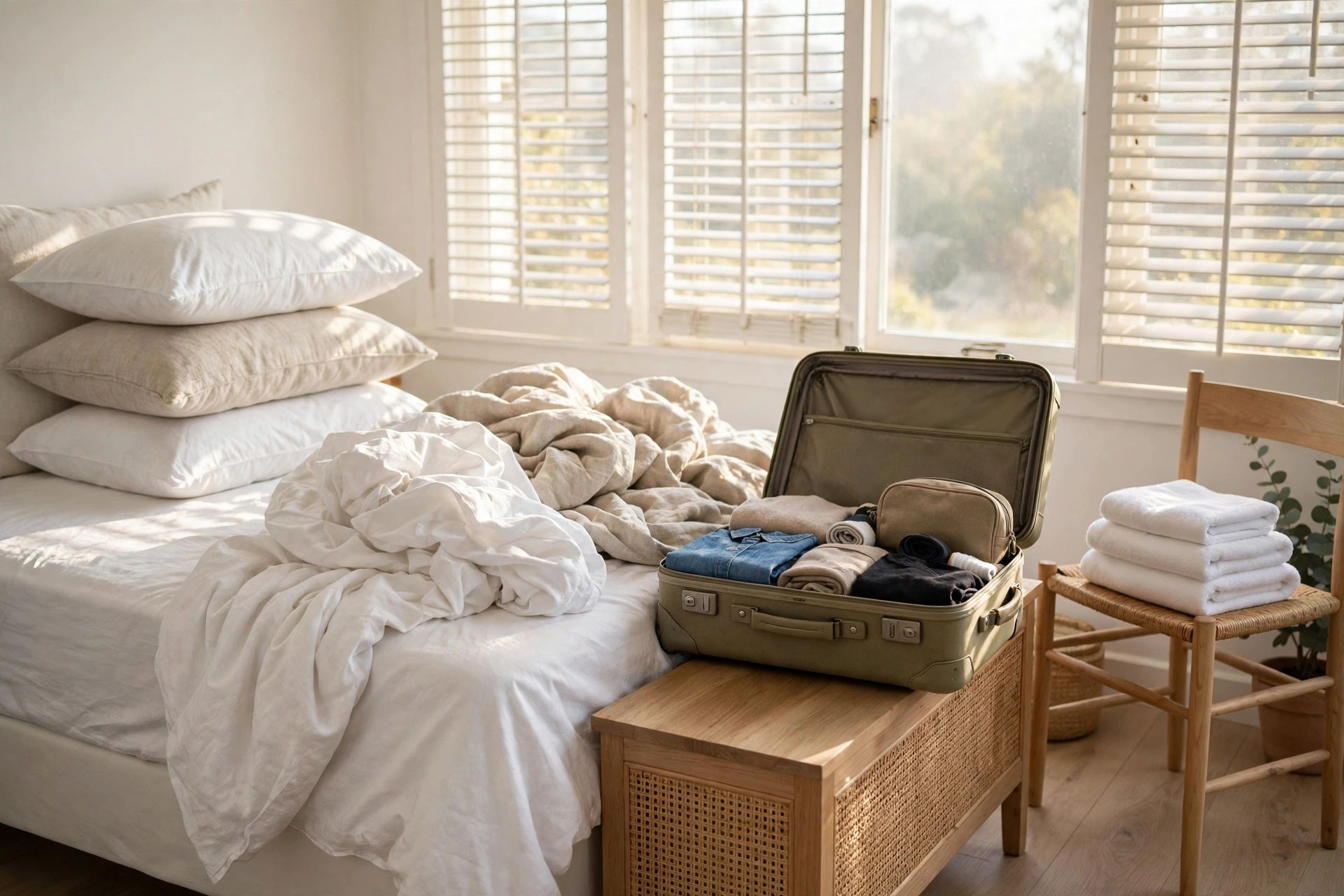
Stripping the bed is out. Leaving the dishes in the sink is still allowed. Hosts can no longer ask guests to wash and put away dishes, but they can ask them to leave used dishes in the sink. No stripping beds or starting laundry; gathering used towels is fine. No hauling trash off-site; separating it into indoor bins is fine. No telling guests to avoid using advertised air conditioning; asking them to switch it off when they leave is fine.
A host who keeps the chore list doesn’t get a phone call from a lawyer. They get a flag inside the listing editor, with tips on how to fix the wording. Then an email, and a chance to appeal. Leave it unresolved and Airbnb puts an alert on the listing itself — the example given is “includes cleaning requests” — so guests see it before they book. Legal write-ups of the policy add that violators face warnings and reduced visibility in search results, which on Airbnb is where the money comes from.
Every request must be “reasonable,” and Airbnb weighs the type of listing and local conditions to decide. Its own examples show where the line bends: it’s reasonable to ask guests to put trash in an animal-proof container in bear country, or to limit shower time where drought rules restrict water. Hosts can plead their situation through the appeal.
Hosts also lose the right to fine guests themselves. Airbnb says its AirCover protection already covers damage, so personal penalties are out — along with restricting access to advertised amenities. And the contracts some hosts make guests sign are now restricted to legal requirements, homeowners-association rules, monthly-stay agreements, Luxe listings and optional amenities like golf carts. Airbnb won’t help enforce those contracts, and it won’t require guests to sign them.
Guests get something in return: nothing may be added after booking. All rules and requests now live in one section of the listing, shown before booking and repeated in the Trips tab and reservation reminders — not in messages, not on a sign taped inside the house. Guests have to follow the house rules; the requests are things they’re “encouraged” to comply with. A host who catches a guest breaking an actual rule during the stay — or finds out before check-in that they intend to — can cancel without fees or penalties.
Seven standard rules now cover the basics: how many people can stay overnight, quiet hours, whether events are allowed, pets, smoking and vaping, commercial photography, and whether guests have to lock up and return keys at checkout. Everything beyond that is a request, and every request now has to clear the reasonableness bar.
So the November 20 that matters isn’t a checkout date. It’s the first booking date on which a host with a chore list wakes up to a flag in the editor, an email with an appeal link, and eventually a label on their own listing telling every guest exactly what they’re in for.