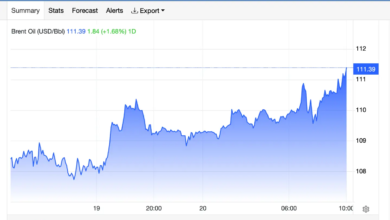
Oil hits $112.85 as 84% surge strains U.S. supply buffers
An 84% annual surge tests the limits of the Strategic Petroleum Reserve and domestic shale expansion.

Brent crude reached $112.85 a barrel at 8:15 a.m. Eastern Time on Tuesday, October 20, 2026. The 84.24% year-over-year jump from $61.25 marks the fastest annual acceleration since the post-pandemic recovery of 2021-2022. For American consumers and logistics operators, the immediate question is how long federal emergency reserves can absorb the shock before costs bleed permanently into retail prices.
The Strategic Petroleum Reserve was designed for acute disruptions—hurricanes crippling Gulf Coast refineries, sudden embargoes, or armed conflicts severing shipping lanes. It was never engineered to subsidize an extended bull market. With Brent climbing $2.75 in a single session and sitting $8.60 above its level one month ago, according to market data, policymakers face a structural problem that releasing stored barrels cannot solve.
Washington attempted to expand domestic output earlier this year. The Trump administration moved to reopen more than 1.5 million acres in the Coastal Plain of the Arctic National Wildlife Refuge for oil and gas leasing, reversing the Biden administration’s policy of limiting oil drilling in the Arctic. Permitting timelines and infrastructure requirements mean those leases will not add a single barrel to global markets for months, if not years. Futures markets, where traders price contracts based on anticipated supply and demand, are already reflecting that delay.


The inflationary mechanics are straightforward. Crude oil accounts for more than half the cost of a gallon of gasoline. But the damage extends well beyond the pump. Diesel fuel dictates freight rates. When transport costs rise, grocery stores and manufacturers pass the difference directly to buyers. This dynamic fueled the inflation spikes of 2022, when Brent briefly topped $130 following Russia’s invasion of Ukraine. The current run-up carries similar risks for household budgets.
Industrial consumers are beginning to pivot. Higher oil prices push factories and utilities toward natural gas substitution where technically feasible, tightening that market simultaneously. Energy coverage from Fortune has tracked these cross-commodity pressures closely in recent weeks.
U.S. shale producers remain the primary variable capable of altering the trajectory. Shale rock contains vast untapped oil and natural gas deposits. Increased extraction rates historically cap price spikes by flooding the market with additional supply. Yet capital discipline adopted by major drillers after the 2020 crash—when lockdowns pushed prices below $20 per barrel—means companies are slower to ramp up rigs today than they were during previous boom cycles.
Historical precedent offers little comfort. The early 1970s Yom Kippur War embargo triggered the first modern oil shock. A mid-1980s influx of non-OPEC production crashed prices. The 2008 financial crisis erased a massive demand-driven rally almost overnight. Each episode involved sudden, violent corrections rather than gradual stabilization.
West Texas Intermediate (WTI) serves as the primary North American benchmark, but the U.S. Energy Information Administration now relies on Brent as its main reference in its Annual Energy Outlook because it prices a larger share of globally traded crude. As long as futures markets remain open, the price updates constantly with every executed contract.