NVIDIA Says Its New Laptop Starts at $2,399. Its Own Press Release Says $2,599
The same N1X superchip, three different prices — and NVIDIA's own blog can't agree with its press release.
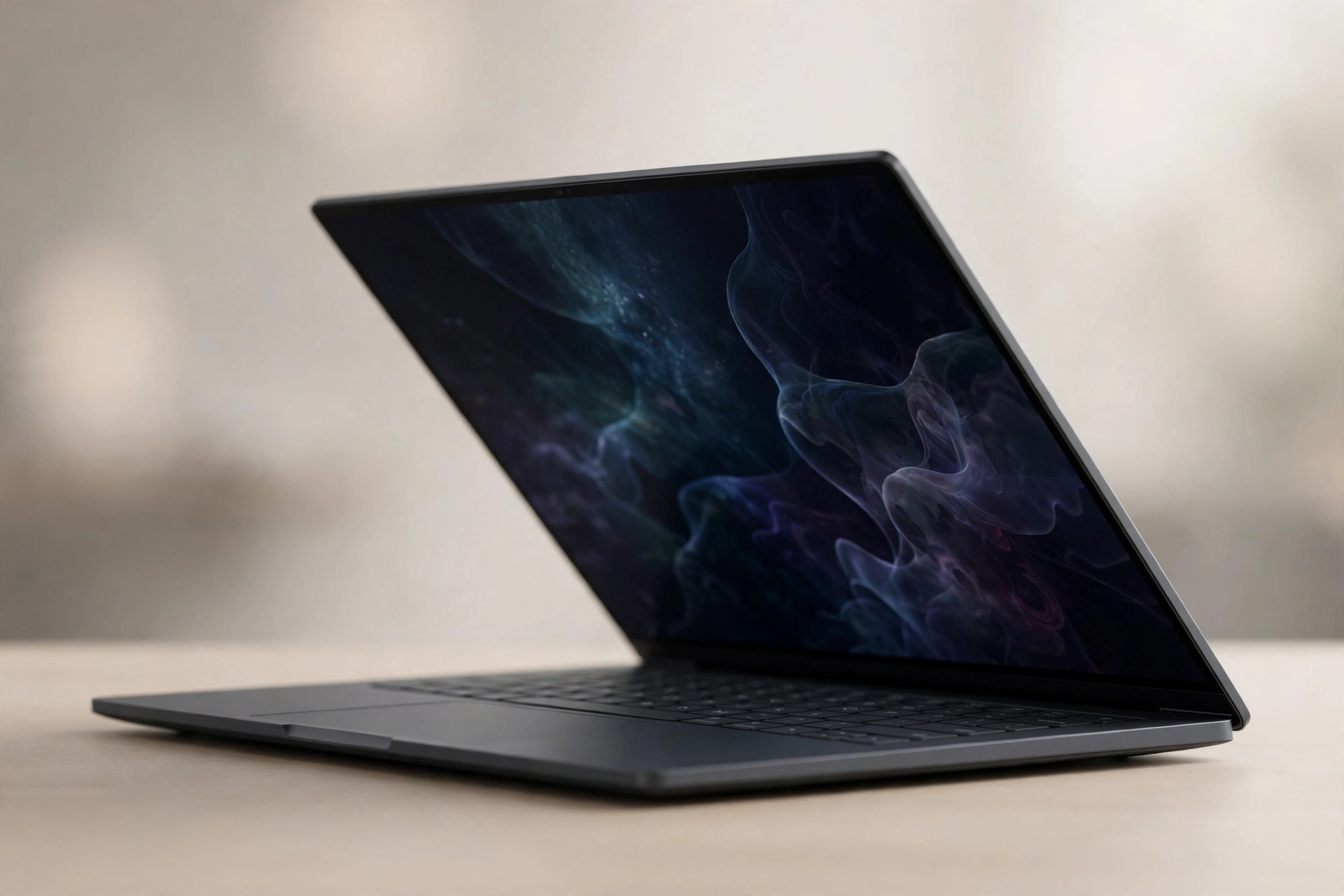
Two numbers, one laptop launch. NVIDIA‘s blog says its new RTX Spark laptops start at $2,399. Its press release, published a day earlier, says $2,599. The discrepancy sits inside the company’s own materials, the blog post updated as recently as October 19, and no shopper should treat any single figure as the price.
The $2,399 figure is the stranger of the two. No retailer lists an RTX Spark machine at that price. The cheapest one found anywhere is the ASUS ProArt P14 with 24GB of memory at $2,599.99 on Best Buy, which means the blog understates the real floor by two hundred dollars and the press release lands almost exactly on it.
Microsoft’s configurator is where the numbers turn into a grid. The Surface Laptop Ultra comes in eight configurations, $2,599 to $5,899. Doubling memory from 64GB to 128GB adds $1,600, which works out to $25 a gigabyte. Stepping from the 18-core chip to the 20-core one costs $400. And the top memory tier comes with a catch: the 128GB model is capped at 1TB of storage, while the 2TB drive is reserved for the 64GB configuration.


ASUS runs the same chip through a different maze. Its ProArt P16 starts at $2,799.99 for 24GB at Best Buy and climbs to $6,999.99 for the 128GB version with 2TB of storage. Where you shop decides what you can buy: Best Buy carries only the lower-memory configurations, the ASUS Store only the higher ones, and the two lists share not a single SKU. Visit one store and you see a different product range than the other.
Set the two brands side by side and the same N1X superchip costs $5,899 from Microsoft and $6,999.99 from ASUS at 128GB. That is $1,100 apart, or about $700 once you allow roughly $400 for the extra terabyte in the ASUS machine. Each brand publishes only its own sheet.
A ProArt P16 listed around $2,399.99 is probably the H7606: last year’s AMD machine, not the RTX Spark H7607. One digit apart. The old one is still on sale. NVIDIA’s own DGX Spark desktop with 128GB costs $6,950 after a reported 75 percent price increase, so the top laptop undercuts the company’s desktop box by about fifty dollars.
ASUS argues the arithmetic works out anyway. Its launch materials claim that heavy daily agent workloads can burn through cloud token costs equal to the PC’s price within five to ten months. The footnote behind that claim prices a $6,000 128GB P16 amortized over 36 months against Anthropic’s published token rates and a promotional OpenAI rate, assuming a 15:1 input-to-output ratio with 70 percent cache hits. Change the workload and the payback moves with it.
The Surface RTX Spark Dev Box, a 128GB mini PC for developers, ships in November at $5,999. Microsoft is offering up to $1,000 in trade-in credit for a MacBook Pro through November 23.