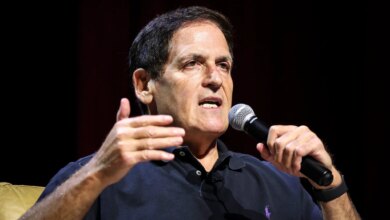
Neurodivergent CEOs Reshape Corporate Leadership as ADHD, Dyslexia Diagnoses Rise Among Executives
Adult diagnoses surge as executives reframe ADHD, dyslexia as competitive advantages in AI era

NEW YORK — Carlos Gutierrez ran a Fortune 500 company and served as U.S. Commerce Secretary before a psychiatrist told him at age 65 what decades of impulse decisions and chronic disorganization already suggested: he has attention-deficit/hyperactivity disorder.
The diagnosis, revealed during an interview at the Hispanic Association on Corporate Responsibility symposium, places the former Kellogg chief among a small but visible cohort of top executives publicly acknowledging neurodivergent conditions. Palantir CEO Alex Karp recently declared that only trade workers and neurodivergent people will thrive in the artificial intelligence era. Former Cisco CEO John Chambers, who grew up with severe dyslexia, has long credited his pattern-recognition abilities for turning a router manufacturer into the internet’s backbone.
About 15.5 million U.S. adults have ADHD, according to the Centers for Disease Control and Prevention, with more than half diagnosed after age 18. The condition’s hallmark traits — impulsivity, hyperfocus, nonlinear thinking — map onto leadership demands in ways researchers are only beginning to quantify.

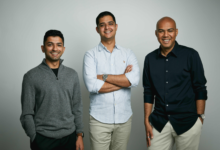
“Looking back, it now makes sense,” Gutierrez said, describing procrastination and excess energy alongside the pattern thinking and curiosity that drove Kellogg’s pivot from high-volume cereals to higher-margin innovations. Fortune dubbed him “The Man Who Fixed Kellogg” in 2004 after profits rose and resources shifted to new product development.
Gutierrez’s forthcoming book, “Sheer Will,” argues that C-suite roles uniquely accommodate neurodivergent leaders because the executive ecosystem — schedulers, handlers, executive assistants, coaches — compensates for administrative weaknesses while amplifying cognitive strengths. Chambers, co-author of “Connecting the Dots,” operates without notes because they slow his processing speed, a workaround developed over decades of hiding dyslexia from colleagues.
Corporate America’s gradual acceptance mirrors broader diagnostic trends. Adult ADHD diagnoses have surged since the pandemic, driven by telehealth access and reduced stigma. Yet few companies track neurodivergence in leadership pipelines or board succession plans. Advocates argue that formal support structures — beyond the ad-hoc staff Gutierrez describes — could unlock performance from executives who currently mask symptoms.
Karp’s assertion that neurodivergent thinkers hold an AI-era edge rests on the premise that machine learning rewards associative, non-linear problem solving. Chambers’ career offers a pre-AI proof point: his inability to read linearly forced development of mental models that anticipated network effects before they materialized.
Gutierrez, who never completed college, advises younger leaders to pursue treatment early. “Know yourself,” he said. “Take advantage of treatment to manage the good and address the challenges.” The alternative, he implies, is reaching the cabinet room before understanding how your own mind works.