Abu Dhabi’s $1B Satellite Bet Targets Global Phone Networks
The Equatys platform plans to link sovereign satellite systems, letting national networks share orbital capacity instead of building redundant constellations.
A joint venture between Abu Dhabi-based Space42 and U.S. communications firm Viasat is positioning itself to become shared orbital infrastructure for national satellite networks worldwide, aiming to eliminate the costly duplication that has long constrained the direct-to-device market.
The platform, named Equatys, was established last month through a binding agreement in which Space42 committed $600 million and Viasat contributed $400 million in equity, according to the companies. Rather than competing directly with sovereign space programs building their own smartphone-connecting satellites, the venture intends to sell excess capacity across borders.
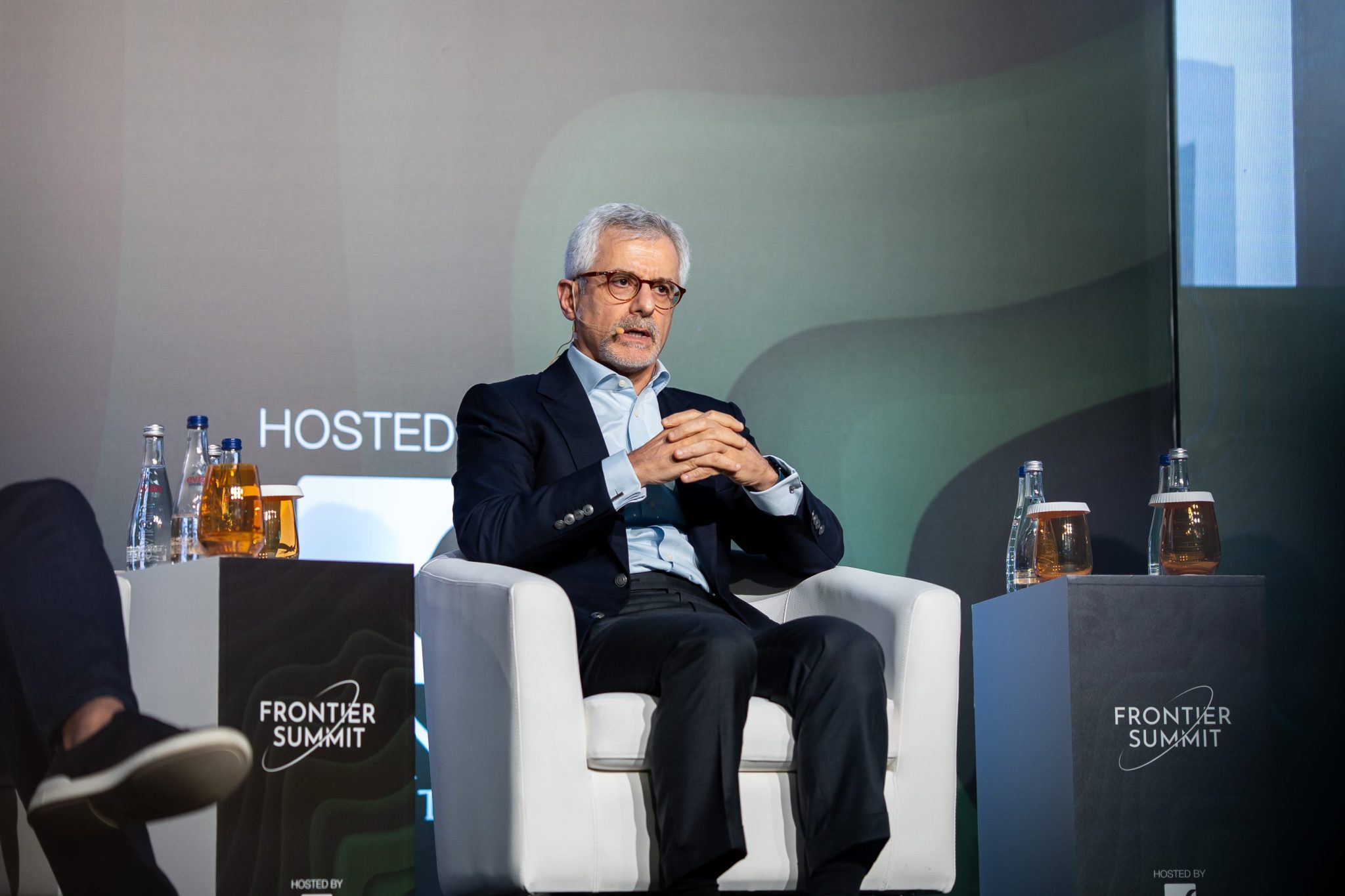
Under the model described by Space42 managing director Karim Sabbagh at the Frontier Summit in Abu Dhabi this week, a European, Canadian or Indonesian direct-to-device network could plug into the Equatys system when its users travel outside domestic coverage areas. The approach targets the idle satellite capacity that typically results when a national constellation operates beyond its primary territory.


Equatys expects to leverage 400 existing relationships with mobile network operators globally, Sabbagh said. Initial operations are scheduled for 2029 with fewer than 200 satellites, expanding eventually to a 2,800-satellite constellation.
The venture represents the largest single component of Space42’s broader $1.7 billion capital deployment plan. The company generated $260 million in revenue during the first half of 2026, a 15% year-on-year increase, while posting $18 million in profit. It aims to double total revenue to $600 million by 2030.
Sabbagh indicated the investment figure could rise further, with potential updates expected at the company’s annual investor day next month.
Space42 currently derives 90% of its revenue from the United Arab Emirates, with government clients accounting for approximately 80% of total sales. Commercial customers make up the remaining 20%. Over a five-year period, the company projects both ratios will shift toward a 70/30 split, favoring international markets and commercial buyers, Sabbagh said.
Beyond organic spending, the company is pursuing acquisitions focused on geospatial intelligence. Potential targets include firms that have built specialized analytical models and established customer bases in agriculture and critical infrastructure monitoring, converting raw satellite observations into predictive data.
Space42 is backed by Mubadala, Abu Dhabi’s sovereign wealth fund with $385 billion in assets under management, and International Holding Company, the emirate’s largest listed firm.
Traditional mobile satellite services have relied on expensive, specialized hardware such as satellite phones, restricting the user base to fewer than 10 million people globally. Direct-to-device technology bypasses that requirement by connecting standard smartphones to orbiting infrastructure. Sabbagh estimated it would take one to three years after launch for new services to build subscriber bases and establish commercial packages capable of matching terrestrial pricing.
The company also integrates synthetic aperture radar, or SAR, alongside optical imaging and artificial intelligence analysis. Unlike conventional cameras dependent on sunlight, SAR uses radar signals to construct surface images through darkness, cloud cover and smoke. “Many situational awareness requirements arise at night. An optical lens, for example, cannot capture images from 400 kilometres away in the dark,” Sabbagh said. “Or let’s say that it’s raining, or there’s cloud cover or fumes. SAR doesn’t care about any of this.”