Verstappen and Rossi Share GT Grid at Portimao Finale
The F1 champion and MotoGP legend drive different GT3 machinery in the same Pro class at the Algarve circuit's three-hour endurance race.
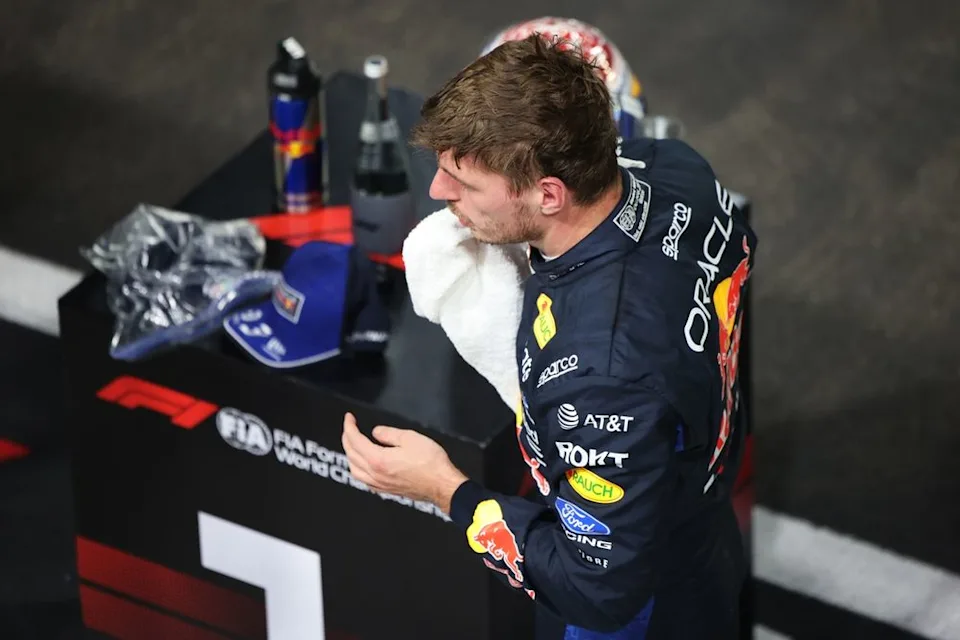
A 60-car field at the Algarve International Circuit will produce one of motorsport’s most unusual direct matchups this Saturday when Formula 1 champion Max Verstappen and nine-time MotoGP world champion Valentino Rossi compete in the same Pro class during the GT World Challenge Europe season finale.
Both drivers have publicly acknowledged the difficulty of sharing a track crowded with professional GT3 machinery, though their concerns stem from entirely different pressures. For Verstappen, navigating traffic cleanly is paramount to protecting his own team’s equipment. For Rossi, the challenge lies in measuring his car-racing progression against a driver widely considered among the fastest in any discipline.
Verstappen enters the three-hour endurance race behind the wheel of the No. 3 Mercedes-AMG GT3 EVO fielded by Verstappen Racing. He shares driving duties with Chris Lulham and Lexus factory driver Ben Barnicoat. The entry arrives on the heels of consecutive Red Bull Formula 1 victories for Verstappen in Singapore and Malaysia, extending a dominant stretch that has kept him at the center of global motorsport attention even while competing outside his primary series.


Rossi campaigns the No. 46 BMW M4 GT3 EVO for Team WRT, the Belgian outfit that operates as one of the premier customer racing teams in European GT competition. His co-drivers are Neil Verhagen and Max Hesse. Because both entries run in the top-tier Pro category rather than being separated into amateur or bronze-cup classifications, on-track battles between the two legends are highly probable rather than merely ceremonial.
The crossover highlights a broader trend of elite single-seater and motorcycle racers migrating to GT3 platforms. Unlike prototype sports cars such as Le Mans Hypercars, which require factory-level budgets and dedicated testing programs, GT3 regulations enforce strict Balance of Performance adjustments. This parity mechanism equalizes straight-line speed and lap times across different manufacturers, placing a premium on driver consistency, tire management, and racecraft over raw engineering advantages. That environment has made GT3 the preferred landing spot for high-profile competitors transitioning away from two wheels or supplementing open-wheel schedules.
Rossi, speaking to Sky Sport Italy, framed the weekend as an educational opportunity. He noted he never anticipated racing directly toward Verstappen and expressed a desire to follow the Mercedes-AMG on track to study its driving lines and braking points. Observing a reigning F1 champion adapt to a heavy, front-engine GT car offers rare insight into how elite drivers extract pace from vehicles fundamentally different from their primary machines.
Verstappen echoed the sentiment regarding track congestion, stating he hopes to avoid seeing Rossi or anyone else during the race, a scenario that would indicate his car is running safely at the front. He previously sampled GT3 competition earlier this year at the Nürburgring Nordschleife, an experience that introduced him to the physical demands of closed-cockpit endurance racing, where steering weights, limited visibility, and multi-class traffic create hazards absent in Formula 1.
The 4.692-kilometer (2.9-mile) Algarve circuit in Portimão, Portugal, presents specific challenges for GT3 cars. Known for its dramatic elevation changes and blind crests, the track hosted the Formula 1 Portuguese Grand Prix in 2020 and 2021. Its wide runoff areas forgive minor errors, but the undulating surface makes aerodynamic balance and mechanical grip critical, particularly for heavier GT cars compared to lightweight open-wheelers.
Saturday’s race begins a new chapter in both drivers’ expanding portfolios, with timing data and sector splits expected to provide the first concrete measurement of how their respective skill sets translate when sharing identical regulatory constraints. The green flag drops October 17.