How Apple Turned $10,000 Into $40.5 Million
The milestones behind Apple's extraordinary investment returns
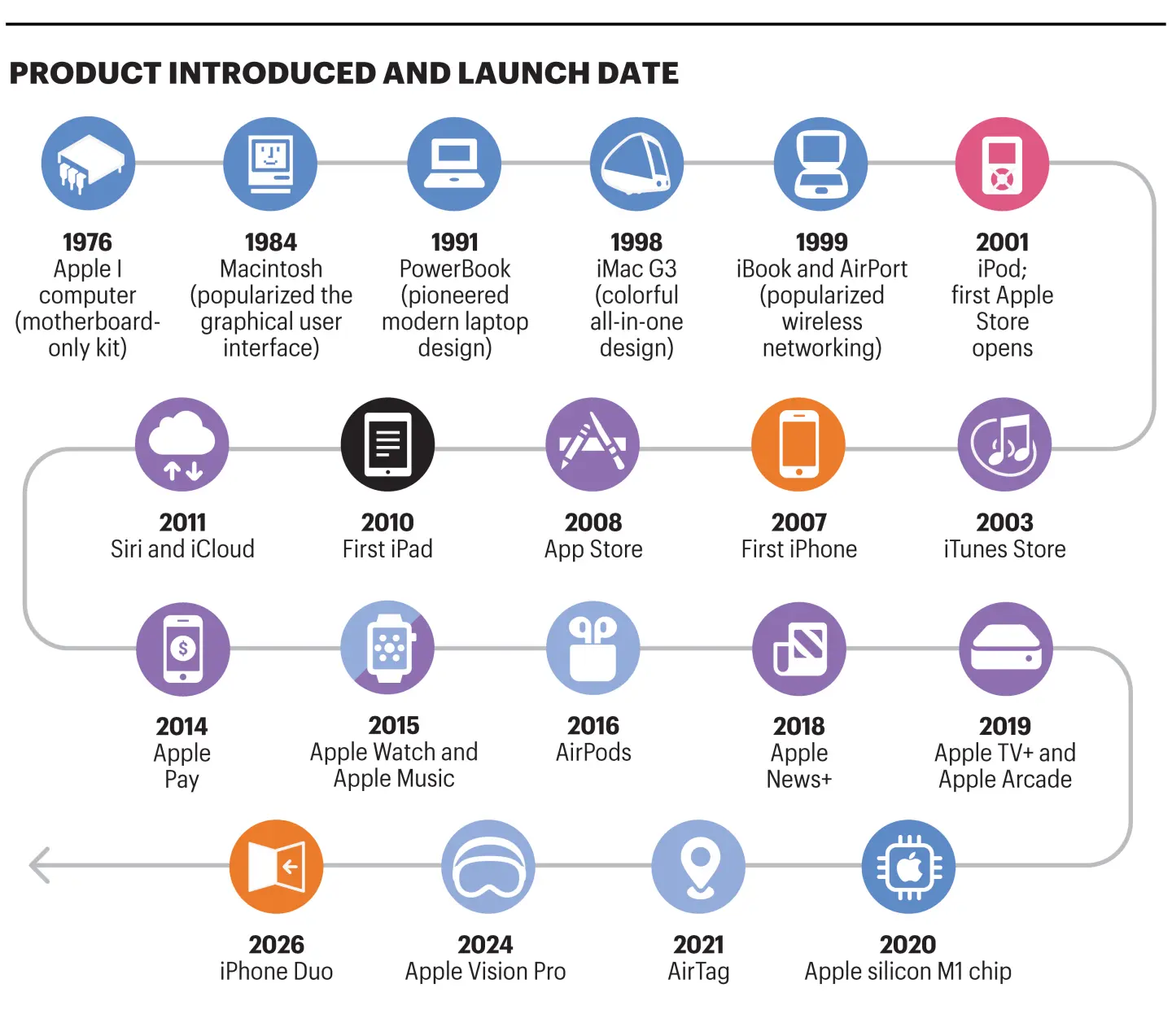
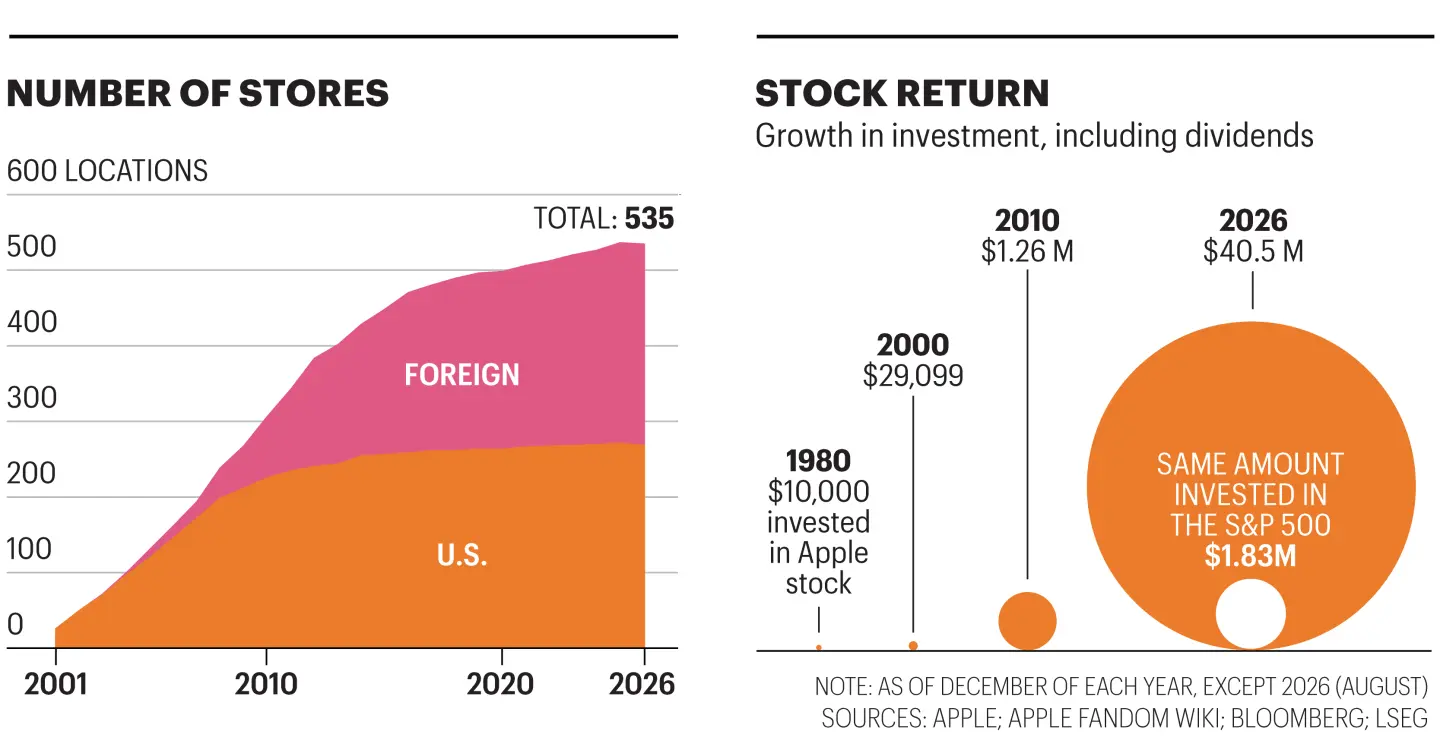
Apple’s physical retail experiment began on May 19, 2001, when the company opened its first two brick-and-mortar stores simultaneously in Tysons Corner, Virginia, and Glendale, California. The retail division later expanded into key global cities, with signature outlets in London, Tokyo, Shanghai, and Beijing.
Apple went public on Dec. 12, 1980, offering shares at $22 each under the ticker symbol AAPL. A $10,000 initial investment at the initial public offering grew to $40.5 million by mid-2026.


The company executed five stock splits over its public trading history: 2-for-1 splits in 1987, 2000, and 2005, followed by a 7-for-1 split in 2014 and a 4-for-1 split in 2020. During that period, Apple’s business model moved from personal computer manufacturing into an integrated hardware, software, and services enterprise.
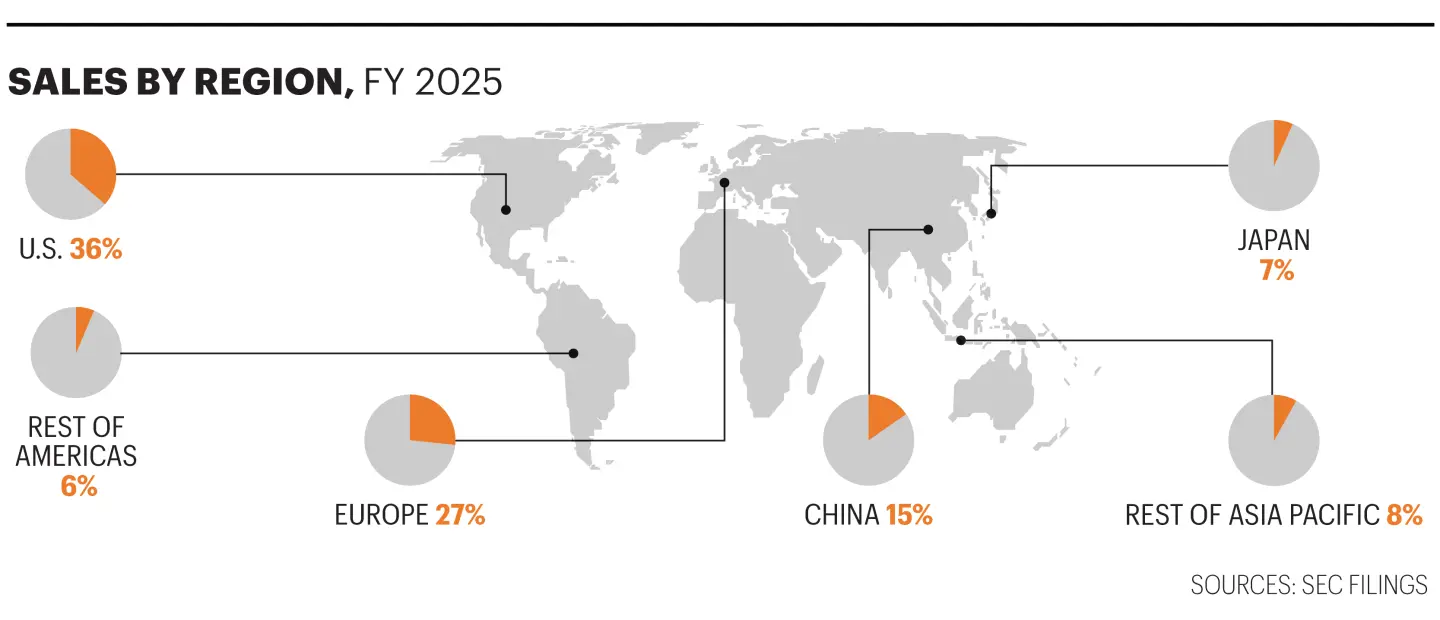
Domestic operations in the United States contribute 36% of total corporate revenues, while Europe produces 27% of overall sales. Apple’s European infrastructure dates back to 1980, when it established operations in Cork, Ireland.
The remaining 33% of revenue comes from the rest of the Americas and the Asia-Pacific region. Over subsequent decades, Asia-Pacific became both a critical manufacturing center and a major consumer market for Apple’s products.
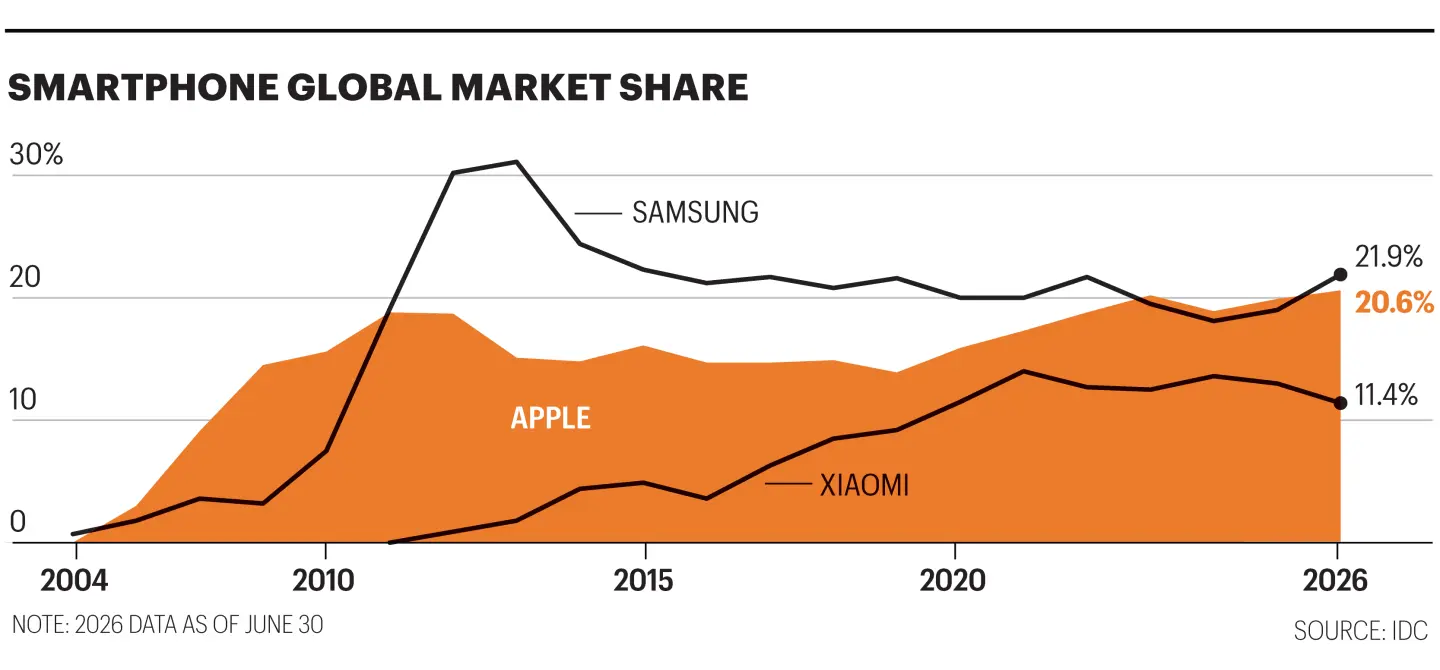
Apple introduced the original iPhone on June 29, 2007, entering a mobile handset market then dominated by devices with physical keyboards. The device united cellular capability, multi-touch interface hardware, and mobile web browsing.
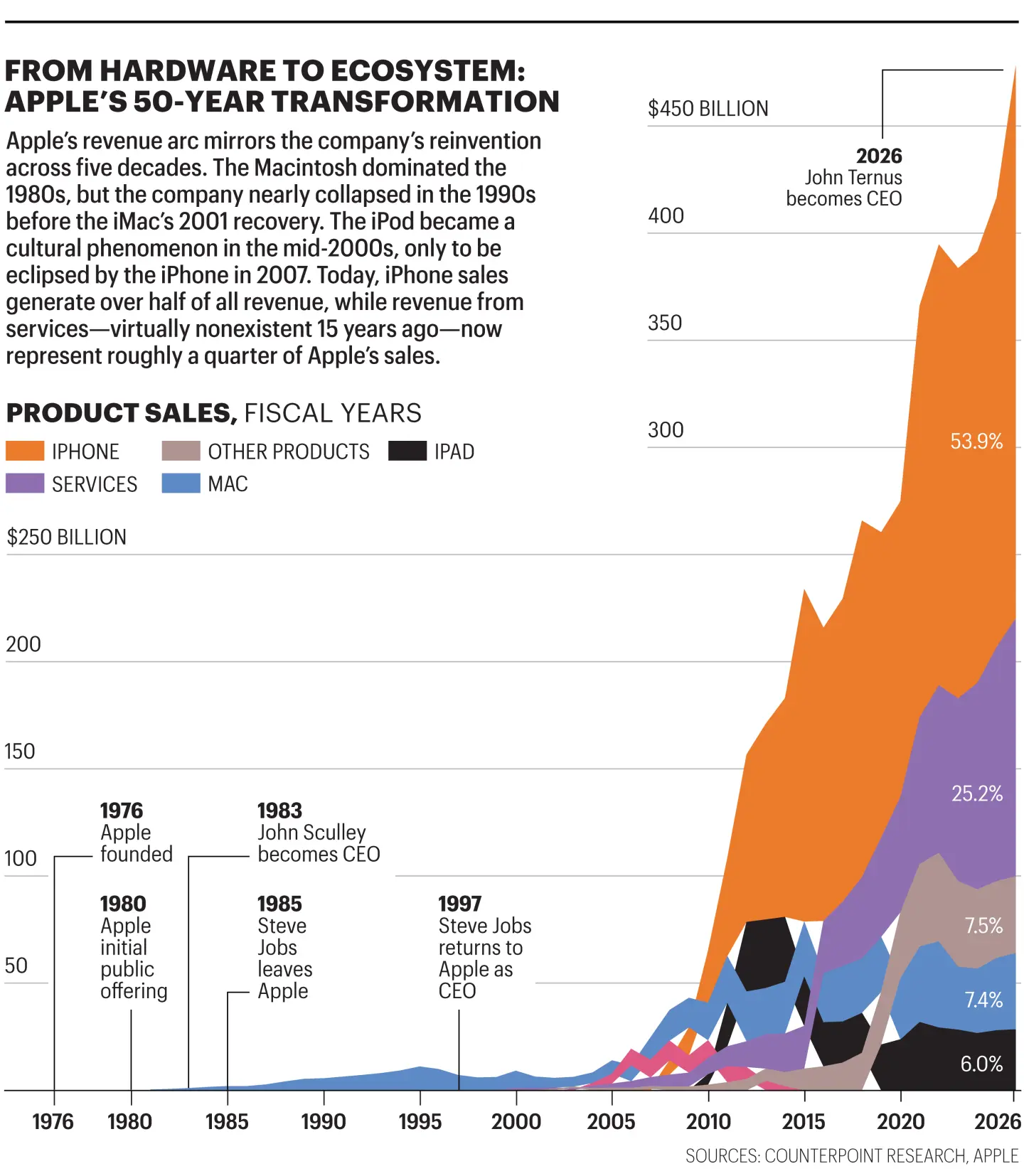
The iPhone continues to serve as the financial core of the business, accounting for approximately half of Apple’s overall sales in 2025. Its introduction established the active user base that now feeds into the company’s broader digital service ecosystem.
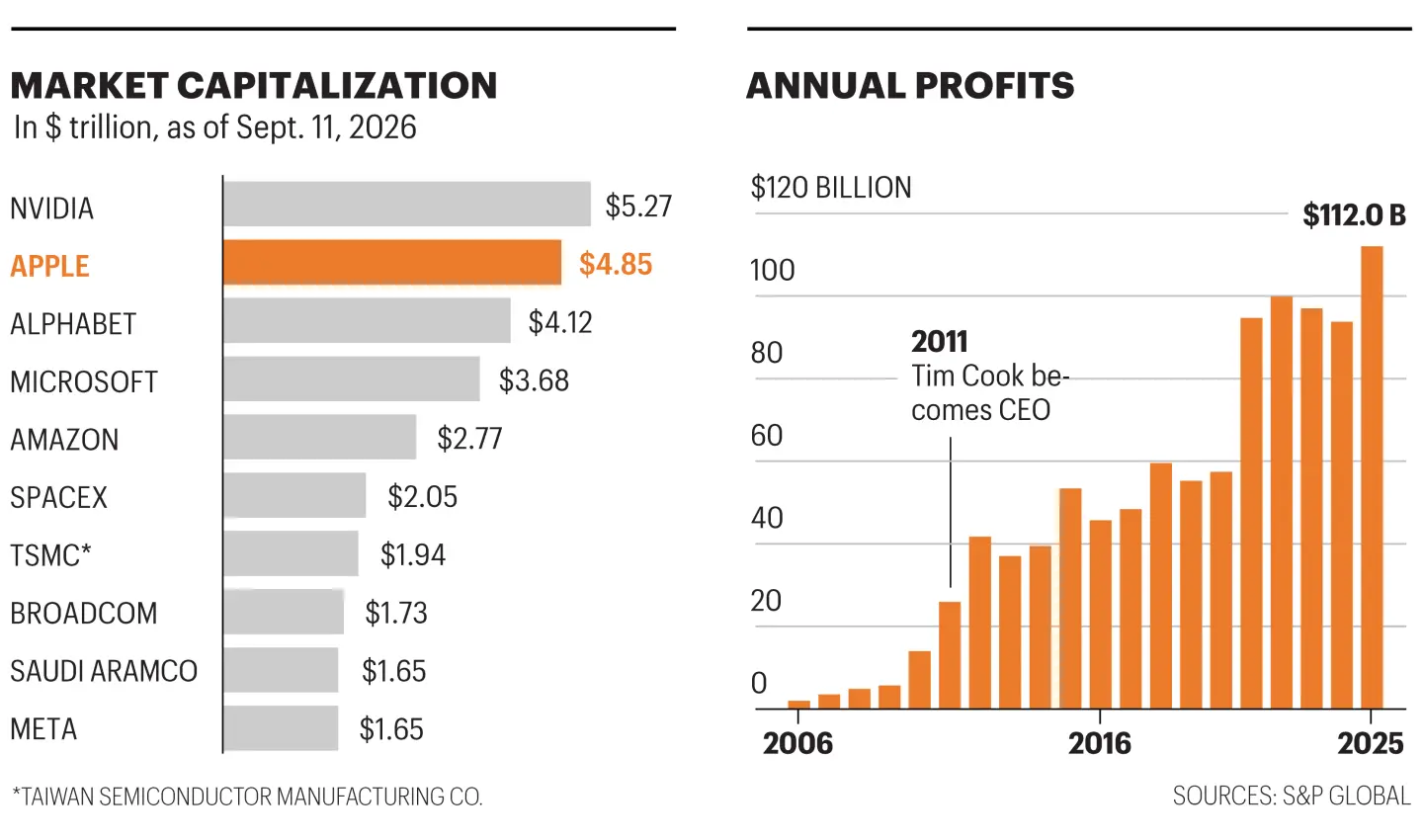
Apple’s annual net profits expanded from approximately $2 billion in 2006 to $112 billion in 2025 over the two decades leading into 2025. Services, which contributed minimally to corporate earnings 15 years ago, is projected to generate more than a quarter of total revenue in 2025.
The Services division includes recurring revenue channels such as the App Store, iCloud storage, Apple Music, Apple TV+, Apple Pay transaction fees, and digital advertising services. The platform architecture supporting the division began expanding in July 2008 with the launch of the App Store, which debuted with 500 applications.
Apple broadened its subscription offerings with the launch of iCloud in June 2011, Apple Pay in October 2014, Apple Music in June 2015, and Apple TV+ in November 2019. These services converted the company’s global hardware base into a steady stream of recurring software revenue.
Hardware sales remain the primary foundation of total sales even as software services represent a growing share of profits. The global distribution network also includes more than 500 Apple retail store locations worldwide.
Most recent store expansion has occurred outside the United States, driving retail growth in major international metropolitan markets.
The operational and financial data featured in this report appears in the October/November 2026 issue of Fortune.