

Louis Vuitton China Sales Drop 5% After Molly Tea Trademark Suit
A $1.5 million court victory against a local milk tea chain accelerated a consumer boycott, compounding structural weakness in LVMH's largest regional market.
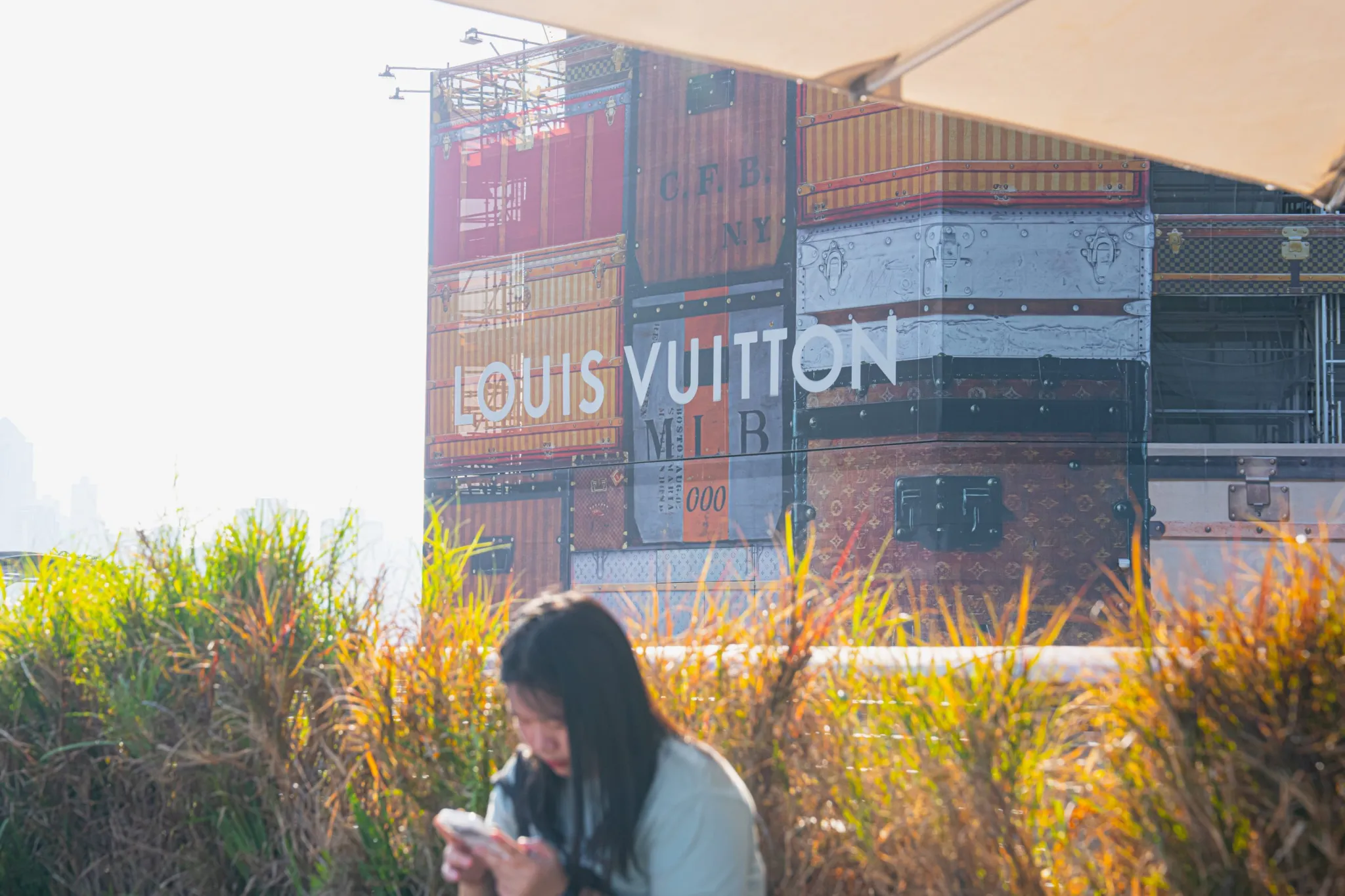
Chinese consumers are punishing Louis Vuitton at the cash register after the French luxury house won a trademark lawsuit against a domestic milk tea chain, accelerating an already severe spending pullback that dragged LVMH’s core division into contraction during the third quarter of 2026.
Revenue in LVMH’s fashion and leather goods segment fell to €8.25 billion from €8.50 billion a year earlier, translating to a 5% decline on an organic basis. The reversal follows 1% growth in the second quarter and marks one of the sharpest decelerations for the conglomerate’s most profitable unit since the post-pandemic normalization period. Luca Solca, managing director of luxury goods at Bernstein, estimated the consumer backlash tied to the dispute accounted for 2 to 3 percentage points of that total drop.
The financial damage stems from a June 29 court ruling in which a Chinese judge ordered beverage brand Molly Tea to halt use of its four-petaled floral logo and pay 10.3 million yuan ($1.5 million) in damages. Louis Vuitton filed the complaint in May 2025, arguing the design infringed on seven registered trademarks associated with its iconic monogram canvas, which was originally created by Georges Vuitton in 1896.


Rather than establishing a routine intellectual property precedent, the verdict ignited a nationalist firestorm. State-backed outlet Beijing Daily questioned why a European corporation should profit from penalizing a motif rooted in traditional Chinese aesthetics. On Weibo, the hashtag accusing the brand of monopolizing ancient patterns entered the top 10 trending topics. Related discussions amassed hundreds of millions of views across Chinese social platforms within days.
LVMH executives acknowledged the friction but stopped short of quantifying the exact financial toll. Chief Financial Officer Cecile Cabanis told analysts on the Oct. 12 earnings call that sizing the controversy’s impact remains difficult, though she conceded it likely depressed results early in the quarter. She explicitly rejected the notion that the company is reconsidering its capital commitments in the country.
Molly Tea founder Zhang Bocheng announced plans to appeal the judgment immediately after the ruling. Neither the beverage company nor LVMH responded to requests for comment regarding the ongoing commercial fallout.
The boycott effect compounded structural headwinds already battering Western luxury houses in Greater China. A prolonged property sector downturn, persistent youth unemployment, and a broader shift toward domestic brands have fundamentally altered the purchasing behavior of Chinese shoppers, who historically accounted for roughly a third of global luxury consumption. During the third quarter, spending by Chinese clients on LVMH fashion and leather goods plummeted by a mid-teens percentage compared to the prior year. Cabanis noted that purchases made inside mainland China fell by double digits, while outbound shopping by Chinese tourists declined by a mid-single-digit percentage.
Asia excluding Japan, which generates 27% of LVMH’s total revenue, swung from 4% organic growth in the second quarter to a 5% contraction in the third. Morningstar analyst Jelena Sokolova identified Chinese demand as the primary drag on the division in an Oct. 13 research note, confirming the trademark dispute as a contributing factor.
This regional weakness stands in stark contrast to North America, where LVMH recorded 5% organic sales growth during the same three-month period. That divergence reflects a wider industry split: U.S. consumers have continued supporting premium retail despite elevated interest rates, while Chinese buyers increasingly view conspicuous foreign logos as culturally tone-deaf amid rising economic nationalism.
LVMH shares closed lower following the earnings release as investors digested the severity of the Asian slowdown.









