HelioVolta Report: 87% of US Solar Projects Have Major Defects, 8% Require Emergency Shutdown
Tracker systems show 95% major defect rate; new HQS grading standard aims to fix industry-wide quality gaps
Nearly nine in ten utility-scale and commercial solar projects inspected across the United States and Puerto Rico contain major quality defects that threaten safety and financial returns, according to the fourth annual SolarGrade PV Health Report released by technical advisory firm HelioVolta. The 2026 edition, based on field data from nearly 8 gigawatts across more than 1,500 projects, found that 87% of inspected assets required urgent corrective action while 8% harbored critical faults demanding immediate de-energization.
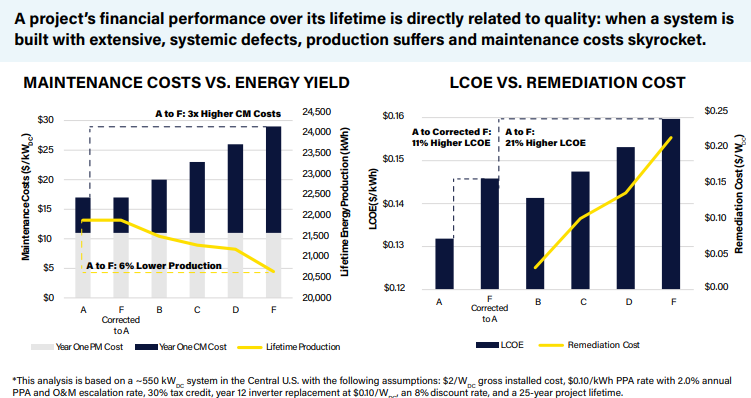
The findings underscore a systemic quality crisis in the rapidly expanding US solar fleet, which now exceeds 200 gigawatts of installed capacity. HelioVolta’s analysis quantifies the financial toll: quality deficiencies can increase levelized cost of energy (LCOE) by more than 20%, with the lowest-rated (F-grade) systems underperforming by an estimated 6% over their lifetimes and incurring three times the unplanned maintenance costs of top-tier (A-grade) assets.
Tracker systems — which follow the sun’s path and represent 89% of total inspected capacity despite being just 10% of project count — posted the industry’s worst risk profile. Eighteen percent of tracker installations contained critical issues, and 95% showed major defects. The constant mechanical stress on moving components amplifies installation errors, accelerating failures in connectors, wire management, and distribution hardware.

Commercial rooftops, comprising 83% of all inspected projects, fared only marginally better. Eighty-eight percent carried major issues and 8% critical faults. Thermal anomalies appeared in 43% of rooftop systems and accounted for 62% of critical rooftop findings. These hotspots often signal potential-induced degradation, cell cracking, or connector failure — conditions that can lead to arc faults and fire risk if unaddressed.
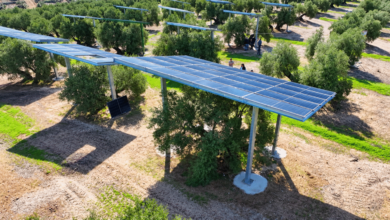
Fixed-tilt ground mounts showed the lowest critical rate among major categories at 4%, though 73% still required major remediation. Half of all ground-mount defects traced to grounding, bonding, and wire termination errors. Canopy systems recorded zero critical issues and a 59% major-issue rate, but HelioVolta cautioned that the segment represents only 0.3% of inspected capacity, making conclusions preliminary.
To replace subjective quality assessments with enforceable metrics, HelioVolta introduced the HelioVolta Quality Standard (HQS), a data-driven grading rubric now embedded in the report. The firm also inaugurated HQS Awards recognizing exemplary workmanship on projects under 5 megawatts. The Best Rooftop PV System honor went to a 760-kilowatt array developed by Greenskies Clean Energy and built by Opulent Power Solutions for a Fortune 100 retailer in California. Judges cited module-level string labeling, precisely measured conduit runs, capped unused inverter terminals, and properly torqued wire terminations.
The Best Ground Mount PV System award recognized a 1.15-megawatt fixed-tilt array developed by Onyx Renewables and constructed by Helix Electric for a California homeowners association. Standout features included research-grade meteorological instrumentation, meticulous electrical enclosure wiring, and protective conductor sheathing.
HelioVolta recommends three immediate steps for asset owners: integrate standardized quality assurance and quality control during construction, mandate thermal imaging at commissioning, and implement bi-annual operational inspections. The firm argues that consistent inspection regimes are the most effective lever for protecting long-term yield and site safety.
The report arrives as institutional investors and insurers tighten due diligence on solar portfolios. Several major reinsurers now require third-party quality assessments before underwriting new capacity, and tax-equity investors have begun discounting assets lacking documented QA/QC records. HelioVolta’s HQS framework is being evaluated by two large asset managers as a potential procurement standard for 2026 acquisitions.