

Healdsburg, California: The Small Town Dominating the Michelin Guide
With three Michelin stars and multiple recognized venues, this 11,000-resident Sonoma County town outpaces major cities in fine-dining density.
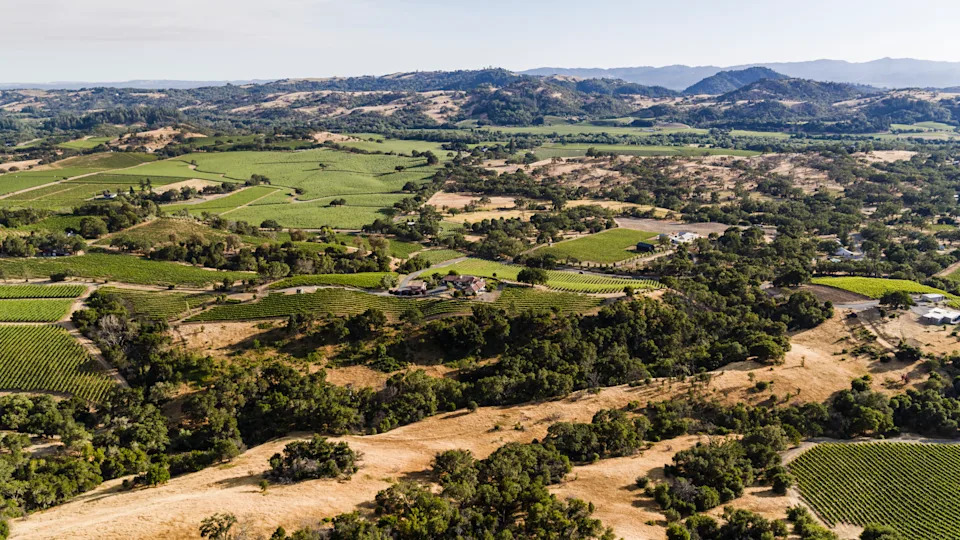
A single three-star restaurant usually anchors a major metropolitan dining scene. In Healdsburg, California, it is merely the starting point for a culinary concentration that defies the town’s 11,000-person census count.
Located roughly 70 miles north of San Francisco in Sonoma County, Healdsburg holds more Michelin-recognized restaurants per capita than New York City, Tokyo, or Paris. The entire downtown core spans just a few walkable blocks around a historic plaza, yet it supports an ecosystem of fine dining, regenerative agriculture, and luxury hospitality that typically requires a population base in the millions to sustain.
The density of high-end kitchens within such a small footprint represents a structural anomaly in American gastronomy. While rural fine dining exists elsewhere—most notably at destinations like The French Laundry in nearby Yountville—those are often singular outposts. Healdsburg operates as a fully integrated culinary district where multiple award-winning establishments share the same sidewalks, sourcing from the exact same surrounding acreage.


SingleThread established the baseline for this reputation. Chef Kyle Connaughton and farmer Katina Connaughton built their three-Michelin-starred operation around an 11-course tasting menu drawn almost entirely from their own farm located minutes from the dining room. Vegetables harvested hours before service arrive alongside local seafood and estate-grown herbs. The Michelin Guide reserves its three-star designation—the highest possible rating—for restaurants deemed “worth a special journey,” a classification that has turned the unassuming storefront into a global pilgrimage site for food professionals and enthusiasts.
But the town’s culinary weight extends far beyond one kitchen. Within a short radius of SingleThread, the Michelin Guide also recognizes Barndiva, where chef Erik Anderson executes farm-to-table cooking in a courtyard setting, and Valette, led by chef Dustin Valette and owner Aaron Garzini, which focuses heavily on Sonoma Coast seafood and regional produce. The Matheson, Dry Creek Kitchen, and Troubadour Bread and Bistro round out the guide’s selections, creating a cluster of recognized venues that would be spread across dozens of city blocks in any urban environment.
This concentration traces directly to the region’s agricultural architecture. Harmon Heald founded the settlement in the 1850s along the Russian River. The arrival of the railroad in the 1870s transformed the area into a shipping hub for prunes, hops, and eventually grapes. Today, Healdsburg sits at the convergence of three distinct American Viticultural Areas: the Russian River Valley, Dry Creek Valley, and Alexander Valley. Each AVA possesses unique microclimates and soil compositions, allowing chefs to source an unusually diverse range of ingredients without relying on long-distance supply chains.
That hyper-local infrastructure supports operations well outside the Michelin framework. At Little Saint, a plant-based restaurant, bar, and market, menus rotate based on yields from an eight-acre regenerative farm situated just down the road. Executive Chef David Lawrence, who trained at London’s Michelin-starred Le Gavroche before running acclaimed San Francisco kitchens, applies similar sourcing rigor at Goodnight’s Prime Steak and Spirits, pairing Japanese A5 Wagyu with Pacific Coast oysters and produce from neighboring cattle ranches and orchards. Jacob Harth, who earned national recognition for his Portland restaurant Erizo, now applies French farmhouse techniques to Sonoma ingredients at Bistro Lagniappe, cooking over a wood-burning oven steps from the plaza.
Celebrity chef Charlie Palmer further cemented the town’s status by choosing Healdsburg as the flagship location for his Appellation hotel brand. The 108-room property houses Folia Bar and Kitchen, where Palmer—a 1997 James Beard Foundation Best Chef in America winner who has accumulated more than 20 Michelin stars over his career—oversees wood-fired cooking fueled by produce grown in the hotel’s culinary gardens and his personal greenhouse. Costeaux French Bakery, operating in the community for a century, continues to bake artisan breads in steam-injected brick ovens that routinely sell out before midday.
The integration of food and lodging has accelerated recently. Alongside Appellation, The Cottages at Little Saint offer four redesigned properties by designer Ken Fulk, positioning guests directly adjacent to the restaurant’s wine program, heated pool, and garden spaces. This model mirrors European agritourism traditions but adapts them to Northern California’s specific terroir.
Even the region’s historically dominant wine industry has expanded its parameters. Jordan Vineyard and Winery now pairs its seated tasting experiences—which feature rotating seasonal plates including caviar and housemade popovers—with zero-proof options. The shift addresses a growing demographic of sober travelers seeking culinary tourism without alcohol. Local tasting rooms have diversified accordingly, with La Ruche offering guided tastings of nearly 200 global honey varieties, including rare single-flower iterations, while The Olive Press conducts sensory education sessions focused exclusively on California-grown extra-virgin olive oil.
Reservations at SingleThread currently require booking months in advance, with tables frequently secured by international travelers flying directly into San Francisco International Airport specifically for the Sonoma County dining circuit.









