Tesla Robotaxi Paid Mileage Drops 36% as Company Shifts Strategy on Autonomous Fleet Calibration
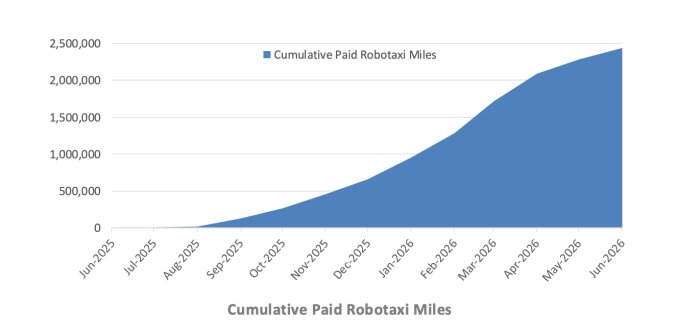
Commercial ride-hailing volume across Tesla’s autonomous transport service fell sharply during the second quarter, contradicting executive projections of rapid operational scaling and adding pressure to a disappointing financial report that triggered a steep market decline.
Quarterly operational metrics released alongside Tesla earnings show that the company’s paid Robotaxi network—composed of Model Y vehicles operating across select markets—logged approximately 700,000 passenger miles between April and June. That represents a 36% contraction from the nearly 1.1 million miles recorded in the first quarter, despite expanding geography across six cities in Texas and Florida. The sudden reduction in paid mileage coincided with weaker-than-expected corporate profit margins, sending Tesla stock down by more than 13% in early trading on Thursday.
The pullback comes as commercial ride-hailing services face heightened investor scrutiny. For electric vehicle manufacturers facing margin compression on hardware sales, driverless passenger networks are viewed as a critical high-margin revenue engine needed to justify premium technology valuations.
Addressing the slower rollout during an investor call, Chief Executive Elon Musk stated that scaling the service requires gathering hardware-specific operational data for the Cybercab, Tesla’s purpose-built two-seater autonomous vehicle. Musk explained that the company must accumulate road miles using Cybercab units equipped with physical steering wheels and pedals to properly calibrate the vehicle’s distinct chassis dynamics before deploying large fleets.
This requirement marks a strategic shift from previous statements suggesting that Tesla’s consumer vehicle fleet—comprising millions of customer cars running Full Self-Driving background software—provided sufficient real-world data to fully launch an autonomous network. In chassis engineering, distinct vehicle weight profiles, steering geometry, and suspension tuning require bespoke algorithmic calibration to ensure reliable automated handling.
Tesla’s ride-hailing figures also incorporate passenger trips in the San Francisco Bay Area, where vehicles operate with human safety drivers onboard because Tesla lacks the state regulatory permits required to run fully driverless rides in California.
Regulatory records filed with the National Highway Safety Administration document 22 crashes involving Tesla autonomous test vehicles over the past year. While most incidents involved third-party drivers striking stationary Teslas, filings include three collisions resulting from errors by remote human teleoperators, as well as minor low-speed impacts with utility poles, curbs, and tow truck beds.
Despite these filings, Tesla AI Vice President Ashok Elluswamy emphasized that driverless units have logged over 380,000 miles without “notable incidents,” maintaining that non-stationary accidents were caused by outside motorists. Musk echoed caution, warning that even a single high-profile accident could spark regulatory crackdowns, contrasting strict media scrutiny of autonomous transport with the 30,000 to 40,000 annual motor vehicle deaths in the United States.
Tesla also reiterated its commitment to a vision-only autonomous architecture utilizing optical cameras alone. This contrasts with competitors like Waymo, which rely on multi-sensor suites combining lidar, radar, and high-definition mapping to navigate urban centers. Executive leadership projected that unsupervised vehicle miles would continue growing steadily, citing weekly gains of roughly 10% since driverless trials began late last year.