Bitcoin Cycle Low May Have Arrived Early as Macro Factors Take the Lead, Grayscale Reports
Grayscale research suggests macroeconomic forces and Federal Reserve decisions are overriding the traditional four-year halving cycle.
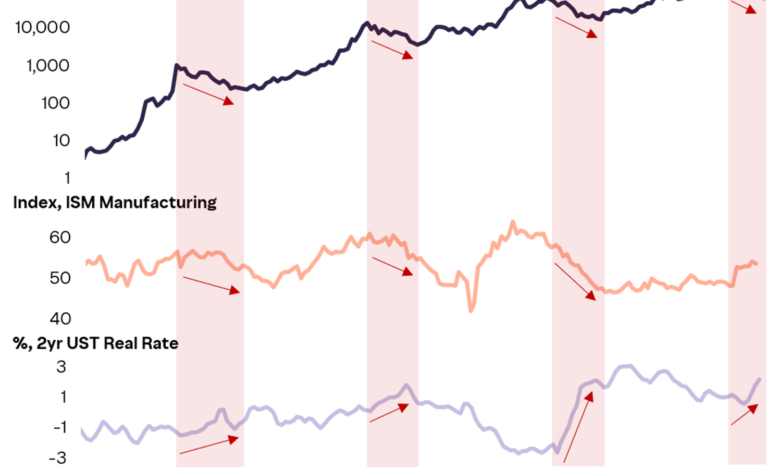
Bitcoin may have already reached its cyclical price bottom, breaking away from its traditional four-year halving cycle as macroeconomic forces and Federal Reserve monetary policy take over as the primary drivers of the cryptocurrency market. According to a report by digital asset management firm Grayscale, the maturing asset class is now highly sensitive to broader economic indicators, suggesting a potential cycle low was established earlier than historical patterns would dictate.
Zach Pandl, head of research at Grayscale, highlighted that Bitcoin’s price movements are increasingly aligned with global macroeconomic trends rather than purely crypto-native supply dynamics. Pandl suggested that if the Federal Reserve pauses its aggressive interest rate hikes and the broader economy avoids a severe recession, the cryptocurrency’s price bottom may already be behind us, potentially landing in the September-to-October window.
Historically, Bitcoin’s price cycles have been closely tied to its halving events, which occur approximately every four years and reduce the rate of new supply generation. However, the massive influx of institutional capital and the introduction of spot exchange-traded funds (ETFs) have integrated Bitcoin deeper into traditional financial markets. Consequently, the asset has behaved more like a risk-on macro asset, highly sensitive to liquidity conditions and interest rate expectations.
The Federal Reserve’s upcoming policy meeting on July 29 is a critical focal point for market participants. According to the CME Group FedWatch Tool, traders are pricing in a 66% probability that the central bank will maintain current interest rates, a decline from the 88% probability recorded a week prior. Pandl noted that previous Bitcoin bear markets have typically coincided with periods of decelerating economic growth and rising real interest rates, making the Fed’s next moves pivotal for the digital asset’s trajectory.
Other market indicators support the thesis of an imminent or established bottom. Data from cryptocurrency brokerage K33 recently revealed that more than 50% of the circulating Bitcoin supply was being held at an unrealized loss. Historically, such widespread capitulation has signaled the final stages of a bear market, with prices bottoming out weeks after more than half of the supply falls underwater.
Furthermore, long-term investor behavior reflects strong conviction. Cory Klippsten, CEO of Swan Bitcoin, pointed to record-high accumulation by long-term holders, whose collective balances reached an all-time high of 14.7 million Bitcoin earlier this year. This hoarding behavior effectively reduces the liquid supply available on exchanges, creating a supply sink that historically cushions price floors during market downturns.
Despite the bullish macro outlook, regulatory hurdles remain a significant headwind. Pandl warned that legislative delays, particularly regarding stablecoin and digital asset frameworks like the CLARITY Act, could force corporate treasuries holding Bitcoin to deleverage, potentially triggering moderate downward pressure. Moreover, not all analysts agree on an early bottom. Jiang Zhuoer, founder of Lebit Mining Pool, projects a much later cyclical low, estimating that Bitcoin may not find its ultimate bottom until the final quarter of 2026, based on corporate valuation metrics relative to net asset values.