Trump Tariff Fears Spark Crypto Sell-Off as NYSE Prepares for 24/7 Tokenized Trading
Bitcoin slips to $91,100 while institutional adoption marches forward with NYSE tokenization plans and Bermuda's national blockchain initiative.

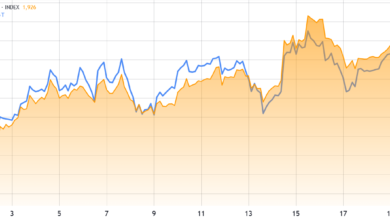
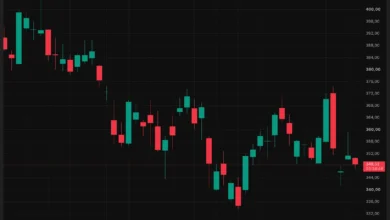
Fresh tariff warnings from President-elect Donald Trump have triggered a wave of volatility across global financial markets, sending major cryptocurrencies into the red. Bitcoin fell by 2% to trade around $91,100, while Ethereum dropped 4% to $3,105. Other leading digital assets followed suit, with Solana slipping 3% to $129 and XRP declining 2% to $1.93.
The market pullback coincided with a sharp reversal in institutional investment flows. U.S. spot Bitcoin exchange-traded funds (ETFs) recorded $394 million in net outflows on Friday, snapping a four-day streak of positive inflows. Conversely, Ethereum ETFs managed to buck the broader trend, securing a modest $4.7 million in net inflows to remain in positive territory.
Despite the short-term market turbulence, structural integration between traditional finance and blockchain technology continues to accelerate. The New York Stock Exchange (NYSE) has begun early preparations to facilitate 24/7 trading for tokenized stocks and ETFs. This move represents a significant shift toward continuous, borderless trading hours, challenging the traditional market schedule that has governed Wall Street for over a century. The initiative aligns with ongoing discussions at the Securities and Exchange Commission regarding the modernization of exchange operating hours and clearing mechanisms.
Corporate adoption of digital assets also continues to expand into unexpected sectors. Restaurant chain Steak ’n Shake disclosed a strategic Bitcoin exposure of approximately $10 million. The company is also establishing a formal corporate treasury reserve dedicated to the cryptocurrency, mirroring a treasury strategy popularized by enterprise software firm MicroStrategy and subsequently adopted by several small-to-mid-cap public companies seeking inflation hedges.
On the sovereign level, Bermuda has unveiled a highly ambitious plan to transition to a fully onchain national economy. The government is collaborating with major digital asset firms Coinbase and Circle to develop decentralized infrastructure for payments, digital identity, and tokenized financial services. Bermuda has long positioned itself as a progressive regulatory jurisdiction for digital assets, utilizing its Digital Asset Business Act to attract international Web3 enterprises.
Meanwhile, the decentralized finance (DeFi) sector is facing internal calls for structural reform. Ethereum co-founder Vitalik Buterin recently urged the crypto community to design more sophisticated governance models for decentralized autonomous organizations (DAOs). Buterin emphasized that current voting mechanisms require deeper accountability, better coordination, and long-term sustainability to prevent centralization risks and governance gridlock.
The downturn also hit the speculative meme coin sector, which typically exhibits higher beta to major cryptocurrencies. Dogecoin and Shiba Inu both slipped by 1%, while Pepe fell 2% and SPX dropped 12%. Despite the widespread red across major assets, decentralized onchain markets saw isolated surges. Eliza Town surged by 800%, USOR gained 70%, and GSD rose by 50%, highlighting the highly fragmented nature of current onchain liquidity.