Senate Grills CDC Nominee Erica Schwartz Over Agency Independence and RFK Jr. Influence
Dr. Erica Schwartz pledges 'radical transparency' as lawmakers raise concerns over political interference and leadership turnover at the public health agency.
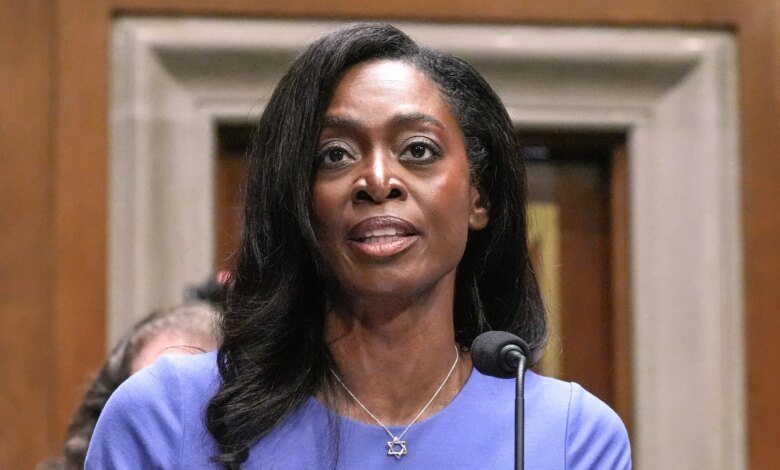
WASHINGTON — The battle over the leadership and scientific independence of America’s premier public health agencies spilled into a Senate hearing room on Wednesday, as lawmakers grilled the Trump administration’s latest nominee to head the Centers for Disease Control and Prevention.
Dr. Erica Schwartz, a 54-year-old former military physician, faced sharp questioning from members of the Senate health committee who are deeply concerned about the agency’s vulnerability to political meddling. The CDC, which is legally charged with protecting Americans from preventable health threats, has been buffeted by leadership instability, mass departures, and public clashes over medical orthodoxy.
During her testimony, Schwartz sought to reassure lawmakers that she would remain independent, pledging to employ radical transparency to rebuild trust in an institution whose global reputation has been severely bruised. “I will never betray the science,” Schwartz told the committee.
Yet, the shadow of U.S. Health and Human Services Secretary Robert F. Kennedy Jr. hung heavily over the proceedings. Kennedy, a prominent critic of the pharmaceutical industry who has repeatedly sought to alter federal vaccine policies, has already exerted significant influence over the agency. Senators repeatedly pressed Schwartz on how she would handle pressure from her potential boss, but she frequently declined to distance herself from his controversial actions.
The stakes for the CDC could not be higher. Historically regarded as the world’s gold standard for epidemiological research, the Atlanta-based agency has been in a state of administrative turmoil. Driven by layoffs and resignations, the CDC has lost more than 3,000 employees—representing more than a quarter of its workforce. Morale has plummeted as a rapid succession of temporary leaders have cycled through the front office, which is currently heavily staffed by political appointees with little to no formal training in medicine or public health.
“There’s still really good people who work there,” said Dr. David Margolius, director of Cleveland’s health department and a leader in a national coalition of metropolitan health officials. “They are doing their best to navigate choppy waters.” However, Margolius warned that the CDC has lost its footing as the authoritative, central voice during public health emergencies. “Basically everybody’s got to kind of choose their own adventure, as opposed to being led by a national public health department,” he added.
The leadership vacuum at the CDC has been exacerbated by a highly unstable transition. The administration’s initial nominee, former Florida Representative Dr. David Weldon, withdrew in March 2025 just an hour before his confirmation hearing after learning he lacked the necessary Senate votes. The White House then turned to acting director Susan Monarez, who was confirmed but abruptly ousted in less than a month after administration officials deemed her misaligned with their agenda. Her dismissal prompted several key scientific leaders at the CDC to resign in protest, warning that her departure destroyed any hope of shielding scientific research from political interference. Since then, a revolving door of temporary leaders has managed the agency, with National Institutes of Health Director Jay Bhattacharya most recently overseeing operations.
During Wednesday’s hearing, Democratic senators pushed Schwartz to clarify her stance on Kennedy’s interventions. Kennedy had previously promised not to alter the nation’s childhood vaccine schedule, but upon taking office, he announced plans to investigate it and attempted a major rewrite of pediatric vaccine recommendations—an effort halted earlier this year by a federal judge.
When questioned, Schwartz claimed she was unaware of recent decisions to curtail CDC programs aimed at preventing smoking and promoting routine vaccinations. She also declined to commit to removing a controversial CDC website that suggests a link between childhood vaccines and autism, stating she had not personally reviewed the page, though she acknowledged that existing medical consensus has found no such link.
The tension peaked during an exchange with Senator Maggie Hassan, a New Hampshire Democrat, who asked if Schwartz would comply if Kennedy ordered her to halt a promotional campaign for flu shots during a severe influenza season.
“Senator, I don’t speak in hypotheticals,” Schwartz replied.
“It isn’t hypothetical. It happened,” Hassan countered, pointing to internal CDC emails released last month by Senator Bernie Sanders that confirmed Kennedy had issued exactly such a directive to staff last year.
Schwartz suggested that some restructuring of the agency’s focus might be warranted, noting that “over time, the CDC has had some mission creep, and it’s trying to be all things to all people.” However, she quickly accommodated several requests from Republican lawmakers, promising to investigate whether artificial intelligence data centers pose localized health risks and agreeing to explore the creation of a World Trade Center Health Program clinical center in Florida.
Schwartz’s nomination, which Trump announced in April, calling her “incredibly talented,” has received qualified support from Kennedy. At a congressional hearing that same month, Kennedy praised the choice but pointedly refused to commit to endorsing any vaccine guidelines her agency might issue.
To prepare for her potential confirmation, Schwartz recently submitted federal financial disclosure filings. She disclosed that she will resign from her current executive role at UnitedHealth Group, where she earned approximately $850,000 in salary and bonuses, and will cash out her stock options. She will also step down from the boards of Butterfly Network Inc., a Massachusetts-based ultrasound technology firm; Aveanna Healthcare, an Atlanta-based home healthcare provider; and the Florida-based Searching for Solutions Institute.
Schwartz’s career has been defined by her long service in military uniform, including a senior role at the U.S. Coast Guard where she managed a network of 41 clinics and 150 sick bays, enforcing vaccination policies for service members. She later served as deputy surgeon general, coordinating uniformed health professionals deployed across various federal health agencies.
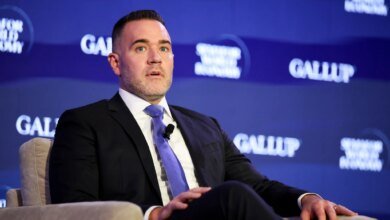
The Senate committee also vetted Sean Kaufman, the nominee to lead the Office of the Assistant Secretary for Preparedness and Response (ASPR), the agency responsible for coordinating the federal response to disasters and public health emergencies.
Although the Trump administration announced a sweeping plan last year to consolidate ASPR under the CDC, that structural reorganization has not yet materialized. The ASPR director wields immense influence over federal funding for countermeasures, including next-generation vaccines for pandemic influenza.
Kaufman’s nomination has drawn scrutiny due to his past public statements. In LinkedIn postings, Kaufman has expressed skepticism about certain routine immunizations, arguing against administering hepatitis B vaccines to newborns, and noted that he had served as an expert witness for individuals refusing COVID-19 vaccinations.
Under questioning on Wednesday, Kaufman was asked to address a past social media post in which he expressed hatred for the CDC. He was also pressed on his support for the administration’s decision last year to cancel 22 research projects, totaling $500 million, aimed at developing vaccines using mRNA technology.
While infectious disease experts widely view mRNA technology as safe and credit its rapid development during the first Trump administration with mitigating the COVID-19 pandemic, critics warn that halting these projects could leave the U.S. vulnerable to future pandemics.
Kaufman defended his position, stating that while he believes mRNA technology is safe and effective, it is prudent to review existing research and analyze potential side effects before committing further funds.
Senator John Hickenlooper, a Colorado Democrat, challenged that rationale, arguing that such scientific evaluations fall under the purview of other federal agencies, not ASPR. Hickenlooper warned that delaying these initiatives could severely hinder the nation’s ability to respond to emerging biological threats.