Walmart Uses $3 Billion Tariff Refund Windfall to Slash Prices as Sales Growth Hits 6-Year Low
Retailer deploys Supreme Court tariff payout for thousands of rollbacks amid consumer spending pressures
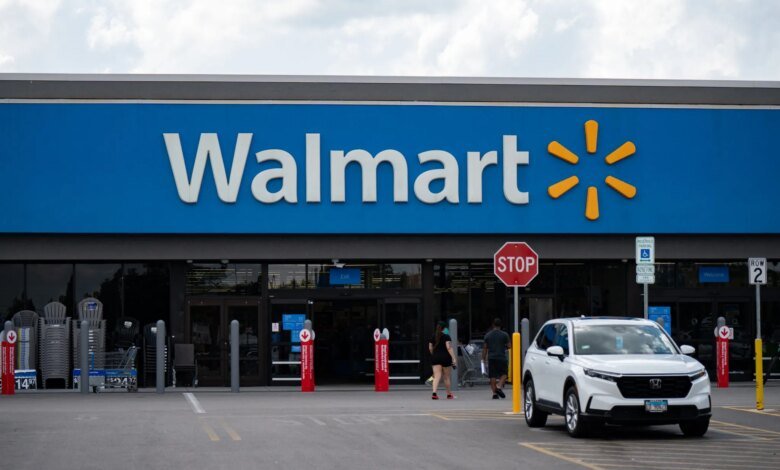
Walmart is channeling nearly $3 billion in returned funds from Donald Trump’s struck-down Liberation Day tariffs into aggressive storewide price cuts, aiming to reignite spending after its domestic sales growth fell to a six-year low.
The retail giant qualified for $2.9 billion in tariff refunds after the Supreme Court determined that duties levied under President Donald Trump’s emergency powers were unconstitutional—representing roughly half a percent of its annual U.S. sales. CFO John David Rainey stated on Walmart’s earnings call Thursday that the company has collected “substantially all” of those funds and will reinvest the capital into lowering shelf prices “because customers need us to.” Walmart shares moved as much as 9% in Thursday trading after U.S. sales growth hit a 6-year-low.
“We’ve taken a disciplined approach to investing these funds back into customer experience and price leadership, prioritizing investment in grocery and general merchandise categories,” Rainey told analysts on the call.
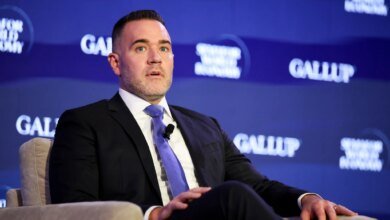
The retail chain now features over 11,000 items on “rollback,” its designation for temporary price markdowns, compared with approximately 7,200 at the close of the prior quarter. Walmart CEO John Furner noted that this marked the highest volume of rollbacks he could recall “at least in recent times.” The refunded funds have been allocated toward discounts, particularly on ground beef, where Furner pointed out that elevated prices were straining shoppers. Walmart had previously passed tariff costs along to buyers, driving retail prices on categories like electronics and appliances up by more than 3%, compared to 1.7% prior to the duties.
“Ultimately, we’re trying to reinforce the everyday low-price model and save customers money,” Furner said.
Research shows that consumers carried the brunt of tariff expenses alongside mounting inflation. Dallas Fed researchers calculated that core inflation would have been 0.8 percentage points lower in March had the tariffs not been applied. Additional research from the Kiel Institute estimated that American consumers absorbed 96% of total tariff costs.
The invalidation of executive-branch tariffs by the Supreme Court represents a significant commercial shift for major U.S. importers. When large retail distributors absorb and pass along emergency import surcharges, subsequent judicial strikes trigger Customs and Border Protection rebate proceedings, providing corporations with unexpected capital that can be deployed to lower store prices and protect market share during broader consumer spending contractions.
Gas prices squeezed Walmart customers as fewer people shopped
The effort to drop prices arrives as Walmart indicates its core customer base is facing renewed pressure from gas prices, reinforcing warnings that company leadership has highlighted since May.
Rainey informed analysts that budget strain became more pronounced in June when gas rose above $4 a gallon, driving consumers to make stricter trade-offs in their purchasing decisions. Consequently, the company now projects absorbing more than $2 billion in extra fuel-related operational costs this year above its initial forecasts.
In-store shopper counts also waned as a K-shaped economy retained higher-income shoppers while squeezing lower-income households, leaving Walmart with its largest market-share gains coming from households making over $100,000 annually.
Walmart’s domestic sales increased 2.6% in its most recent quarter, trailing Wall Street projections of 3.8% and marking the merchant’s first comparable-sales shortfall in over five years. Customer traffic growth slowed to 1.5%, down from 3% in the prior quarter, as elevated gas prices burdened shoppers. Rainey had previously cautioned in May that customers filled their vehicles with fewer than 10 gallons on average for the first time since 2022, calling the metric an “indicator of stress.”
While core sales categories outside health and wellness remained steady in the 3% to 4% range, Walmart adjusted its full-year sales outlook upward to growth of 4% to 5%, from 3.5% to 4.5% previously, on the strength of early-year performance and anticipated gains from its price rollbacks. Providing significant support throughout the quarterly shift was global e-commerce, where digital sales surged 23%.