ECB Warns AI Stock Bubble Risk Threatens European Investors
Central bank researchers highlight high exposure to U.S. Big Tech stocks.
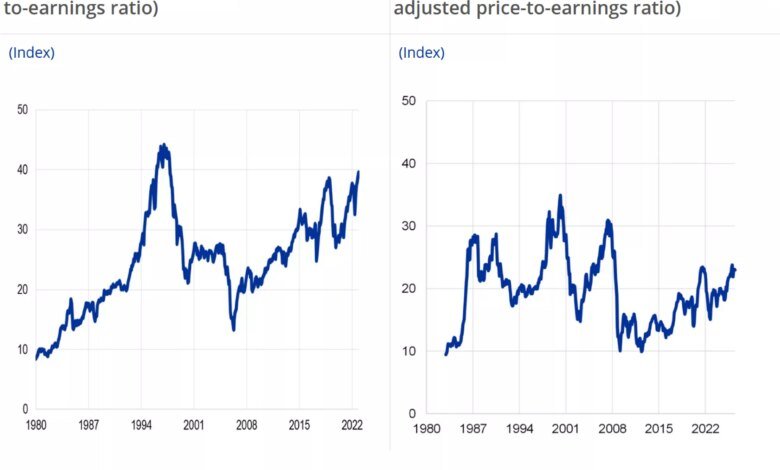
Economists at the European Central Bank are warning that inflated stock valuations in the U.S. artificial intelligence sector pose a direct threat of a global financial correction, with severe spillover risks for European households and financial institutions. In an analytical paper published by five ECB researchers, the Frankfurt-based institution warned that equity prices on Wall Street are hovering near historical highs, fueled by aggressive corporate capital spending and speculative enthusiasm around generative AI technologies.
Despite the concentration of artificial intelligence capital expenditures remaining anchored in Silicon Valley and Wall Street, European retail investors maintain massive, direct exposure to U.S. Big Tech firms. European Union households hold approximately u20ac440 billion in U.S. technology equities, frequently through passive index investments, mutual funds, or managed portfolios where underlying cross-border risks are not fully understood by retail asset owners.
European institutional funds are similarly tied to the performance of American technology conglomerates. Major European pension funds and insurance providers have scaled up allocations to high-performing U.S. mega-cap equities in recent years to boost investment returns, amplifying systemic vulnerabilities across the euro area’s financial framework if technology valuations experience a sudden downturn.
To evaluate current market behavior, the ECB researchers examined previous technological revolutions, comparing the modern artificial intelligence boom to the 19th-century railway expansion, the rise of electricity and radio commercialization during the 1920s, and the late-1990s dot-com bubble. While each historic advancement fundamentally restructured global business operations, every episode triggered a severe market boom-and-bust sequence that destroyed substantial investor capital before productivity benefits materialized.