Russia Legitimizes Crypto Infrastructure and Cross-Border Trade Settlements Under Sweeping Law
President Vladimir Putin signs legislation establishing state registry requirements for crypto exchanges while greenlighting digital assets for cross-border trade.
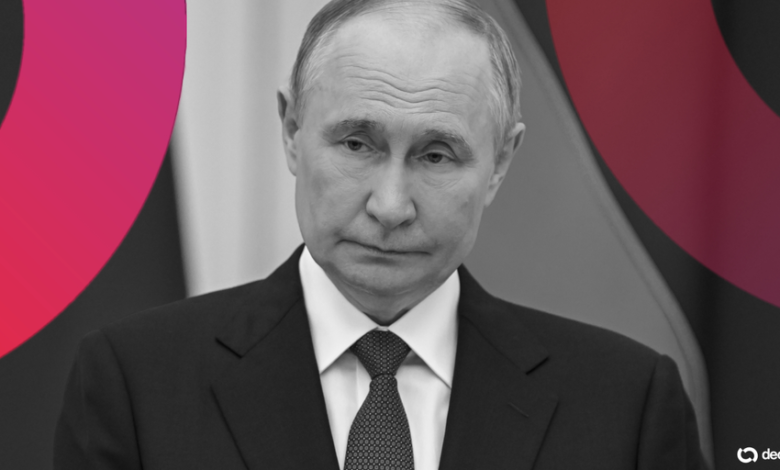
Russia has enacted its first comprehensive legal framework for digital asset exchanges, brokerages, and custodians after President Vladimir Putin signed sweeping legislation that legitimizes institutional crypto infrastructure while establishing tight state oversight over domestic financial flows.
Reported by state news agency TASS, the law establishes strict licensing and state-registry mandates for trading platforms, clearing houses, and digital depositories, filling a major regulatory void left after Russia legalized cryptocurrency mining in 2024. Most of the new provisions take effect on September 1, creating a structured, state-monitored pipeline for digital asset liquidity.
Crucially for international trade, the legislation maintains a complete prohibition on using cryptocurrencies and digital rights as payment for domestic goods and services within Russia, alongside a blanket ban on advertising crypto payment services. However, the law explicitly carves out exceptions for foreign commerce: settlements under international trade contracts between Russian residents and non-residents are now formally permitted, as are transactions involving locally mined cryptocurrencies and internal digital asset platform transfers—a strategic framework created as the country seeks settlement channels around Western financial sanctions.
Under the new architecture, digital asset operators face strict operational hurdles. Exchanges must maintain at least 15 million rubles ($187,000) in equity, secure membership in an approved financial market self-regulatory body, and obtain placement on an official government registry. Existing market participants have been granted a grace period until July 1, 2027, to achieve full compliance. Entities generating more than 3.5 million rubles in monthly transaction volume will automatically trigger standard exchange regulatory requirements, while commercial banks and foreign lender branches are legally required to block fiat transfers linked to unregistered crypto service providers.
Retail market access will be tightly restricted through mandatory investor categorization and volume limits. Non-accredited retail investors will be permitted to trade only the most liquid cryptocurrencies—a list to be published by regulators—and capped at annual purchases of 300,000 rubles per intermediary. Both retail and qualified investors must pass mandatory knowledge assessments before trading, though accredited investors face no annual purchasing caps. In a key development for property rights, the legislation guarantees legal standing and judicial protection for cryptocurrency owners in Russian courts, regardless of whether the assets were previously declared.
The September 1 implementation timeline directly aligns with the Central Bank of Russia’s mandate requiring commercial banks to support infrastructure for the digital ruble, cementing a dual-track strategy aimed at centralizing domestic retail transactions via state digital currency while directing institutional crypto activity through supervised gateways.