Bill Ackman Attacks NYC Rent Freeze, Warning Policy Distorts Housing Market
Pershing Square founder says price caps shift burden to free-market renters and choke housing supply.
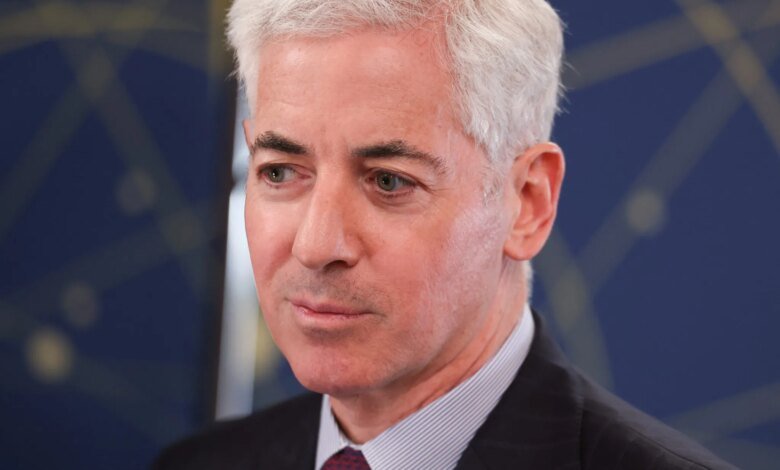
Pershing Square Chief Executive Bill Ackman warned that New York City’s government intervention in the housing market is worsening its affordability crisis, putting the hedge fund manager at direct odds with Mayor Zohran Mamdani’s progressive economic policies.
Speaking on Fortune’s “500 Titans and Disruptors of Industry” podcast, Ackman argued that administrative rent freezes and stringent development regulations are curtailing housing supply and driving market-rate prices higher. His comments follow a landmark 7-1 vote by New York City’s Rent Guidelines Board to freeze rents on one- and two-year leases for nearly one million rent-stabilized apartments, marking the first two-year lease freeze in the city’s history.
“In many New York City buildings, roughly half the tenants are in rent-stabilized apartments with frozen rent, and the other half are at market rate,” Ackman said. “So landlords raise rents on the free-market half to generate enough cash flow to cover their interest expense. That’s bad policy contributing to the affordability problem.”
The policy environment has led property owners to pull unrenovated housing units off the market entirely, according to Ackman. State figures as of April 2026 showed more than 57,000 vacant rent-stabilized apartments across the city. Landlords contend that current regulations prevent them from recovering the capital expenditure required to rehabilitate older units.
Housing researchers and tenant advocacy organizations counter that historic deregulation stripped more than 300,000 units from stabilization protections between 1994 and 2019, arguing that supply caps are not the primary driver of rising costs. However, credit analysis from Moody’s indicates that sustained regulatory caps carry financial risks, projecting a five-year rent freeze would leave approximately 6% of citywide multifamily loans vulnerable to default by 2030.
Ackman extended his critique of state-level regulation to the energy sector, citing long delays for major infrastructure projects. The Constitution Pipeline, initially submitted for approval in 2012, was blocked by state environmental permits in 2016 before its developers formally abandoned the project in November 2025 after 13 years of regulatory reviews.
Contrasting New York’s regulatory framework with other jurisdictions, Ackman pointed to Austin, Texas, where aggressive residential construction has driven down average lease rates, and Florida, where state lawmakers have placed a property-tax reduction measure on the November 2026 ballot requiring 60% voter approval to expand homestead exemptions.
Ackman also voiced opposition to Mamdani’s proposed “pied-à-terre” tax on non-resident secondary homes and broader wealth tax proposals, cautioning that penalizing high earners risks damaging the city’s tax base. According to city tax estimates, the top 10% of earners currently generate roughly 70% of New York City’s income tax revenue. Instead of wealth levies, Ackman advocated expanding capital ownership, noting he previously pitched the Trump administration on a national savings plan offering government-matched retirement accounts for workers without employer coverage.