2026 Range Rover Sport PHEV: A High-Stakes Balancing Act in Luxury Electrification
Balancing 543 HP with 53 Miles of Electric Range
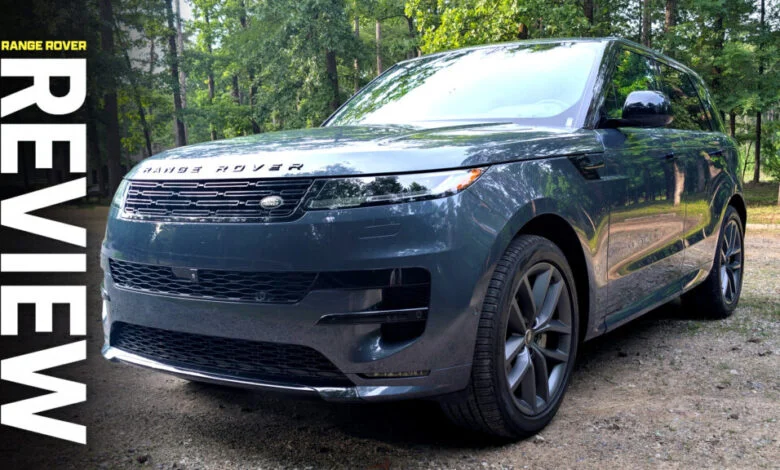
The 2026 Range Rover Sport PHEV arrives as a calculated response to a luxury market that is increasingly hesitant to commit fully to battery-electric vehicles but remains hungry for efficiency. Priced at a starting point of $83,700, with high-specification testers reaching $96,725, this plug-in hybrid seeks to occupy the narrow space between raw internal combustion performance and the silent utility of an EV.
At the heart of this iteration is a 3.0-liter turbocharged inline-six paired with a 38.2-kWh battery. The system produces a combined 543 hp and 590 lb-ft of torque, delivered through an 8-speed automatic AWD system. While these figures suggest a performance-oriented machine, the vehicle’s true utility lies in its electric capability. The EPA estimates a range of 53 miles on electric power alone, a figure that allows the average commuter to bypass the gas pump entirely during daily operations.
Visually, the model adopts a stealth-wealth aesthetic. Finished in Varesine Blue, the exterior avoids the aggressive posturing of its V8-powered siblings, opting instead for clean surfaces and restrained proportions. This design philosophy extends to the cabin, where Caraway leather and Ebony accents define the atmosphere. However, the interior is not without its compromises; the persistent use of piano black trim on high-touch surfaces like the steering wheel and center console remains a point of contention for a vehicle in this price bracket.
On the road, the 2026 Range Rover Sport PHEV carries a curb weight of 6,173 lbs. This mass is felt in the steering and braking when compared to lighter, non-hybrid variants, yet the air suspension remains a standout feature, isolating the cabin from road imperfections with a level of refinement that rivals larger flagship models. During real-world testing, the vehicle returned an average of 26.4 mpg, though this efficiency is heavily dependent on the owner’s willingness to utilize the charging port nightly.
The competitive landscape for luxury SUVs is tightening. While the Porsche Cayenne remains the benchmark for driving dynamics, and the upcoming BMW X5 xDrive50e promises a formidable challenge in 2027, the Range Rover Sport maintains a unique character defined by its off-road heritage. Even in hybrid form, the vehicle retains hardware capable of navigating terrain that would leave rivals like the Volvo XC90 Recharge or Mercedes-Benz GLE 450e stranded.
Ultimately, the PHEV model serves as a bridge. It offers a 53-mile buffer of zero-emission driving without the range anxiety inherent in pure electric platforms. For the demographic that values understated luxury over overt displays of power, the Sport PHEV represents a sophisticated, if expensive, compromise.