Capital One Cites Anti-Money Laundering Flags in Closure of Over 300 Trump Accounts
Court filings disclose internal AML reviews triggered the shutdown of 300-plus business accounts, prompting a high-stakes legal battle.
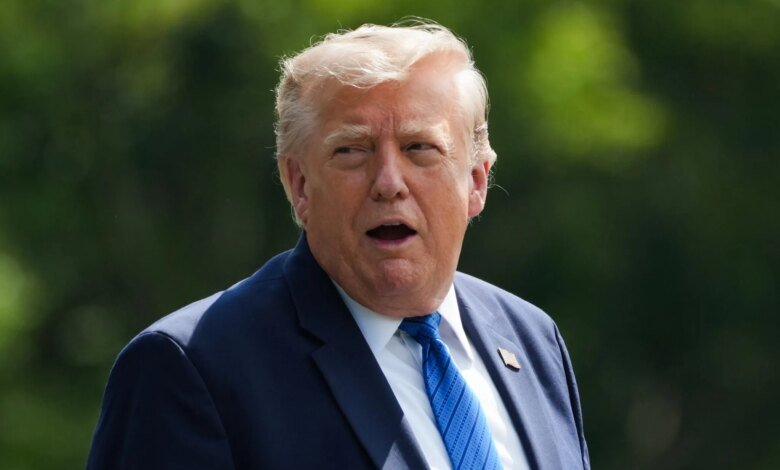
Capital One’s internal anti-money laundering team spent months reviewing more than 300 accounts tied to Donald Trump before terminating his decade-long banking relationship over flagged financial activity, according to legal documents filed in federal court.
The disclosure was made as the bank moves to dismiss a lawsuit filed by Trump’s financial holding company shortly after he took office for a second term. Trump alleges that Capital One illegally closed his accounts for political reasons following the Jan. 6 attack on the U.S. Capitol.
In the filing, Capital One stated that the account closures were the result of extensive analysis and review by its anti-money laundering team in accordance with bank policies and regulatory guidance. The bank maintained that internal risk managers identified transaction characteristics indicative of money laundering across Trump-branded business accounts ranging from golf courses to a winery.
Capital One denied any political motivation, noting that it never publicized the account terminations and granted Trump’s team several months and multiple extensions to transfer funds to alternative financial institutions.
Trump’s legal team rejected the bank’s explanation on Monday, maintaining that the institution acted out of political bias. “Capital One, along with other major banks, de-banked President Trump, his family, and his businesses for blatantly political reasons,” a spokesperson for Trump’s legal team said. “President Trump’s powerful lawsuit holds Capital One accountable for its disgraceful conduct, and we look forward to seeing this matter through to a just and proper conclusion.”
The legal battle against Capital One is part of a broader challenge by Trump against major U.S. financial lenders. Trump has also filed a $5 billion lawsuit against JPMorgan Chase, accusing the firm of debanking his family and business enterprises after he left office in 2021. JPMorgan Chase has denied political discrimination, stating that financial institutions close accounts with or without cause when facing potential legal, regulatory, or reputational risks.
Under federal regulatory frameworks such as the Bank Secrecy Act, banks face strict statutory obligations and oversight from institutions like the Financial Crimes Enforcement Network to report and isolate accounts displaying unusual financial patterns. Failure to monitor high-risk accounts can expose lenders to substantial legal liabilities and regulatory sanctions.
In July, Trump’s attorneys filed an amended complaint alleging political bias based on internal statements. Capital One pushed back, asserting that the new claims lack merit and rely on “cherry-picked quotations” while ignoring the underlying anti-money laundering findings.
Conservative legal groups and lawmakers have long criticized commercial banks over debanking allegations. The controversy traces back to Operation Choke Point, a 2013 Obama administration initiative where federal regulators encouraged banks to cut ties with high-risk commercial sectors, including firearms dealers, tobacco vendors, and payday lenders. Similar concerns re-emerged during the Biden administration regarding banking access for the cryptocurrency industry.
In response to account terminations across the sector, Trump signed an executive order in August 2025 titled “Guaranteeing Fair Banking for All Americans.” The order directs federal bank regulators to end supervisory examinations targeting banks based on customer associations and has been paired with federal subpoenas served to major Wall Street banks as part of an investigation into alleged debanking practices.