UN-Backed Neutral Mechanism Proposed to Reopen Strait of Hormuz Amid U.S.-Iran Standoff
International Chamber of Commerce proposes UN-led model in Oman to restore trade amid US-Iran MoU standoff.
A United Nations-backed neutral governance mechanism modeled on the 2022 Black Sea Grain Initiative has been developed to reopen commercial shipping through the Strait of Hormuz, offering a diplomatic framework as legal disputes between the U.S. and Iran continue to paralyze the strategic waterway.
Formulated with input from the International Chamber of Commerce (ICC), which represents businesses across more than 170 countries, the proposal establishes an operational blueprint to register, monitor, verify, and report vessel movements through the Strait. The mechanism would initially focus on secure transit corridors for fertilizers and related raw materials, which are vital to global agricultural supply chains.
Under the proposed structure, operations would be coordinated by a Joint Co-ordination Center (JCC) based in Salalah, on the Arabian Sea coast in southern Oman. A dedicated task force led by Jorge Moreira da Silva, Executive Director of the United Nations Office for Project Services (UNOPS), would direct the initiative alongside representatives from the International Maritime Organization (IMO) and the UN Conference on Trade and Development (UNCTAD).
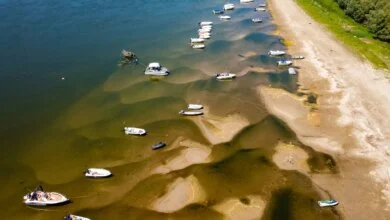
The push for neutral governance comes as commercial traffic through the Strait of Hormuz—a maritime chokepoint that typically handles roughly 20 to 30 percent of global seaborne petroleum flows—remains severely disrupted by diplomatic friction surrounding the U.S.-Iran Memorandum of Understanding signed in June. Iranian President Masoud Pezeshkian stated on Sunday that the Memorandum of Understanding would serve as the “cornerstone” of Tehran’s future foreign relations. However, vague wording in Article 5 regarding shipping control, competing routes, and a 60-day fee waiver limit has turned the clause into the primary obstacle to restoring normal maritime transit.
“Article 5 is a challenge because the Iranians have clearly taken from Article 5 that they’ve been given the right to develop an administrative mechanism for the conduct of shipping through the Strait of Hormuz, a reading that the U.S. disputes,” said ICC Secretary General John Denton, who previously headed the Australian legal firm Corrs Chambers Westgarth.
Denton noted that unlike the Black Sea agreement brokered between Russia and Ukraine to restore agricultural exports from Black Sea ports, the situation in the Persian Gulf involves multiple regional states with conflicting territorial claims and international legal positions. “The logic behind that deal was an exchange of incentives; Ukraine gained the ability to move wheat and sunflower products, while Russia gained the ability to move fertiliser,” Denton told Fortune. “Whereas, at the moment, what we’re seeing with the Iran conflict is that the only way of exchanging incentives is escalation, which is not going to get us to a peaceful reopening of Hormuz. And that’s where we think our neutral governance mechanism could prove decisive.”
Daily operations at the Salalah-based JCC would involve reviewing verified requests from commercial vessels and assigning deconflicted navigation routes through the Strait. While vessel inspections under the plan are not mandatory, member states could request secondary checks based on specific criteria. These inspections would be performed by Oman’s Salalah Port Authority under the direct observation of UN monitors, with results shared among JCC members before ships are cleared to proceed.
The mechanism is designed as a time-bound bridging solution until a permanent regional accord is reached, and it explicitly does not alter navigation rights under customary or conventional international law. Although historical precedents such as the Malacca Strait mechanism in East Asia required three years of negotiations, Denton confirmed the ICC framework is ready for deployment within weeks, provided all key actors give consent.
Denton emphasized that reopening the route requires addressing the operational confidence of the broader maritime market, including maritime insurers, seafarers, shipowners, port operators, commodity traders, and financiers who face elevated war risk premiums during periods of uncertainty. “People have had a habit during this horrible dispute of announcing the strait is open, the strait is closed, or that there’s a partial opening,” Denton said. “But, ultimately, we actually have to ensure that the trade route functions. That means engaging the full economic ecosystem—shipowners, seafarers, insurers, port handlers, commodity traders, and financiers—all of whom need certainty before they’ll move goods again.”
Addressing ongoing regional discussions between Oman and Iran, Denton stressed that any lasting resolution must include Washington and leverage the neutral standing of the United Nations. “If an agreement were to be signed between Iran and Oman, can it actually hold?” Denton said. “Aren’t you going to need to have the U.S. involved with that as well? And then, if the U.S. is to be involved, then how do the parties have confidence because no one currently trusts anyone. The only institution they trust at the moment, to a level that makes things work, may well be the United Nations.”