Ray Dalio Warns AI Market Surge Mirrors 1929 and 2000 Stock Bubbles
Billionaire hedge fund founder aligns with Jeremy Grantham, warning that reckless leverage and massive AI listings threaten financial stability.
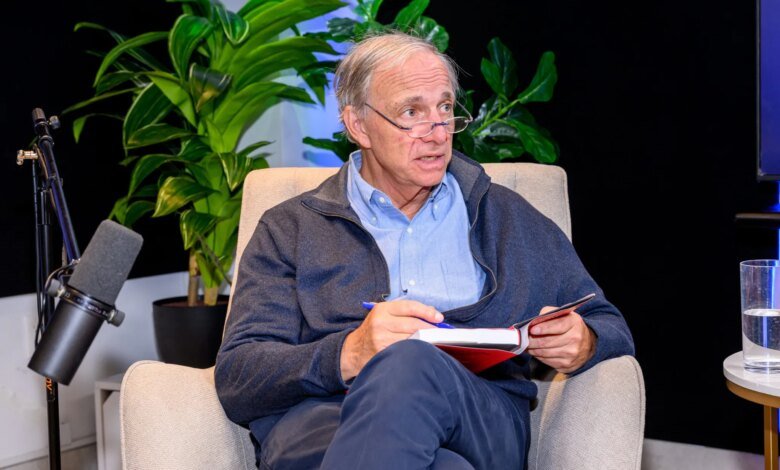
Billionaire investor Ray Dalio has warned that artificial intelligence enthusiasm has driven financial markets into a speculative bubble akin to the crashes of 1929 and 2000, concurring with GMO co-founder Jeremy Grantham’s call that investors face one of the largest market bubbles in history. Speaking on The Diary of a CEO podcast with host Steven Bartlett, the Bridgewater Associates founder stated that classic indicators of market mania are flashing across asset classes, driven by rapid wealth creation on paper, speculative debt leverage, and retail participation in complex financial instruments like leveraged ETFs.
The warning arrives as the financial system prepares for an unprecedented wave of massive corporate equity offerings, a phenomenon market strategists identify as a primary catalyst for pricking speculative bubbles. Anthropic has confidentially filed for a public listing targeting a valuation near $1 trillion as early as October, while OpenAI is preparing a public debut that analysts estimate could surpass $1 trillion, even as its timeline shifts toward 2027 amid shifting market dynamics. These mega-issuances follow SpaceX’s public debut in June, which saw its shares trade below their initial offering price alongside S&P projections of negative free cash flow through 2029 and Moody’s warnings regarding Elon Musk’s concentrated voting control.
Dalio highlighted that rising interest rates and aggressive stock issuance historically burst financial bubbles by overwhelming market liquidity. Under current market conditions, elevated concentration in top technology stocks has left broader markets exceptionally vulnerable. The so-called Magnificent Seven mega-cap technology companies now command an unprecedented weight of over 30 percent in the S&P 500 index, meaning passive investors and pension funds hold historic baseline exposure to AI capital expenditure cycles.
Grantham’s analytical framework, detailed in his memoir The Making of a Permabear, describes current market dynamics as a “bubble within a bubble.” According to Grantham, an initial market overvaluation that cracked in 2022 was artificially extended and expanded by the launch of ChatGPT. A January 2026 financial paper co-authored by Grantham and financial historian Edward Chancellor found that market price-to-book ratios and cyclically adjusted price-to-earnings multiples—which evaluate valuations against 10-year inflation-adjusted corporate earnings—have reached extreme thresholds previously surpassed only in 1929, 1972, 1999-2000, and 2021.
Major Wall Street institutions have increasingly acknowledged vulnerabilities in technology earnings, even while resisting broader crash narratives. Goldman Sachs chief global equity strategist Peter Oppenheimer noted on August 3 that tech markets face a potential “earnings bubble,” while BCA Research chief strategist Peter Berezin warned the AI trade mirrors boom-bust capital cycles seen in pre-2008 banking. Apollo Global Management chief economist Torsten Slok cautioned that the traditional 60/40 portfolio strategy has broken down under persistent “higher for longer” interest rate conditions.
Investor scrutiny over massive AI expenditures was demonstrated between July 26 and July 31, when Microsoft and Amazon shares rose 18 percent and 10 percent on strong capex credibility, while Alphabet fell 4 percent and Meta dropped nearly 10 percent despite reporting solid profits. Dalio warned that when paper wealth backed by borrowing unspools, investors face forced liquidations to cover fixed debts. Placing current market conditions inside an 80-year “Big Cycle” of debt accumulation, wealth inequality, and geopolitical tension, Dalio cautioned that the eventual unwinding of inflated asset values risks triggering severe social and political instability.