McDonald’s Misses Sales Expectations on Franchise Execution Lapses, Names New U.S. Head
Execution failures at a third of franchises blunted McDonald's value strategy, prompting a U.S. leadership change.
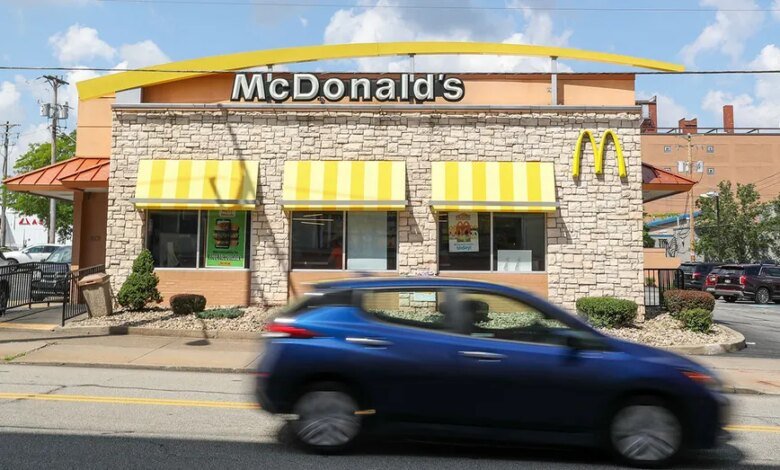
McDonald’s Corp. missed quarterly sales estimates as operational failures across a significant portion of its domestic franchise network hampered efforts to win back low-income diners hit by inflation, prompting the fast-food giant to overhaul its U.S. leadership.
U.S. comparable sales rose 0.8% in the second quarter, falling short of Wall Street expectations of a 1.06% increase compiled by LSEG. The performance represents a sharp deceleration from the 2.5% growth rate recorded in the same period last year, highlighting growing pressure on quick-service restaurant operators as budget-conscious consumers trim discretionary spending.
To lead the turnaround, the Chicago-based burger chain appointed 26-year company veteran Skye Anderson to head its U.S. business, placing her in charge of approximately 14,000 domestic locations. Anderson, who previously served as domestic chief operating officer, takes over as McDonald’s seeks to standardize value menu pricing across a system where nearly 95% of locations are independently operated by franchisees.
Chief Executive Officer Chris Kempczinski acknowledged during an earnings call that about one-third of U.S. franchise locations failed to implement corporate guidance for the everyday affordable price menu, causing inconsistent guest experiences across the market.
“We don’t have a strategy problem. We simply didn’t execute at the level we needed to in the second quarter,” Kempczinski said, noting that restaurant compliance on low-price offerings will now factor directly into formal corporate business reviews.
McDonald’s sales came in lower than expected, with executives noting that some franchisees struggled to implement its low-price menu offerings effectively. (Paul Weaver/SOPA Images/LightRocket)
The execution missteps occurred against a broader industry slowdown. Fast-food chains across the U.S. have faced heightened traffic erosion among households earning less than $45,000 per year, who have curtailed restaurant visits following years of cumulative price hikes across the sector.
In addition to pricing missteps, restaurant workers were overwhelmed by a high volume of operational deployments introduced during the quarter. The influx of new initiatives created operational bottlenecks, leading to slower drive-thru times and declining customer satisfaction scores.
McDonald’s is simplifying some operations that hampered efficiency and led to slower customer service times. (Spencer Platt/Getty Images)
A reduction in digital discount promotions—such as buy-one-get-one deals—further compounded the traffic decline. Kempczinski stated that reduced engagement with digital promotions accounted for roughly two-thirds of the total shortfall in customer visits during the quarter.
To regain lost momentum, Chief Financial Officer Ian Borden announced that McDonald’s will launch new national digital flash offers next week aimed at high-frequency patrons. The company is also eliminating several non-customer-facing restaurant tasks over the remainder of the year to ease pressure on store staff and improve order speed.
Market analyst Mitch Roschelle, appearing on Fox Business’s “Mornings with Maria,” emphasized that sustained inflation continues to force lower-income households to reevaluate fast-food purchases, making operational precision on value pricing essential for chain survival.
Shares of McDonald’s Corp. (MCD) rose 1.17% to $268.38 in recent trading as investors evaluated the leadership change and operational reboot.