$130 Million Coldcard Breach Triggers Security Alarm Over Hardware Wallet Randomness
A seed generation bug in Coinkite's Bitcoin wallets allowed attackers to guess private keys, raising questions about open-source security and AI threats.
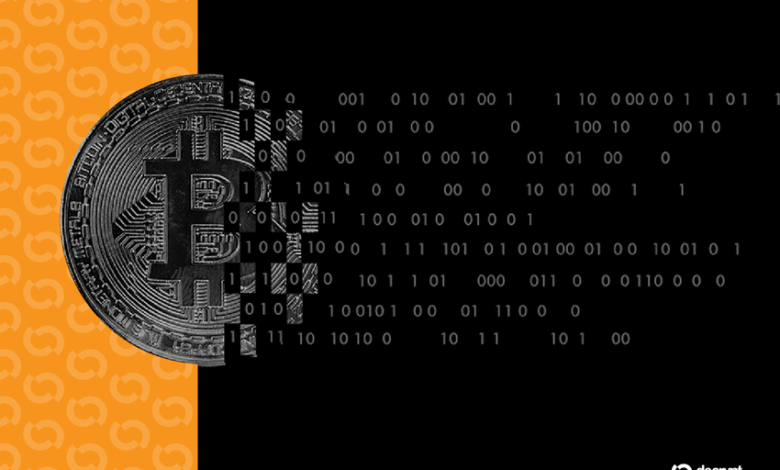
A $130 million exploit targeting air-gapped Coldcard Bitcoin hardware wallets has exposed structural vulnerabilities in cryptographic entropy generation, forcing manufacturer Coinkite to release emergency patches and sparking broad concerns over automated code exploitation in open-source security software.
The breach traces back to a March 2021 firmware update that introduced a software fallback in place of the device’s hardware random number generator. The flaw rendered wallet recovery seed phrases mathematically guessable, enabling adversaries to reconstruct private keys and drain user funds. Coinkite issued fixed firmware on Sunday, advising affected users to immediately migrate funds to newly generated wallets. Further thefts remain under active investigation, while Coinkite did not respond to requests for comment.
The scale of the breach highlights how hardware wallet security depends fundamentally on how cryptographic randomness is constructed, according to Charles Guillemet, Chief Technology Officer at competitor Ledger.
“We’re treating this as a serious reminder of how the whole security model of a hardware wallet lives or dies on randomness,” Guillemet said. “Cryptography is hard and implementing it securely is harder. This week’s Coldcard incident made that visible in the most expensive way possible.”
Ledger stated its own hardware wallets were unaffected due to a different architecture. “Ledger hardware wallets draw their root secret (the 24-word Secret Recovery Phrase) from a true hardware random number generator built directly into a certified Secure Element, with no software fallback path,” Guillemet said, noting the generator provides the full 256 bits of entropy for every seed.
The Coldcard flaw remained undetected in public code for more than five years until attackers reportedly used artificial intelligence tools to identify the vulnerability. Guillemet noted that while open-source software allows public auditing, visibility alone does not guarantee security.
“Open source and reviewed are not the same thing,” Guillemet said, adding that AI enables threat actors to scan repositories and detect configuration errors at “machine speed.” He emphasized that defensive measures must adapt accordingly: “That means defense has to move at the same speed. It needs to come from security by design, hardware, and math.”
AI-driven code auditing has previously sent shockwaves through the digital asset market. In May, a security researcher using the AI model Claude Opus 4.8 identified a four-year-old vulnerability in Zcash that could have enabled unlimited token minting. News of the discovery caused widespread market panic, driving Zcash down by more than 40% in a single trading session.
To combat AI-assisted exploits, Ledger has spent two years deploying AI tools alongside human cryptographers and its internal Donjon research lab to discover vulnerabilities internally. “We also don’t just rely on our own word for it,” Guillemet said. “Our Donjon research lab exists to try to break our products before anyone else can.”
Guillemet advised users evaluating hardware wallets to ensure key generation relies on certified physical processes rather than software algorithms. “Randomness has to come from physics, not a formula,” he said. “It has to be certified by people whose job is trying to break that claim, not just asserted by the vendor.”