Fast-Food AI Drive-Thru Push Faces Consumer Resistance as Surveys Reveal Trust Gap
Major chains accelerate automated ordering initiatives like McDonald’s ArchIQ and Wendy’s FreshAI despite strong public preference for human order takers.
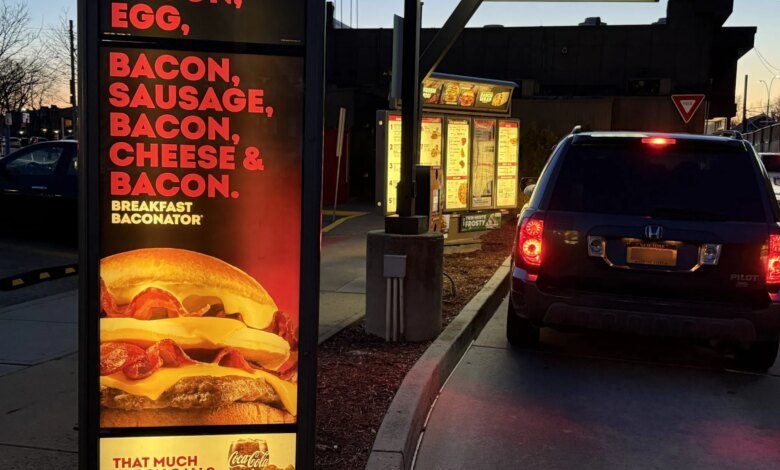
Fast-food operators across North America are rapidly scaling Artificial Intelligence across their drive-thru lanes, yet consumer willingness to interact with automated agents continues to lag significantly behind executive rollouts.
Industry data reveals a widening disconnect between corporate efficiency goals and customer preference. A study by advisory firm Metrigy shows that roughly 80% of consumers prefer placing orders with human employees rather than AI agents. While restaurant executives estimated that approximately 40% of their customer base favored digital order takers, Metrigy’s research found that only 22% of consumers actually preferred AI interactions.
Despite customer skepticism, major brands are pushing ahead with automated infrastructure. McDonald’s expanded its digital strategy earlier this year through its “McDonald’s > NEXT” initiative, introducing its proprietary ArchIQ AI drive-through ordering platform. The move follows the chain’s decision in mid-2024 to conclude a multi-year automated order-taking trial conducted in partnership with IBM across more than 100 locations.
Wendy’s has similarly expanded its automated footprint through its FreshAI program, which initially debuted in 2023. Speaking during the company’s Q1 2026 earnings call, Wendy’s Chief Financial Officer Ken Cook outlined plans to deepen digital integration across channels, emphasizing investments designed to leverage consumer insights, drive app engagement, and broaden checkout payment options to improve conversion rates.
Neither McDonald’s nor Wendy’s responded immediately to requests for comment regarding customer feedback on their automated drive-thru systems.
Drive-thru sales historically account for 60% to 70% of total revenue for top quick-service restaurant chains in the United States. In recent years, rising labor costs—fueled in part by regulatory shifts such as California’s fast-food minimum wage increases—have pushed operators to seek technological solutions capable of streamlining throughput and lowering operational overhead.
However, technical execution remains a hurdle for widespread adoption. Acoustic interference from vehicle engines, complex custom orders, and varied speech patterns frequently lead to system errors. Layne Haaksma, senior research analyst at Metrigy, noted that early operational mistakes continue to weigh heavily on consumer perception, though customer acceptance of AI order-taking chatbots did register a slight uptick of over four percentage points between the first and second quarters of 2026.
Haaksma pointed out that the aggressive pace of corporate deployment has outpaced public comfort, noting that insufficient time has elapsed for consumers to establish trust in automated systems that still commit frequent operational errors.
Sociological and management experts suggest that automation does not necessarily require the complete elimination of restaurant staff. Jerry Jacobs, a professor of sociology and management at the Wharton School of the University of Pennsylvania, argued that automated tools could instead relieve workers of repetitive transactional tasks, allowing staff to focus on direct customer service, complex inquiries, and issue resolution.
Jacobs noted that human order takers are also subject to fatigue and constrained by standardized scripts, but cautioned operators against viewing voice technology solely as a mechanism for reducing overall headcount.