Malaysia Shuts Down Balaji Srinivasan’s Network School as Tech Venture Pivots to Kazakhstan
Malaysian authorities revoked licenses for the Forest City campus following diplomatic fallout and regulatory reviews.
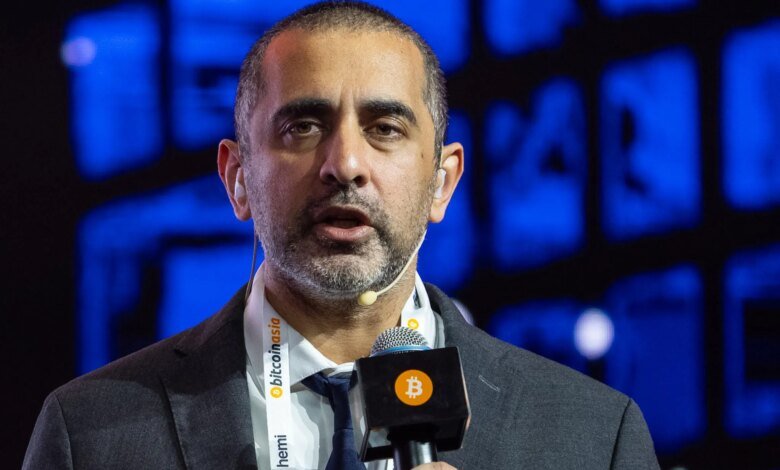
Tech investor and former Coinbase chief technology officer Balaji Srinivasan has signed a strategic agreement to establish his experimental “Network School” in Kazakhstan, just days after Malaysian authorities shuttered the project’s initial campus in Johor state following online controversy and administrative license revocations.
The Iskandar Puteri City Council revoked the business and advertising licenses of operating entity NS0 Malaysia Sdn. Bhd. on July 21. Johor Chief Minister Onn Hafiz Ghazi subsequently confirmed full state backing for the immediate shutdown, citing a discrepancy between the group’s registered office-use permit and its actual commercial educational activities in Forest City.
The municipal action followed weeks of escalating online scrutiny, triggered when a promotional advertisement highlighting the campus’s proximity to Singapore led internet sleuths to locate the facility on Malaysian soil. Local pro-Palestinian advocacy groups accused the program of bringing Israeli citizens into Malaysia—a nation that maintains no diplomatic relations with Israel and strictly prohibits Israeli passport holders from entering its territory.
Although official Malaysian investigations uncovered no immigration or travel document violations, diplomatic fallout quickly broadened. After Malaysian authorities ordered a dual U.S.-Israeli citizen affiliated with the program to leave the country, the U.S. Department of State summoned Malaysia’s ambassador to clarify its official position.
The controversy was exacerbated by historical comments made by Srinivasan in 2023, where he referenced “tech Zionism” as an abstract governance concept for territorial acquisition and self-determination by technology communities. In strongly pro-Palestinian Malaysia, where national passports explicitly state their invalidity for travel to Israel, the terminology provoked sharp public condemnation. Attempts by Srinivasan to secure an audience with Malaysian Prime Minister Anwar Ibrahim or leverage potential investment freezes failed to halt the administrative enforcement.
Launched in 2024 as a 90-day trial before expanding into a year-long initiative, Network School pitched itself as a cheaper alternative to traditional higher education and expensive innovation hubs in Silicon Valley or the United Arab Emirates. For $1,500 per month, the residential compound provided communal living, meals, facility access, and technical workshops for roughly 100 global technology entrepreneurs and digital creators.
The facility had previously enjoyed government interest, with Malaysian Digital Minister Gobind Singh Deo visiting the site earlier this year and framing it as an emerging destination for international tech talent. Its location in Forest City—a $100 billion real estate megaproject constructed by Chinese developer Country Garden under Beijing’s Belt and Road Initiative—offered vast underutilized infrastructure. Built to house 700,000 residents across the Strait of Johor from Singapore, Forest City has struggled with occupancy rates under 2 percent following Chinese capital controls, pandemic disruptions, and financial instability at Country Garden.
Moving swiftly to relocate, Srinivasan signed a five-year memorandum of understanding on July 22 with Kazakhstan’s Ministry of Artificial Intelligence and Digital Development. The partnership aims to build a new technical campus focused on artificial intelligence research, hackathons, and global talent recruitment, aligning with President Kassym-Jomart Tokayev’s initiative to transform the Central Asian nation into a regional technology powerhouse equipped with gigawatt-scale data center infrastructure.