Tech History Rewind: How a Sony Camcorder Ignited the Lithium-Ion Revolution
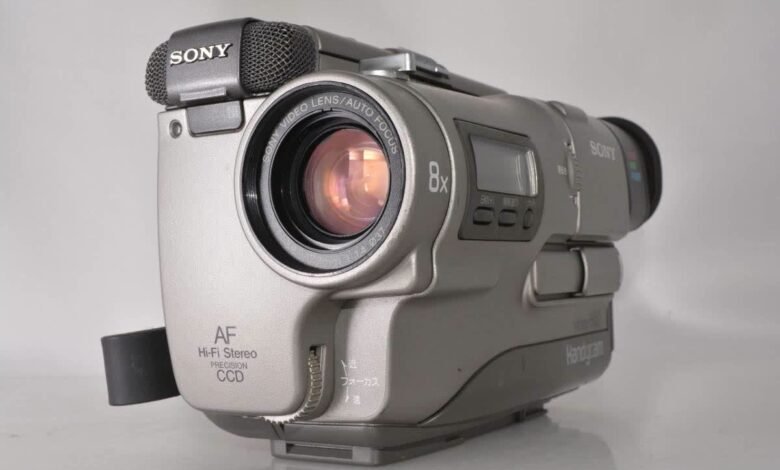
Long before lithium-ion batteries became the universal power source for smartphones, notebooks, and electric vehicles, the rechargeable technology made its commercial debut inside a video camera. In the early 1990s, Japanese electronics giant Sony launched the world’s first retail product powered by a lithium-ion cell: the CCD-TR1 8mm Handycam camcorder.
At the time, portable consumer electronics were severely constrained by existing energy storage technologies. Most portable equipment relied on nickel-cadmium batteries, which were notoriously heavy, possessed low energy density, and suffered from memory effect—a degradation process where cells lose maximum storage capacity when repeatedly recharged without full discharges. For handheld camcorders, which required significant energy to drive motors and tape mechanisms, battery weight directly limited usability. Sony‘s new chemistry delivered higher operating voltages and far greater energy density, dramatically reducing device bulk while extending operating times.
The commercial rollout by Sony and its dedicated manufacturing arm, Sony Energytec, built upon decades of fundamental scientific breakthroughs. The foundational chemistry was developed by scientists M. Stanley Whittingham, John B. Goodenough, and Akira Yoshino, who were later awarded the 2019 Nobel Prize in Chemistry for their work. A pivotal safety milestone occurred in 1985 when Yoshino eliminated volatile metallic lithium from the battery anode, replacing it with carbonaceous materials. That advance made the chemistry stable enough for mass manufacturing and practical daily use.
The CCD-TR1’s role as the lithium-ion pioneer stands in contrast to common assumptions that mobile phones or laptops led the transition. Other iconic devices from that era relied on older, heavier power sources. Motorola’s landmark mobile phone, the DynaTAC 8000X, ran on a heavy nickel-cadmium pack. In early portable computing, Apple’s 1991 PowerBook 100 used a lead-acid battery, while IBM’s famed ThinkPad 700C debuted in 1992 shortly after the Sony breakthrough without adopting the new battery technology.
While early video cameras rarely receive the same nostalgia as classic smartphones or laptops, the launch of the CCD-TR1 proved that lithium-ion power was commercially viable. That initial application laid the groundwork for the high-density energy storage systems that currently power modern mobile devices, drones, cordless tools, and electric transportation.